

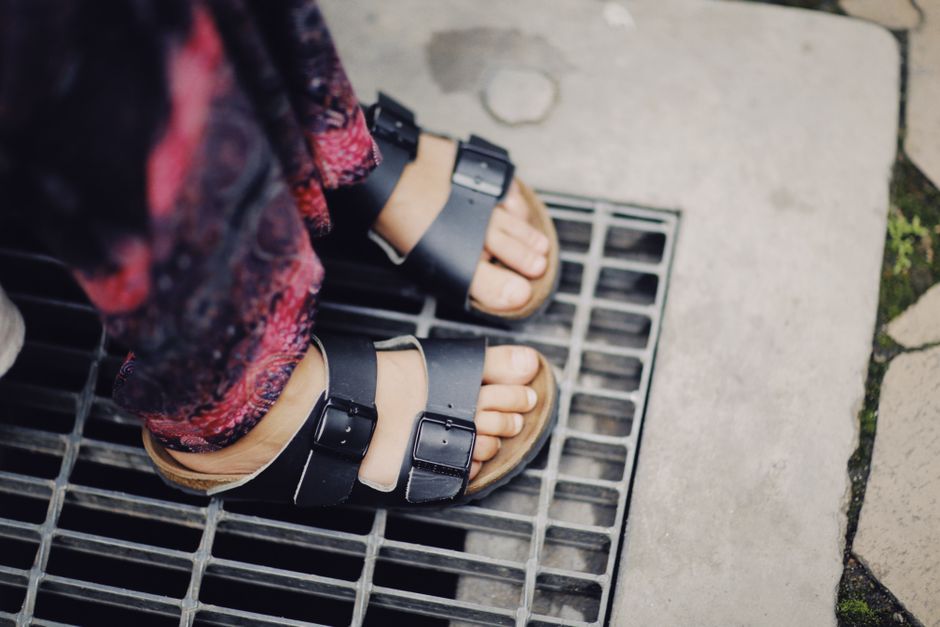
From Orthopaedic Insole to Global Icon: The Complete Guide to Birkenstock
Birkenstock is a German footwear brand founded in 1774, best known for its cork-latex footbed sandals and clogs. Here is a quick overview of what you need to know:
- Founded: 1774 in Germany — over 252 years of shoemaking heritage
- Most popular style: The Arizona two-strap sandal, introduced in 1973
- What makes them special: An anatomically shaped cork footbed that molds to your foot over time
- Price range: Roughly $50 for EVA models up to $175+ for premium leather styles
- Key styles: Arizona, Boston, Gizeh, Madrid, London, and EVA waterproof lines
- 2024 revenue: €1.80 billion, with 7,400 employees worldwide
- IPO: Listed on the NYSE in October 2023 under ticker BIRK at an $8.64 billion valuation
Few brands have traveled as strange a road as Birkenstock — from a clunky orthopaedic insole sold near the granola aisle of American health food stores in the 1960s to a runway staple at Céline and a billion-dollar publicly traded company. The journey is equal parts foot science, counterculture history, and savvy fashion reinvention.
How did a shoe once rejected by every traditional retailer in America become one of the most recognizable silhouettes in the world? That is exactly what this guide unpacks.
I’m Christopher Pape, and in the sections below I’ll walk you through everything — the brand’s origins, its iconic footbed technology, its core product lines, and the corporate moves shaping its future.
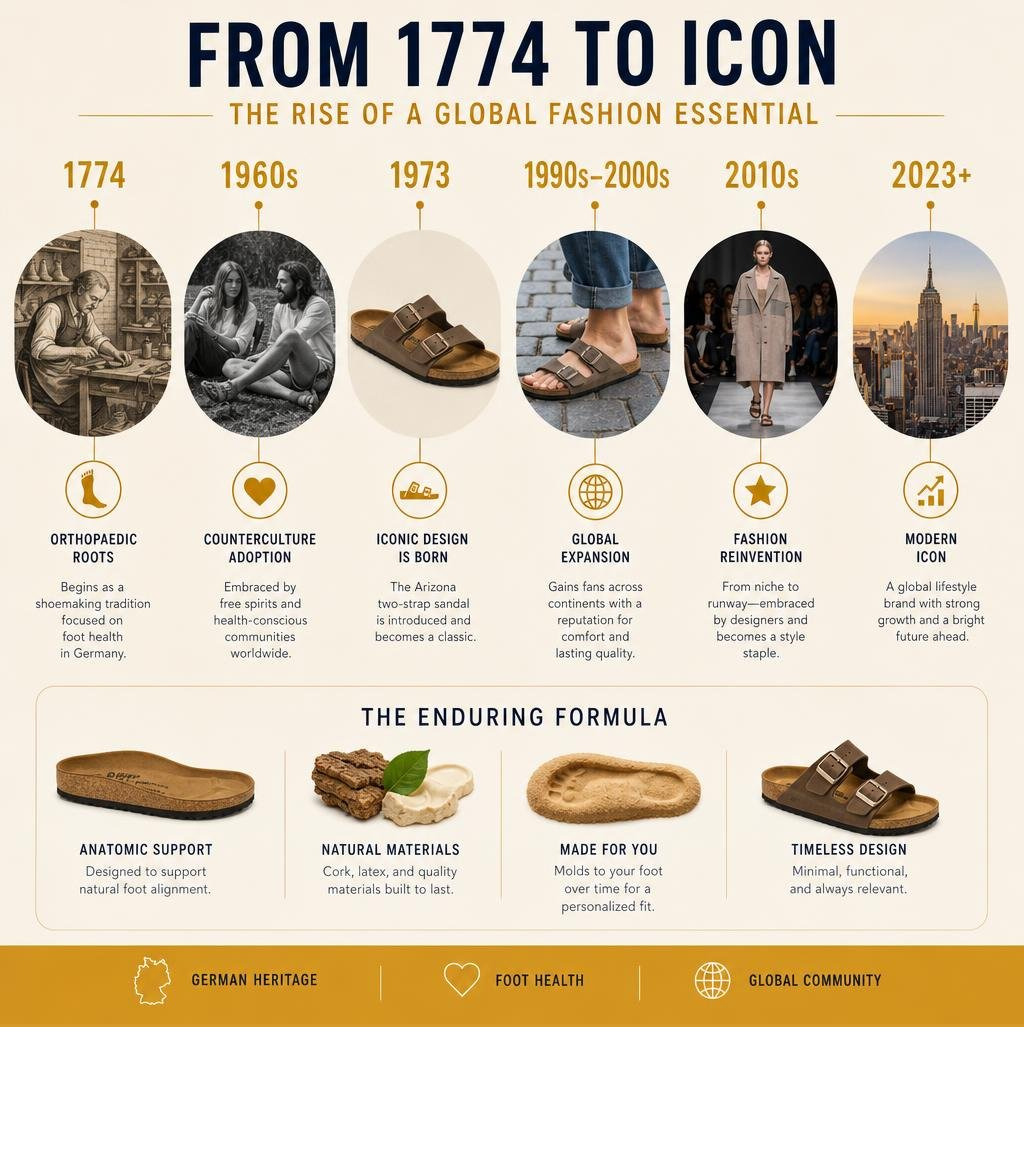
The Evolution of Birkenstock: From Orthopaedic Roots to Global Fashion Icon
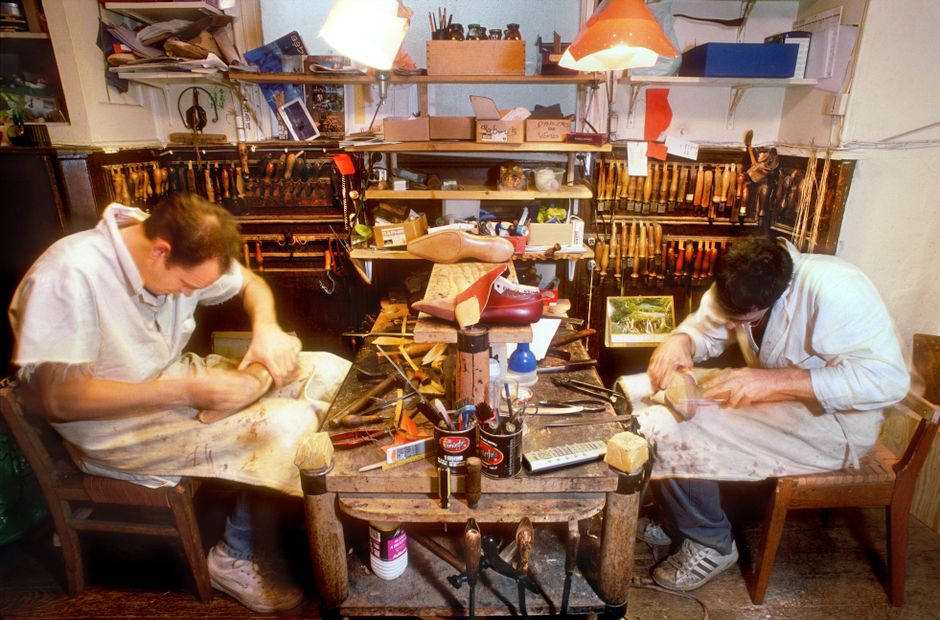
To understand how Birkenstock conquered the world, we have to travel back to 1774 in the small German village of Langen-Bergheim. There, Johann Adam Birkenstock registered himself in local church archives as a “subject and shoemaker.” This humble registration marked the birth of a family dynasty that would spend the next two and a half centuries obsessing over foot health and mechanics.
For over a century, the family operated as traditional shoemakers. However, the true turn came in the late 19th century under Johann’s great-great-grandson, Konrad Birkenstock. In 1896, Konrad opened two shoe shops in Frankfurt and began manufacturing and selling flexible footbed insoles.
Before Konrad’s intervention, shoe insoles were rigid, flat, and made of heavy metal. Konrad hypothesized that the human foot required a flexible, contoured support system that mirrored the foot’s natural shape. This led to the development of the “Fussbett” (footbed) — a contoured insole designed to support the arches and distribute weight evenly.
By the 1920s, Konrad’s son, Carl Birkenstock, joined the business, expanding the manufacturing of these supportive insoles and running training courses for orthopaedic shoemakers across Europe. The company was not selling fashion; they were selling medical-grade physical therapy for your feet.
The transition from orthopaedic insoles to actual shoes occurred in 1963, when Karl Birkenstock (Carl’s son) designed the Madrid sandal. Originally marketed as a “gymnastic sandal,” the Madrid featured a single adjustable strap and a deep cork-latex footbed. It was engineered to force the wearer’s toes to grip the footbed with every step, toning the calf muscles and promoting circulation.
However, the launch of the Madrid in 1963 was initially deemed a commercial disaster. The fashion world of the 1960s was dominated by narrow Italian stilettos and pointed shoes. The wide, anatomical, and frankly “ugly” Madrid sandal stood in direct opposition to the era’s aesthetic standards. Traditional shoe retailers laughed at its clunky appearance, refusing to put it on their shelves. But as we know, the tides of fashion were about to turn in a massive way.
Margot Fraser and the American Counterculture Movement
The global expansion of Birkenstock was not the result of a massive corporate marketing campaign, but rather the accidental discovery of a visionary woman named Margot Fraser. In 1966, Fraser, a German-born dressmaker living in California, traveled back to her home country for a vacation. During her trip, she visited a Bavarian spa to seek relief for a chronic foot ailment.
The spa recommended she try Karl Birkenstock’s newly designed Madrid sandals. Within months of wearing them, her foot pain vanished. Amazed by the results, Fraser contacted Karl Birkenstock and secured the rights to import the sandals to the United States.
When Fraser returned to California with boxes of sandals, she faced the same wall of rejection that Karl had faced in Europe. Traditional shoe store owners took one look at the wide, cork-soled shoes and refused to stock them, claiming American women would never wear something so unflattering.
Undeterred, Fraser looked for alternative retail spaces. If shoe stores wouldn’t sell them, perhaps health conscious consumers would. She began pitching the sandals to health food stores, setting up small displays right next to the granola, bulk grains, and organic honey.
This unconventional distribution strategy proved to be a stroke of genius. The late 1960s and early 1970s marked the peak of the counterculture movement in California and across the United States. Hippies, environmentalists, and anti-establishment youth embraced the gender-neutral, natural, and comfortable design of the sandals.
The shoe became a badge of honor for those who rejected the rigid social and fashion norms of the post-war era. By aligning with the eco-conscious, wellness-focused crowd, Birkenstock established a permanent foothold in the American cultural landscape.
High Fashion Collaborations and the Normcore Trend
For decades, the brand remained comfortably nestled in its counterculture niche. However, the 21st century brought a radical shift in how the world viewed comfort and style. The first major crack in the “hippie shoe” stereotype occurred on the Parisian runways in 2012.
Phoebe Philo, the highly influential creative director of the luxury fashion house Céline, sent models down the Spring/Summer 2013 runway wearing mink-lined Arizona-style sandals. Dubbed “Furkenstocks” by the fashion press, this single collection ignited a global obsession with high-fashion comfort. Suddenly, the “ugly” shoe was the ultimate luxury statement.
Recognizing this shift, Birkenstock established its premium “1774” creative studio in Paris, dedicated to high-end collaborations with elite fashion designers. Over the past decade, the brand has partnered with luxury heavyweights like Dior, Valentino, Manolo Blahnik, and Rick Owens. These collaborations reinterpreted classic designs using premium materials, sleek hardware, and avant-garde colorways, cementing the brand’s position in the upper echelons of high fashion.
This luxury pivot coincided with broader cultural movements. The rise of “normcore” in the mid-2010s — a style trend celebrating ultra-casual, unpretentious, and functional clothing — made the brand’s classic models the default footwear choice for urban creatives.
Later, the “VSCO girl” aesthetic of the late 2010s and the post-pandemic wellness movement further solidified the brand’s multi-generational appeal. Today, Gen Z consumers wear them with baggy denim and vintage tees, while busy Manhattan professionals slip into them for their daily commutes.
Anatomy of Comfort: The Science Behind the Cork-Latex Footbed
At the heart of every single pair of Birkenstock shoes is a design that has remained virtually unchanged for over a century: the anatomically shaped cork-latex footbed. While fashion trends come and go, the brand’s unwavering commitment to foot health is what drives its legendary customer loyalty.
The footbed is engineered to simulate the natural experience of standing and walking barefoot in loose sand. When you walk on hard, flat surfaces like concrete pavements, your feet are forced to absorb high-impact shocks, which can lead to joint pain, poor posture, and foot fatigue.
The contoured footbed solves this by supporting the foot’s natural rolling motion, distributing body weight evenly across the entire sole, and encouraging active muscle engagement.
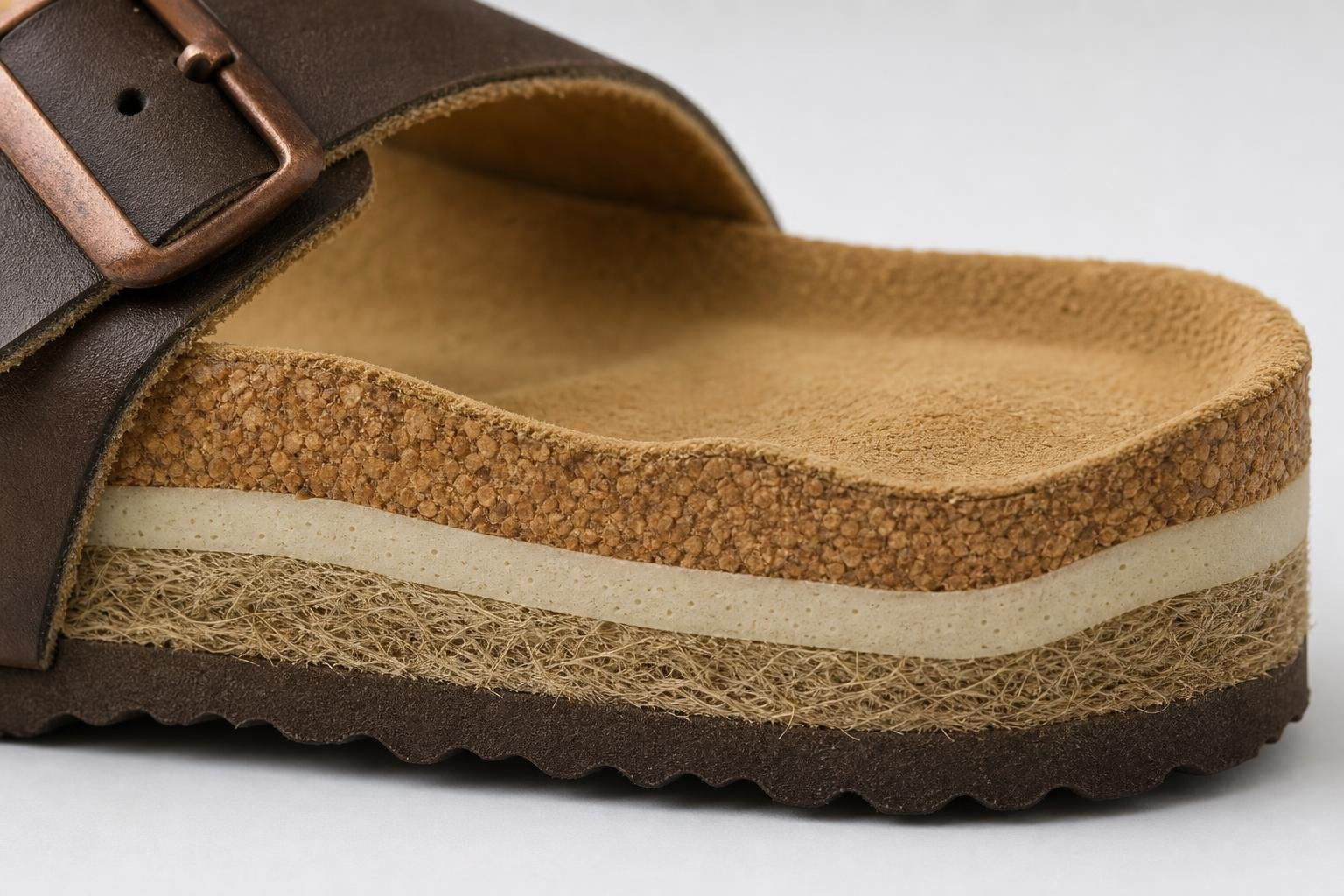
The Four-Layer Construction of the Original Birkenstock Footbed
The classic footbed is a masterpiece of sustainable material science and orthopedic engineering, constructed using four distinct layers:
- The Shock-Absorbent Sole: The bottom layer is made of ethylene vinyl acetate (EVA), a lightweight, highly flexible synthetic material that provides excellent cushioning and smooths out irregularities in the ground.
- First Jute Layer: A layer of natural jute fibers forms the base of the footbed, stabilizing the core and providing structural strength.
- Sustainable Cork-Latex Core: The heart of the shoe is a blend of natural granulated cork and liquid natural latex. Cork is harvested by stripping the bark of cork oak trees without harming them, making it an incredibly sustainable material. This mixture is highly insulating, shock-absorbent, and flexible.
- Second Jute Layer: A second layer of jute is placed over the cork core to regulate moisture and add further durability.
- Soft Suede Lining: The top layer is a breathable, soft suede lining that feels comfortable against bare skin and naturally absorbs moisture.
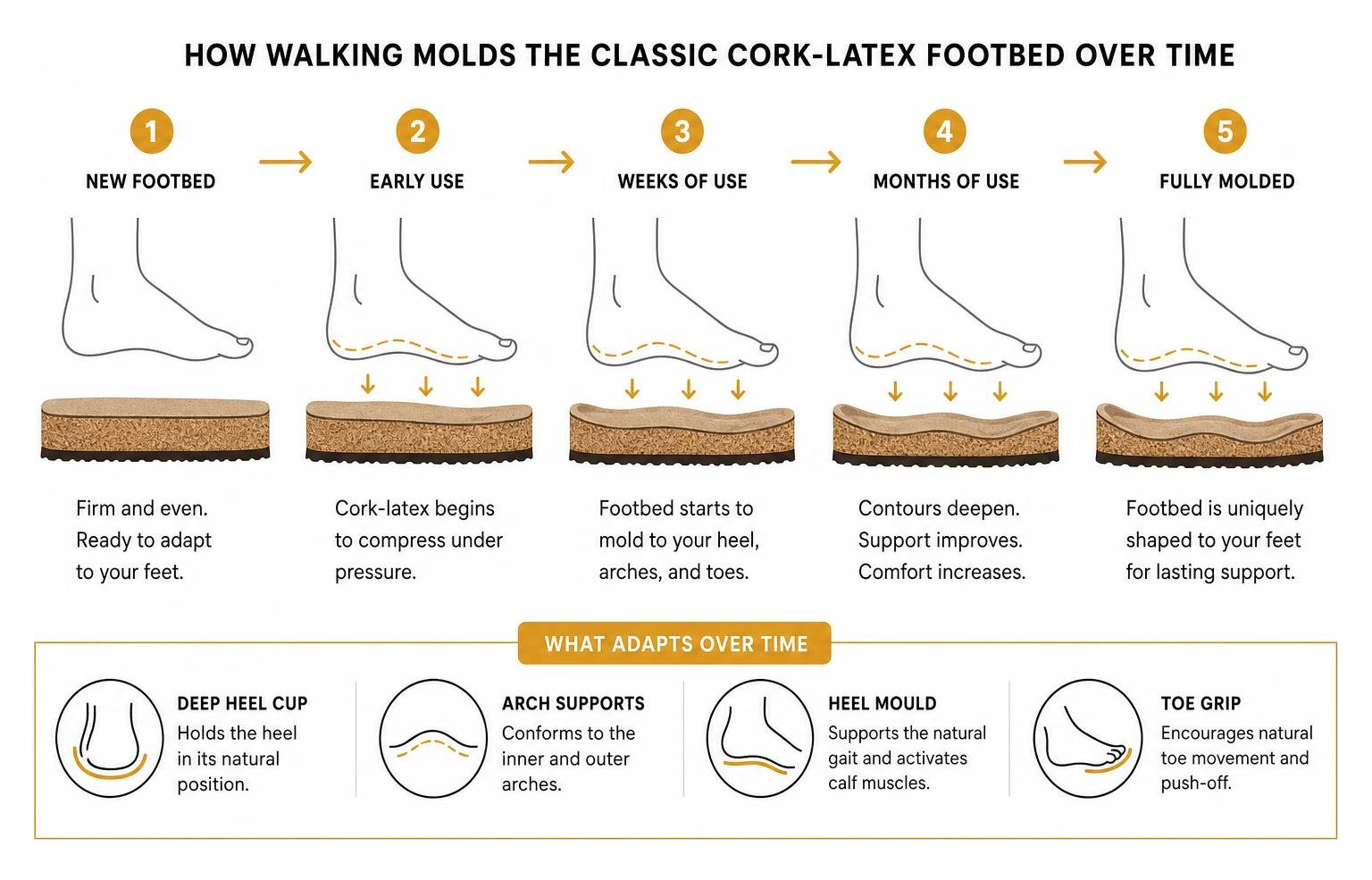
This intricate construction features several key anatomical zones:
- Deep Heel Cup: Holds the heel bone firmly in its natural position, providing the same stability found in a closed-toe shoe.
- Heel Mould: Activates the calf muscles and improves gait coordination.
- Longitudinal and Transverse Arch Supports: Support the inner and outer arches of the foot, preventing the foot from rolling inward or outward.
- Toe Grip: A raised ridge at the front of the footbed that encourages the toes to grip naturally, supporting the natural rolling motion of the foot.
For those looking for a vegan alternative to the traditional suede-lined footbed, the brand offers styles like the Arizona Birko-Flor in Color Triples Sandcastle | BIRKENSTOCK Netherlands, which utilizes skin-friendly Birko-Flor and a soft, animal-free microfibre lining.
Regular vs. Narrow: Finding Your Perfect Fit
One of the most common mistakes consumers make when purchasing their first pair of Birkenstock shoes is ignoring the width options. Unlike most footwear brands that only offer standard widths, this brand offers two distinct footbed widths: Regular (Wide) and Narrow.
Choosing the correct width is crucial. If your foot rests on top of the raised side ridges of the footbed, the shoe will feel uncomfortable and can damage your feet over time. Your foot should sit fully inside the contoured cup with a few millimeters of space around the toes and heel.
Because the classic cork-latex footbed is firm, it requires a “break-in” period. During the first week of wear, the cork will gradually absorb the heat and weight of your body, molding specifically to the unique contours of your feet. To make this process easier, we recommend wearing your new sandals for short intervals of 1 to 2 hours a day, gradually building up to full-day wear.
If you prefer immediate comfort out of the box, the brand offers a Soft Footbed option. This variation integrates an anatomically shaped latex foam cushion directly beneath the suede lining.
Styles like the Boston Soft Footbed Suede Leather in Color Antique White | BIRKENSTOCK US offer this extra cushioning, making them an excellent choice for city dwellers who spend long hours standing on concrete.
The Core Collection: Iconic Sandals and Clogs for Every Occasion
Over the decades, Birkenstock has expanded its product catalog to include hundreds of variations, yet a few core silhouettes remain the undisputed kings of the brand.
| Style Name | Design Type | Best For | Key Materials |
|---|---|---|---|
| Arizona | Two-strap slide sandal | Everyday casual wear, summer walking | Leather, Suede, Birko-Flor, EVA |
| Boston | Closed-toe slip-on clog | Year-round wear, transitional seasons | Suede, Natural Leather, Wool Felt |
| Gizeh | Thong style sandal | Elegant, feminine casual wear | Leather, Birko-Flor, EVA |
| London | Closed-toe, closed-heel shoe | Professional work, colder seasons | Natural Leather, Suede |
| Professional | Slip-resistant technical clog | Culinary, medical, and service industries | Polyurethane (PU), Leather |
The Arizona: A Timeless Two-Strap Classic
Introduced in 1973, the Arizona is the undisputed flagship of the brand. Its minimalist, gender-neutral design features two wide straps, each equipped with an adjustable metal pin buckle that allows the wearer to customize the fit.
The Arizona’s simple aesthetic makes it incredibly versatile. It is a shoe that transcends age, gender, and social class, worn by everyone from backyard gardeners to high-profile celebrities walking the streets of Manhattan.
Whether crafted in rugged oiled leather, velvety suede, or the brand’s proprietary synthetic Birko-Flor, the Arizona remains a masterclass in functional design.
The Boston Clog: Cozy Year-Round Versatility
The Boston clog is a closed-toe, open-back slip-on that has achieved legendary status in recent years. Known for bringing “serious cozy energy” to any outfit, the Boston is the ultimate transitional shoe, easily bridging the gap between summer sandals and winter boots.
During the cooler autumn and spring seasons, the Boston becomes a favorite for “comfy socks season,” paired with thick wool socks for a relaxed, bohemian look.
For a more elevated take on this classic, the Boston Wire Buckle Natural Leather in Color Vintage Wood Black | BIRKENSTOCK UK features a premium aniline leather upper (measuring a sturdy 2.8 to 3.2 millimeters in thickness) and an elegant, minimalist wire buckle that adds a touch of sophistication.
Specialized Birkenstock Styles: Gizeh, London, and Professional Clogs
For those seeking a more delicate look, the Gizeh is an elegant thong sandal featuring a contoured toe post and a single adjustable strap. The brand frequently releases stylized versions of this model, such as the Gizeh Flower Embellishment Natural Leather in Color White | BIRKENSTOCK Denmark, which features beautiful leather appliqué flowers for a feminine touch.
If you love the look of the Boston but need more security around the heel, the London is the perfect evolution. It takes the classic clog silhouette and adds a raised heel section, turning it into a seamless, low-cut closed shoe.
The London Wire Buckle Natural Leather in Color Vintage Wood Black | BIRKENSTOCK Netherlands offers a sleek, buckle-fastened closed shoe option that is perfect for professional environments.
Speaking of professional environments, the brand has also quietly conquered the culinary and medical industries. Kitchen staff, chefs, and healthcare workers spend grueling 12-hour shifts standing on hard, slippery floors.
To serve these professionals, the brand developed highly specialized clogs like the Birki Air 2.0 Polyurethane in Color Matcha | BIRKENSTOCK Germany. This professional clog is made of water- and grease-resistant polyurethane, features a replaceable footbed, and is tested for antistatic properties in accordance with rigorous EN ISO 20347:2022 safety standards.
Corporate Milestones: L Catterton, the 2023 IPO, and Modern Legal Battles
While the brand’s designs remain rooted in tradition, its corporate structure has undergone massive modernization. For nearly 250 years, the company remained strictly family-owned. That changed in February 2021, when the family sold a majority stake to L Catterton — a private equity firm backed by the French luxury conglomerate LVMH (Moët Hennessy Louis Vuitton) — in a deal that valued the company at roughly €4 billion.
Under L Catterton’s guidance, the brand embarked on a massive global expansion. On October 11, 2023, Birkenstock completed its Initial Public Offering (IPO) on the New York Stock Exchange under the ticker symbol BIRK. The IPO raised $1.48 billion, valuing the company at an impressive $8.64 billion. Today, L Catterton retains a 72% controlling stake in the company, while Financière Agache (the Arnault family’s holding company) owns approximately 5.5%.
Despite this massive financial scale, the brand has fiercely protected its manufacturing heritage. While other footwear giants outsourced production to low-cost factories overseas, Birkenstock maintains its strict “Made in Germany” identity. Over 95% of its products are manufactured in its own production facilities in Saxony, Hesse, and Rhineland-Palatinate.
To capitalize on its powerful brand equity, the company has expanded beyond footwear into broader lifestyle categories. This includes the launch of premium foot care lines and even natural nail polishes, positioning the brand as a holistic wellness and self-care powerhouse.
Intellectual Property and the 2025 German Court Ruling
With global success comes the inevitable challenge of copycats and design piracy. For years, the brand has engaged in fierce legal battles to protect its iconic silhouettes from being replicated by fast-fashion retailers.
However, the brand faced a major legal setback in February 2025. The German Federal Court of Justice ruled that Birkenstock‘s classic sandal designs do not qualify for “work of art” copyright status. Instead, the court classified them as practical design items.
While this ruling makes it harder for the brand to claim copyright infringement against generic lookalikes, the company continues to rely on its superior material quality, patented footbed technology, and unmatched brand loyalty to fend off competitors.
Frequently Asked Questions about Birkenstock Footwear
We get a lot of questions about how to choose, wear, and care for these iconic shoes. Here are the answers to the most common queries:
Are Birkenstocks actually good for your feet?
Yes. The contoured cork-latex footbed is designed by orthopaedic experts to support the natural shape of the human foot. It features a deep heel cup to stabilize the foot, built-in arch supports to prevent overpronation, and a toe grip that encourages a natural walking motion. This helps distribute body weight evenly, reducing strain on your feet, knees, and lower back.
How do I break in my new sandals or clogs?
Start slow! Because the cork footbed is quite firm, wear your new shoes for just 1 to 2 hours a day around the house for the first week. This allows the cork to gradually warm up and mold to your foot shape without causing blisters. If you want a softer experience from day one, opt for the Soft Footbed models which feature an integrated latex foam cushion.
How should I clean and maintain the cork and leather?
To keep your shoes looking great for years, we recommend these simple maintenance tips:
- Protect the Suede/Leather: Apply a high-quality water and stain repellent spray before wearing them outdoors.
- Clean the Footbed: Use a damp cloth and a mild leather cleaner or a specialized suede brush kit to gently scrub away dirt and sweat buildup on the footbed.
- Seal the Cork: If the exposed cork on the side of the sole starts to look dry or lose its shine, apply a thin layer of cork sealer to protect it from moisture damage.
- Avoid Extreme Heat: Never leave your shoes in direct sunlight or inside a hot car, as extreme heat can cause the natural cork and EVA soles to warp and shrink.
Conclusion
From its humble beginnings in an 18th-century German workshop to its modern status as a multi-billion dollar fashion icon, Birkenstock has proven that true comfort never goes out of style. It is a brand that has successfully bridged the gap between orthopaedic science and high-fashion runways, all while staying fiercely loyal to its heritage of quality and sustainability.
Here in New York, whether you are walking along the cobblestone streets of DUMBO, commuting through Manhattan, or escaping the city for a weekend getaway in New Paltz or the Catskills, you are bound to see these iconic shoes everywhere.
They have become an essential uniform for our local culinary workers standing on their feet all day, as well as the creative communities that define our neighborhoods.
If you love exploring the intersection of local lifestyle, practical trends, and the best culinary experiences our city has to offer, we invite you to Explore more lifestyle trends and local culture at Edible Brooklyn. Grab your favorite pair of clogs, step out onto the pavement, and enjoy the journey!
