


Walk into a bodega in New Orleans or a liquor store in Minneapolis and you will find a cooler that did not exist five years ago. Cans of hemp-derived THC seltzer, sitting next to the Modelo like they belong there.
In Brooklyn, that same cooler looks different. The cans are smaller in dose, harder to find and governed by a set of state rules most drinkers have never heard of.
The gap between those two coolers is the most interesting story in American drinking right now, and it has a deadline attached to it.
Key takeaways
- Hemp-derived THC seltzer became a real category on the back of one piece of food science: nanoemulsion, which cut onset from up to 90 minutes down to roughly 15.
- New York is stricter than most of the country. State rules cap hemp beverages at 1 mg of total THC per serving, and a beverage has to be packaged as a single serving.
- The cans you see nationally often run 5 mg to 50 mg, which is why the brands dominating the category elsewhere are not on Brooklyn shelves.
- Higher-dose THC drinks in New York come from licensed cannabis dispensaries, not from delis or online sellers.
- Federal law changes on December 11, 2026, and it will reshape the entire category.
Why it matters
The alcohol-alternative shelf used to mean kombucha and expensive nonalcoholic beer. It now includes something that actually gives you a buzz, which changes the math for anyone hosting a dinner party or running a bar program.
For Brooklyn bartenders and shop owners, the category is genuinely confusing. Two products can look identical on a shelf and sit on opposite sides of a legal line.
And for drinkers, the confusion has a cost. People assume a can they bought in another state works the same way here, and it does not.
The science that made it drinkable
THC hates water. That is the whole problem, and for years it made cannabis beverages taste bad and behave unpredictably.
Nanoemulsion fixed it by breaking cannabinoids into droplets small enough to disperse in liquid. The practical result is faster absorption and a much more consistent dose, which is what turned a novelty into a category.
The onset difference is the part drinkers notice. A gummy usually takes 30 to 90 minutes to arrive because it has to be fully digested first, while a well-made seltzer typically lands in about 15 minutes, which makes it behave a lot more like a cocktail.
Dose transparency followed. Once onset became predictable, the brands that lasted were the ones publishing full-panel third-party lab results for every batch, because a drink that lands in 15 minutes is only useful if you can trust the number on the can.
That combination let hemp beverages grow into grocery-store staples in states like Louisiana. New York’s rules did something very different.
What New York actually allows
Here is the part that surprises people. New York permits hemp-derived THC beverages, but at doses far below the national norm.
Under the state’s cannabinoid hemp rules, an orally consumed hemp product can contain no more than 1 mg of total THC per serving, and it generally needs at least a 15-to-1 ratio of CBD to THC. Retailers need a specific license from the Office of Cannabis Management.
Beverages get an extra restriction. A hemp beverage sold here has to be packaged as a single serving, so a compliant can in New York tops out at 1 mg of total THC.
Do the math against a 5 mg can and you can see why the national brands are largely absent from delis here. The entry-level product in most of the country is five times the New York limit.
Crescent Canna’s Crescent 9 THC Seltzer, the New Orleans line, is a useful benchmark for the size of that gap. Its range starts at 5 mg for newcomers and runs to 50 mg for high-tolerance drinkers, with every batch full-panel tested by an accredited third-party laboratory and the results published publicly. In states with looser caps it sells through grocery, liquor and convenience stores and direct from the brand’s own site, which is exactly the distribution New York’s 1 mg ceiling rules out.
That does not mean Brooklyn has no options. It means the higher-dose drinks come through licensed adult-use dispensaries, which operate under a separate framework with its own testing and labeling rules.
How to read the can
Start with the number, then find the denominator. A label that says 10 mg is meaningless until you know whether that is per serving or per container, and beverages are usually sold as a single serving.
Look for a batch-specific certificate of analysis. Reputable brands publish full-panel third-party lab results, and if a QR code on the can leads nowhere, treat that as the answer.
Check what else is in there. New York’s low-dose rules require a heavy CBD-to-THC ratio, so a compliant can here will read very differently from one bought in Louisiana or Minnesota.
Then be honest about your tolerance. Fifteen-minute onset feels fast, but it is not instant, and the classic mistake is opening a second can before the first one has finished arriving.
How it is showing up behind the bar
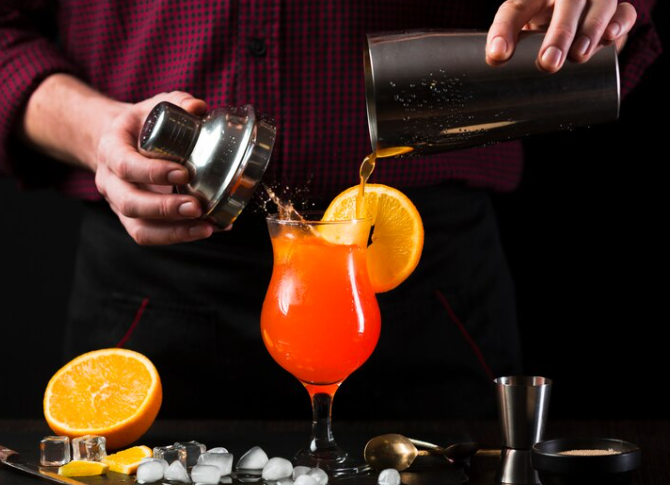
The more interesting local development is not retail, it is bar programs. Low-and-no menus have gotten genuinely good, and the same bartenders building zero-proof drinks are the ones experimenting with cannabinoid formats where the law allows.
Cannabinoid drinks reward the same instincts. Bitterness, acid and a little salt do most of the work covering the vegetal note that used to make these drinks taste like a wellness shot.
The craft is transferable. If you can balance a drink as fussy as Greenpoint’s brioche martini, a canned seltzer over ice with citrus and bitters is not a stretch.
Ask before you order, though. A bar pouring a licensed low-dose hemp beverage and a bar pouring something it bought online are in very different positions, and so are you.
The deadline nobody in the category is ignoring
On November 12, 2025, Congress enacted H.R. 5371, and Section 781 of it rewrites the federal definition of hemp. It moves from a delta-9-only measurement to a total-THC standard and caps finished consumable hemp products at 0.4 mg of total THC per container.
Industry groups estimate that would put most of the current hemp beverage market outside the definition.
The date has already moved once. The Senate passed a 30-day delay 90 to 6 on August 8, the House followed 370 to 48 on September 1, and the President signed it on September 2. For hemp-derived delta-9 drinks, December 11, 2026 is now the date to plan around.
One piece did not move. Cannabinoids the cannabis plant cannot produce on its own lose federal hemp status on November 12, as originally scheduled, which covers most delta-8 and other converted products.
Brands are counting down publicly and campaigning for the bipartisan Lawful Hemp Protection Act, which would replace the blanket approach with a regulatory framework instead.
The bottom line
THC seltzer is a real drink category now, built on real food science, and the best versions taste like something you would actually order.
But where you buy it matters more than almost any other beverage on the shelf. In New York, the safe path is a licensed dispensary or a clearly labeled low-dose product from a licensed retailer.
And whatever you buy, buy it soon enough to know what you are drinking. The rules are going to look different by winter.
Frequently asked questions
How much THC is in a hemp seltzer?
It depends entirely on where it was made and sold. Nationally, cans commonly run from 5 mg to 50 mg per serving. In New York, hemp beverages sold at licensed cannabinoid hemp retailers are capped at 1 mg of total THC per serving, and because a beverage has to be packaged as a single serving, that is also the per-can ceiling.
How fast do THC drinks kick in compared to edibles?
Faster. Nanoemulsified beverages typically take effect in roughly 15 minutes, while a conventional gummy usually takes 30 to 90 minutes because it has to be fully digested first. That speed is the main reason drinks caught on with people used to pacing themselves like they would with alcohol.
Will a THC seltzer show up on a drug test?
Yes. Hemp-derived delta-9 THC is the same molecule as cannabis-derived delta-9 THC, and standard drug screens detect it. That applies across the category, and reputable brands say so plainly in their own FAQs.
Can I mix a THC drink with alcohol?
It is not a good idea. Combining the two can intensify impairment unpredictably, and the delayed onset of THC makes it easy to misjudge. These products are for adults 21 and over, and you should not drive after either one.
