

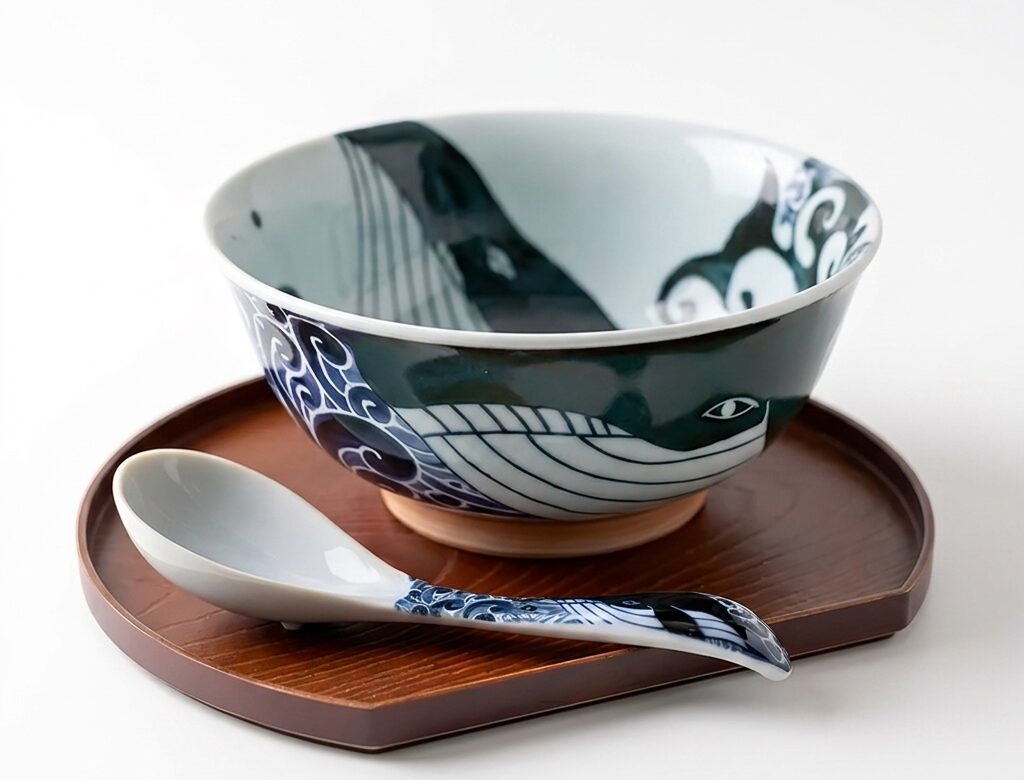
The Bowl Is Half the Ramen
There’s a quiet moment in every good ramen shop, and Brooklyn has quietly filled up with them, that has nothing to do with the broth. It’s the second the bowl lands. A proper ramen bowl arrives with real weight, steep walls, a solid foot, steam trapped under the rim. Before you’ve even tasted anything, you already know the kitchen takes itself seriously. Watch the counters at the borough’s best noodle spots and you’ll see it: the bowls are never an afterthought.
That detail followed me home. After years of eating through Brooklyn’s Japanese kitchens (ramen counters, izakayas, the occasional omakase splurge), I started noticing why the same dishes felt flatter at my own table. The answer, a little embarrassing, was mostly ceramic.
Why the bowl is half the dish ?
Japanese tableware is built on a simple idea: the vessel is part of the recipe. A ramen bowl is deep and thick-walled because the ceramic holds heat. The last spoonful of broth should still be nearly as hot as the first, even if you linger. The steep sides keep noodles submerged instead of drying out across a wide surface. The footed base exists because you’re meant to lift the bowl and drink from it. That’s the correct (and only) way to finish a tonkotsu.
Serve the same broth in a wide pasta bowl and it’s lukewarm in four minutes. I’ve timed it. No amount of twelve-hour stock survives bad geometry.
The same logic runs through the entire Japanese table. Miso soup comes in a small bowl you cup in one hand. Rice gets a chawan, narrow at the base and flaring at the rim, sized so a sensible portion still looks generous. Nothing matches, and that’s deliberate. A traditional Japanese table mixes regions, glazes, and shapes the way a good Brooklyn dinner party mixes people.
What the restaurants use, and where home cooks find it
Ask around and you’ll find most of the serious bowls in this city come from a handful of Japanese pottery regions (Arita and Hasami in the southwest, Mino in the center), places that have been firing tableware for three or four hundred years. The versions you find in American housewares stores get the shape roughly right and the weight entirely wrong.
The good news is that the real thing no longer requires a flight to Tokyo or a restaurant-supply connection. I outfitted my own kitchen with a set of four lidded Japanese ramen bowlsshipped directly from Japan. The lids turned out to be the sleeper feature: they buy you ten quiet minutes between “dinner is ready” and everyone actually sitting down, something anyone cooking for a family will recognize as the most valuable ten minutes of the evening.
I’ve been ordering from Akazuki since before the pandemic. They work with the actual regional makers rather than generic importers, ship from Japan with duties included, and their photography is honest, which matters when you’re buying ceramics you can’t hold first. Start with the bowls. Everything else on the Japanese table makes sense once the bowls are right.
A Brooklyn-appropriate starting point
If you want to test the theory without committing to a full cupboard renovation, try this: make the simplest ramen you know this week (even a doctored instant pack with a soft egg and scallions) and serve it in the deepest, heaviest bowl you own. Then eat the second half of the pot out of your usual dinnerware. The broth is identical. The meal isn’t.
That gap is what the restaurants have been quietly charging us for all along. It’s also the cheapest upgrade a home kitchen can make. No knife skills required, no twelve-hour stock, just better geometry between you and your dinner.
