

You start noticing it in small ways.
A neighbor rinsing out yogurt containers like they’re prepping lab equipment. Someone at the farmers market pulling out a string bag that’s older than your lease. The compost bin in your building—once ignored—suddenly filling up faster than the recycling.
Brooklyn didn’t exactly “discover” zero-waste living. But in 2026, it’s less of a niche habit and more of a quiet baseline. Not perfect. Not rigid. Just… something people are figuring out as they go, usually between a crowded fridge and a tight grocery budget.
And kitchens are where it all shows up.
The Shift Isn’t Loud, but It’s Real
Talk to people long enough, and you’ll hear the same thing: food feels too expensive to waste now. That’s part of it. But there’s also a kind of awareness creeping in—about packaging, about supply chains, about how much of what we buy doesn’t really need to exist in the form it’s sold.
Some of that awareness is coming from unexpected places. The same people who once used digital tools to compare travel deals or browse different VPN server locations for streaming access are now applying that mindset to food—where it comes from, how it’s packaged, and what local alternatives exist. It’s not activism, exactly. More like habit optimization.
And Brooklyn, with its mix of convenience and constraint, forces you to pay attention.
Shopping Looks a Little Different Now
You can still do a full grocery run at a chain store and call it a day. Plenty of people do. But more locals are mixing that routine with smaller, more intentional stops.
Bulk stores, for one. Not the intimidating kind—just neighborhood spots where you bring a container (or forget one and end up buying a jar you didn’t plan on). Dry goods, spices, and sometimes even cleaning supplies. It feels slower. Slightly inconvenient. But also weirdly satisfying.
Farmers’ markets haven’t changed much on the surface, but the way people use them has. Less browsing, more planning. You overhear conversations like, “If I buy this whole bunch, I need to use it by Tuesday,” which wasn’t exactly standard a few years ago.
And then there are bodegas—still doing what they’ve always done, but now part of a different rhythm. Quick top-ups instead of full hauls. A lemon here, a single onion there. It’s not officially “zero-waste,” but it often ends up being less wasteful than overbuying.
There’s no one system. That’s kind of the point.
The Fridge Tells the Truth
You can talk all day about sustainable shopping, but the fridge is where things either work… or don’t.
Brooklyn kitchens aren’t known for their size. You learn quickly what fits and what doesn’t. And that limitation has pushed people into some surprisingly effective habits.
Glass jars everywhere, for starters. Not in a Pinterest way—just reused pasta sauce jars holding everything from chopped herbs to leftover rice. They stack better. You can see what’s inside. And maybe most importantly, they guilt you into actually using what you stored.
Freezing has gotten more strategic, too. Not just “throw it in and hope for the best,” but labeled, portioned, sometimes even planned around future meals. Half a loaf of bread? Freeze it. Herbs starting to wilt? Chop, oil, freezer tray. It’s not glamorous, but it works.
There’s also a subtle shift in how people cook. More “use what’s already here” meals. Less recipe-following, more improvising. That last bit of spinach, a leftover potato, half a can of beans—it turns into dinner, not compost.
Well… ideally.
When Food Doesn’t Make It
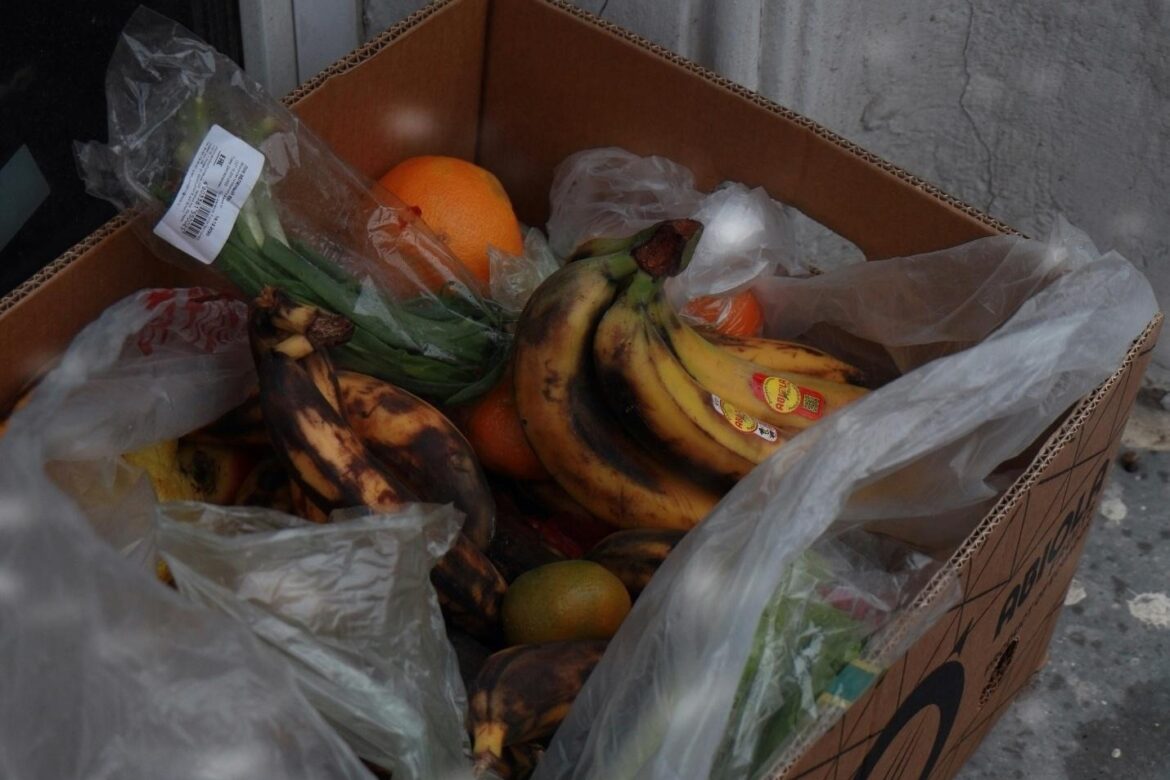
Even the most careful kitchen has scraps. Peels, stems, things you thought you’d use but didn’t.
This is where composting has finally started to feel normal in New York, or at least less confusing than it used to be. The city’s programs have expanded, but the real change is behavioral. People are just… doing it more.
If you’re not sure what the current rules look like, the official NYC composting guidelines are actually pretty straightforward now, and worth a quick read.
The tricky part isn’t the rules—it’s the logistics. Where do you keep the bin? How often do you empty it? What if your building doesn’t participate?
There’s no universal answer, but a few patterns have emerged:
- Small countertop bins with lids (not always odor-proof, despite claims)
- Freezer compost bags (surprisingly effective, if you have space)
- Community drop-off points for buildings without collection
None of it is perfect. Sometimes you forget. Sometimes the bin smells. Sometimes you throw something in the trash because you’re in a hurry. It happens.
But over time, it adds up.
The Unexpected Payoff
People don’t usually stick with zero-waste habits out of pure discipline. Something has to feel better, easier, or at least worth the effort.
And in Brooklyn kitchens, the payoff tends to show up in a few ways.
Food lasts longer when you’re paying attention to it. That’s the simplest one. You waste less because you see what you have and actually use it.
Meals get more interesting, too. Not in a chef-y way, but in a “this wasn’t planned, and it turned out good” way. There’s a kind of creativity that comes from constraints, even if it’s accidental.
And then there’s the cost side. It’s not always cheaper upfront—bulk stores and local markets can surprise you—but over time, wasting less tends to balance things out.
You can see pieces of this shift in how people approach food more broadly in Brooklyn. Dining out isn’t just casual anymore—it’s often planned, budgeted, and sometimes even treated like a mini trip. Our recent piece on how much locals are spending chasing must-try meals hints at that mindset: people are thinking more deliberately about when and how they spend on food, whether that’s a reservation or a week of home cooking. It’s all part of the same equation.
It connects the dots in a way that makes the whole zero-waste thing feel less like a niche lifestyle and more like part of a larger shift.
It’s Not About Getting It “Right”
There’s a version of zero-waste living that feels rigid. Rules, checklists, and a sense that you’re either doing it correctly or not at all.
That version doesn’t really survive in Brooklyn.
Here, it’s messier. You bring your own bags most of the time, but forget them occasionally. You compost, except when you don’t. You try a bulk store, then go back to the supermarket when you’re tired.
And somehow, that inconsistent version still makes a difference.
The kitchen ends up reflecting that. A mix of habits, some intentional, some just convenient. A system that isn’t really a system, but works well enough.
Which might be the most Brooklyn outcome possible.
Not perfect. Just… better than it was.
