

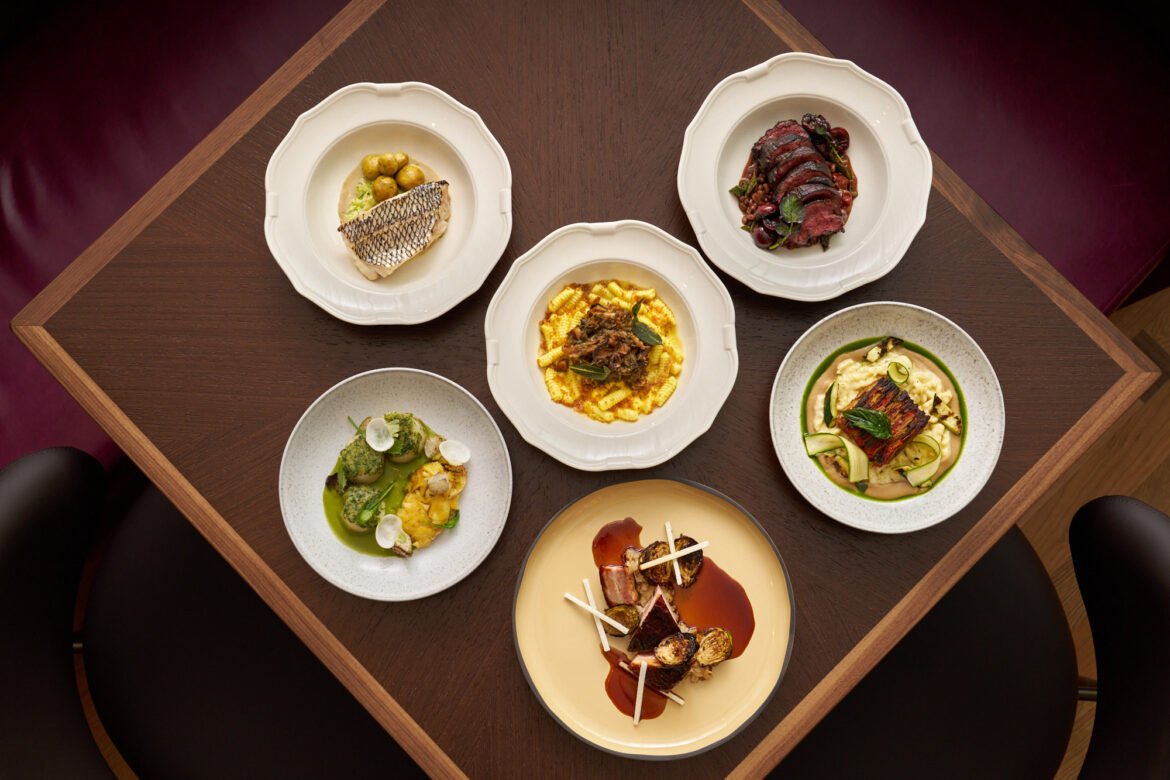
In Hudson Yards, Saverne offers the glow of an open fire, the aroma of wood smoke, and an Alsatian approach to French cooking. The modern wood-fired brasserie, which opened in 2026, is the latest from acclaimed chef Gabriel Kreuther’s culinary vision.
Named for Saverne, the historic town in France’s Alsace region where Kreuther’s culinary roots run deep, the restaurant brings the flavors and traditions of the region into a thoroughly contemporary New York setting. Here, classic French technique meets wood fire cooking, with seasonal ingredients transformed by the smokiness of applewood, oak, and cherry logs.
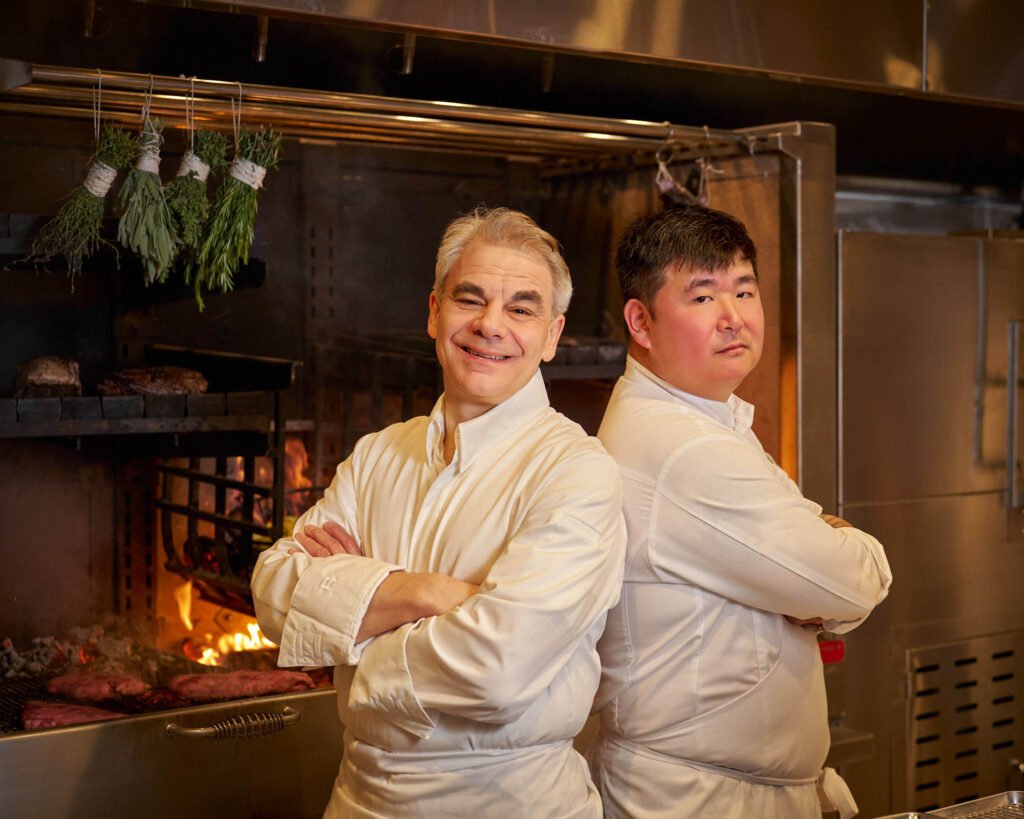
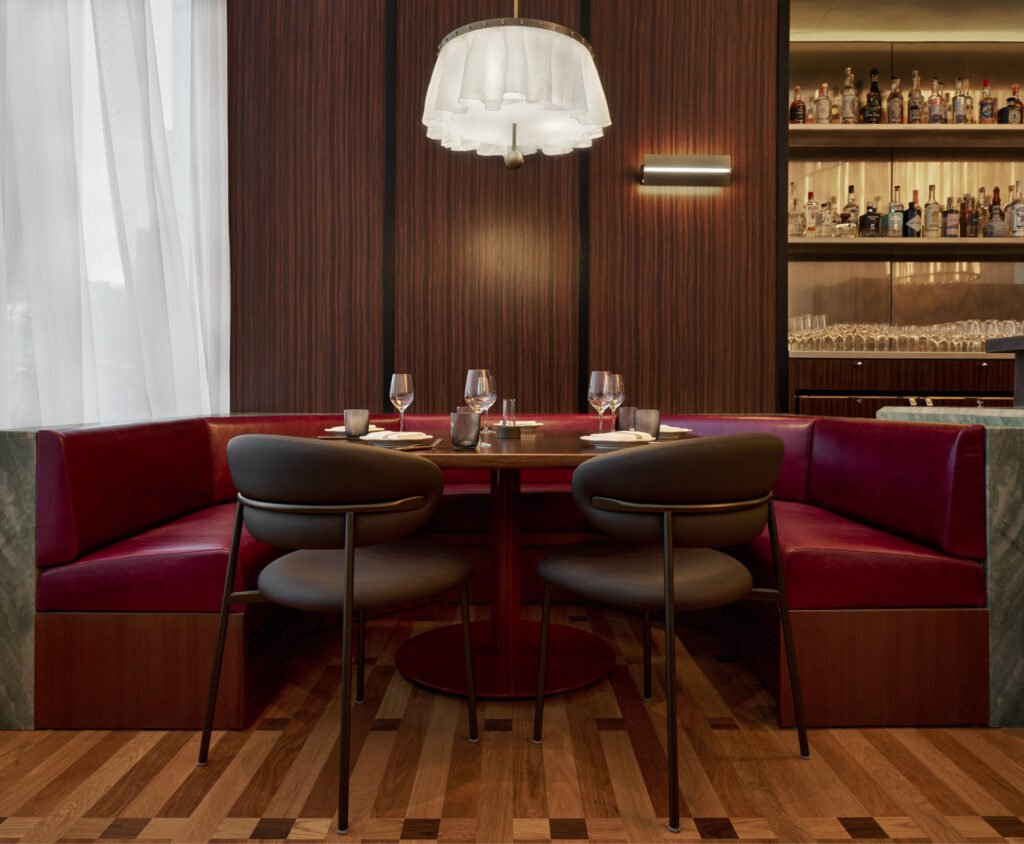
The fire is the heart of the experience. In the east dining room, guests can sit near the live-fire grill and watch the kitchen at work, turning the act of cooking into part of the evening’s entertainment. The 5,000-square-foot restaurant balances the theatrics of an open kitchen with an atmosphere that feels polished but inviting, trading the formality of fine dining for what Kreuther describes as a more approachable experience.
The cooking is rooted in Alsatian tradition. Begin with something like the boudin noir croquettes or the truffled liverwurst, served with toasted country bread and cornichons, or the aged bluefin tuna with black garlic anchoiade offering a more delicate tasting experience.
The wood fire takes center stage with the entrées. A half-roasted chicken with chicories and pommes purée is classic comfort food elevated by careful technique, while the Loup De Mer is grilled skin-side down, and the Black sea bass, cooked en papillote, demonstrates the restaurant’s ability to move between rustic fire cooking and more refined French preparations.
Then there are the tarte flambées, perhaps one of the most charming ways to experience Saverne’s Alsatian influence. The traditional version is featured with mushrooms and house-cured gravlax with horseradish. And for a pasta course with a decidedly luxurious twist, beet spaghetti is served with oysters, salmon roe, smoked sturgeon, and caviar. Even the more casual offerings have personality. During the early evening, pretzels with horseradish dip can be enjoyed at the bar, which is an nod to the food traditions of Alsace that pairs naturally with a beer or a glass of wine. The wine program follows a similarly welcoming philosophy, emphasizing discovery and smaller producers rather than intimidating bottles and prices.
Dessert brings another dimension to the experience, with pastry chef Nicolas Chevrier overseeing a selection that includes crème brûlée, île flottante, chocolate mousse and a particularly evocative Mont Blanc with chestnut ice cream, cassis sorbet, meringue and candied chestnuts.
For Kreuther, Saverne represents a return to fundamentals: good ingredients, accomplished technique, hospitality and the primal pleasure of cooking over fire. His résumé is formidable; two Michelin stars and decades spent in some of Europe and New York’s most respected kitchens, but Saverne is deliberately less formal. The result is a restaurant where serious cooking doesn’t require a serious attitude.
It is that balance that makes Saverne compelling. There is sophistication without stiffness, heritage without nostalgia and spectacle without excess. Saverne offers something refreshingly elemental: gather around the fire, order something delicious and let the cooking speak for itself.
