

A poker dinner break is not a pause for random snacks. It is the moment when the room either gets sharper or heavier. People have been sitting, reading faces, handling cards, reaching for drinks, and watching the same table for hours. Food has to reset the room for everyone without coating fingers, crowding the surface, or making everyone feel ready for a nap.
A recent Frontiers in Nutrition paper on meal-specific dietary patterns and memory is a useful reminder that meals are not interchangeable blocks of fuel. What people eat, and when they eat it, can sit differently with attention. That matters at a card table because dinner is not only about appetite. It is about timing, comfort, and returning to play without feeling interrupted.
Plan the Meal Around the Game
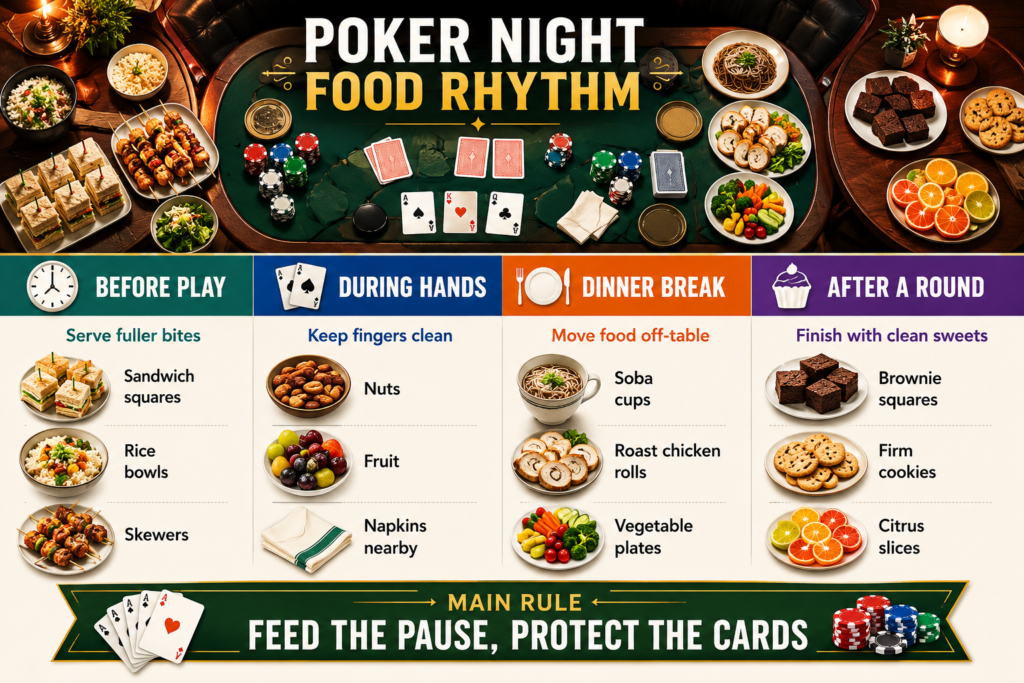
Image source: Article-specific visual created by the author
The first food decision is not whether you want to serve chicken or sandwiches. It is what the rhythm of the game should look like. If the night is planned to be loose and social, food can arrive in waves. If the table is following a tournament-style structure, dinner works better when it lands during a true break.
If you want to see how different poker structures affect pace, this online poker room gives a clear reference point, with cash games, Zone Poker, Sit & Go’s, multi-table tournaments, Mystery Knockouts, and Incognito Poker grouped inside one poker section. A home host does not need to copy any format. The useful lesson is that formats create different eating windows. A faster table leaves little room for bowls, sauces, or two-handed food. A longer tournament arc gives people a reason to step away, eat something more complete, wash their hands, and come back ready for the next stretch. When dinner follows those natural pauses, the food feels like part of the night, rather than a competing event.
That pacing comes through in Xuan Liu’s poker-summer recap. She jumps into a tournament, reaches dinner break with a strong stack, returns to later-stage play, and then moves into a cash-game setting after the tournament ends. The useful detail is the movement of the day. There is a game, a break, and then some more focused table time. That is exactly how hosts should think about food.
Serve Something Real, But Not Too Heavy
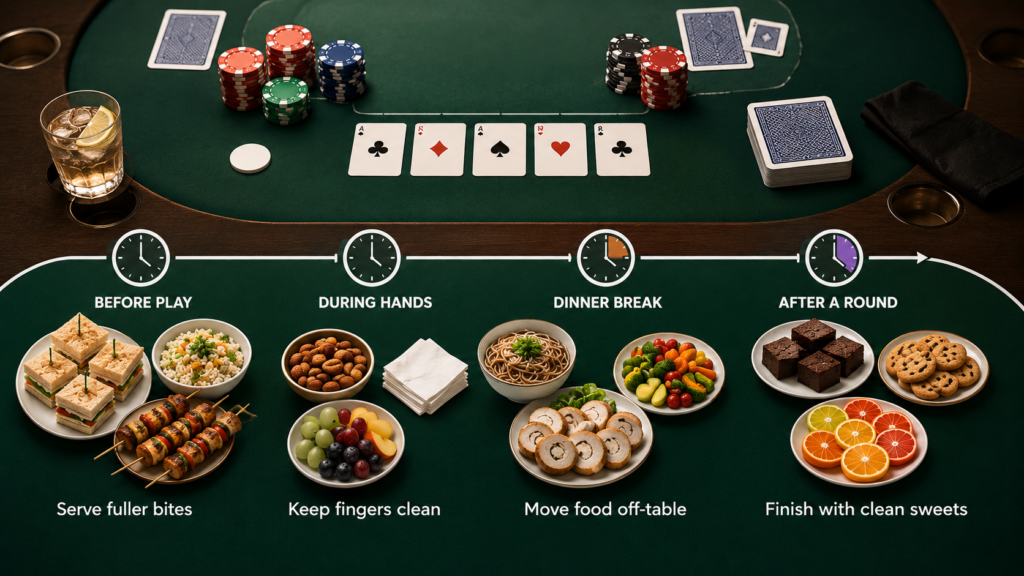
The best poker dinner break food feels like a meal without behaving like a feast. It should satisfy people quickly, leave the table clean, and avoid the slow heaviness that makes every decision feel delayed. A tray of sliced roast chicken sandwiches, mushroom and fontina focaccia squares, grilled shrimp skewers, sesame noodles in small cups, or rice bowls served away from the cards can do the job. The common thread is control. Guests can eat a full portion without balancing a plate over the table or dragging sauce across the room.
Temperature helps more than most hosts expect. Hot food is generous, but it becomes a clock. People rush because the dish is cooling, or they linger because the kitchen has become the center of attention. Room-temperature food gives the evening more flexibility. Frittata wedges, marinated beans, sturdy salads, roast vegetables, soft rolls, and sliced fruit can sit through a short break without punishing anyone who takes 10 extra minutes.
Texture is also important. Crisp is fine when it stays crisp. Flaky is trouble. Powdered sugar, brittle chips, crumbly bread, and overstuffed tacos ask too much from a table full of cards. If a dish needs two napkins before the first bite, save it for another night.
Keep the Main Table Clean
Dinner should have its own landing zone. A sideboard, kitchen counter, or cleared shelf near the table gives people a reason to stand up, stretch, eat, and reset. That small bit of distance protects the game and makes the meal feel more intentional. It also prevents the saddest poker-night scene: beautiful food squeezed between drinks, chips, napkins, phones, and elbows.
Sauces belong in small bowls with spoons, not in loose portions traveling around the table. A herbed yogurt, salsa verde, chili crisp, or lemony aioli can make simple food taste finished, but the serving style has to control the mess. The same goes for drinks. Low glasses, coasters, and a separate refill area keep the playing surface calmer.
If the table is small, simplify the meal before you begin. Serve one sturdy main, one bright side, and one clean sweet. That gives people enough choice without creating a buffet that steals the room.
Finish With a Clean Last Bite
Dessert is best after a round, when hands are free, and nobody is trying to protect the deck from sugar. Firm cookies, brownie squares, chocolate-dipped strawberries, small custards, or citrus slices give the night a clear finish without turning fingers sticky. The last bite should feel sociable and easy.
The real upgrade is not a more elaborate spread. It is food that respects the shape of the night. A poker dinner break needs enough substance to settle the room, enough restraint to protect the cards, and enough rhythm to send people back to the table comfortable, which is close to what a PLOS ONE study found when it compared a plain meal with a more relaxed lunch setting and attention.
