

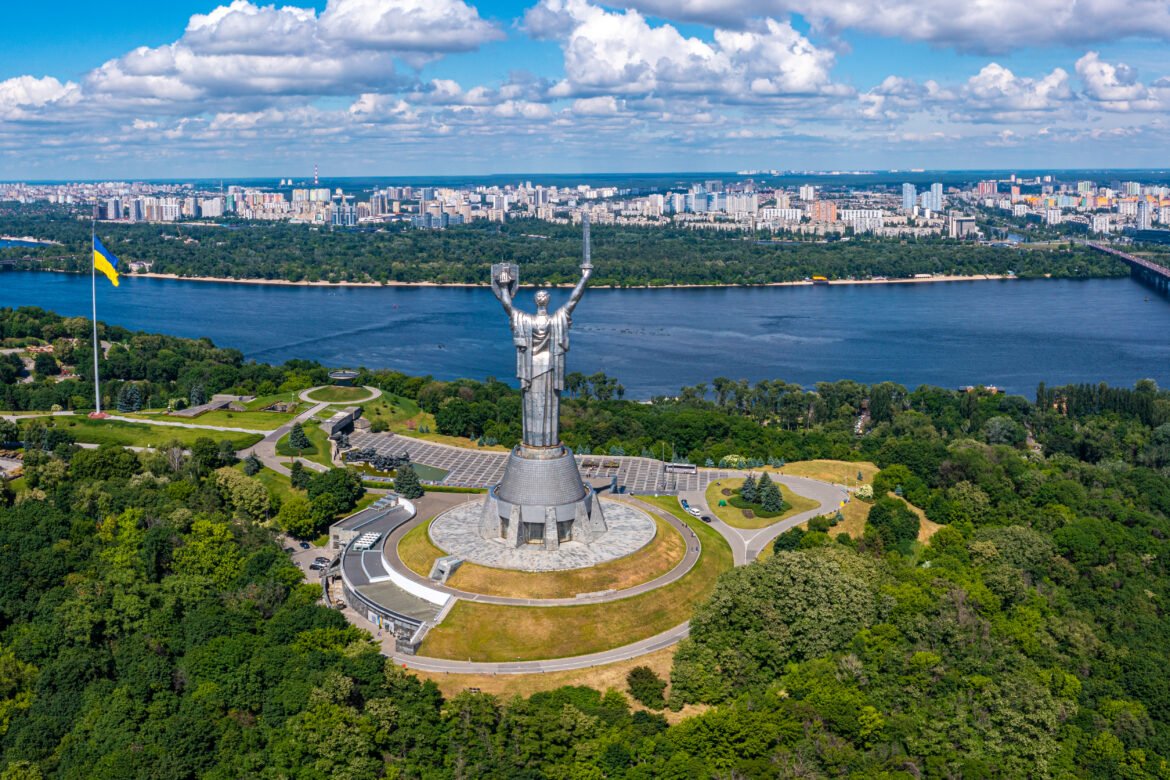
There’s a moment in Kyiv that you will know when you go – when you’re sitting at a low table in some sun-drenched courtyard somewhere in the old city, and a plate of varenyky lands in front of you. Soft, hand-folded, served with sour cream and a little pile of caramelized onions. The kind of thing someone’s grandmother made. And you think: wait, this is exactly the food I’ve been eating versions of my whole life in Brooklyn, except it’s the real thing, in the place it came from.
That connection isn’t a coincidence. Brighton Beach has been feeding New Yorkers Ukrainian and Eastern European food for decades. But the food scene that inspired all of it – chaotic, creative, fiercely proud of its roots and absolutely unwilling to be defined by them – is thriving in a city that most Americans have never considered putting on their travel list.
Kyiv is worth the trip. And if you’re the kind of person who plans a trip around where to eat, it will surprise you.
A quick but important note before we get into the food: Ukraine has been under full-scale Russian invasion since February 2022, and Kyiv, while very much open and functioning, is a wartime capital. Air raid alerts are part of daily life, and travel requires real preparation. Check your government’s travel advisories and read up carefully on the current situation before you book anything.
A City That Takes Its Food Seriously
Kyiv food travel has been on the radar of adventurous eaters for years, long before the war, chefs here were doing something interesting. Taking the canon of Ukrainian cuisine (borscht, salo, slow-braised meats, pickles and preserves) and arranging it in ways that felt as contemporary as anything coming out of Copenhagen or the more experimental corners of Brooklyn.
What makes the current scene so compelling is that urgency has sharpened it. Restaurants that opened after 2022 are making a cultural argument with every dish. Modern Ukrainian cuisine restaurants like Kanapa on Andriyivsky Uzviz – a cobblestoned descent through one of the city’s oldest and most cinematic streets – have built menus around local foragers, small Ukrainian producers, and the kind of unapologetic regionalism that resonates if you’ve spent any time watching Brooklyn chefs dig into their own immigrant food heritage.
What You’ll Actually Want to Eat
If you’re going in without a plan, here’s where to start:
Varenyky – Ukraine’s answer to the dumpling. Potato and cheese, sauerkraut and mushroom, cherry in the sweet version. Find them at a canteen-style spot like Puzata Hata for the no-frills version, or at a more modern kitchen for the elevated take.
Borscht – The real thing is nothing like the jar in the back of your fridge. Deep, earthy, usually served with a fat slice of dark bread and a dollop of smetana (sour cream). It tastes like a whole season compressed into a bowl.
Salo – Cured pork fat. Yes. If you grew up eating anything from an Eastern European deli in Brooklyn, this is the ancestral version. It appears on bread, on charcuterie boards, in restaurants where it’s served as a point of pride.
Deruny – potato pancakes, crispy outside, soft inside, served with sour cream. The kind of thing you order as a side and end up making your whole meal. Every canteen in the city does them, and the best versions have a slightly lacy edge from the pan.
Pampushky – soft garlic bread rolls, traditionally served alongside borscht. Small, pillowy, brushed with garlic and dill. Easy to underestimate, impossible to stop eating.
Of all of these, borscht is the one that arguably carries the most weight. UNESCO has officially recognised the culture of cooking borscht as Ukrainian intangible cultural heritage – an acknowledgment that food and national identity are inseparable here. Every family has a version, every region has its own spin, and every restaurant in Kyiv treats it as a point of pride. Ordering it is less like choosing from a menu and more like asking someone to tell you something about themselves.
The Drinks Situation Is Also Worth Knowing About
Kyiv’s specialty coffee scene is exceptional and catches people off guard. The city has a dense, passionate network of independent cafés – small roasters, places doing natural process beans, baristas who take it as seriously as the best spots in Williamsburg. Flat whites, V60, cold brew. Whatever you want.
Natural wine bars in Kyiv have been multiplying, and the crowd is exactly what you’d expect – young, creative, opinionated about producers in a familiar way if you’ve spent time at Franks Wine Bar, Four Horsemen, or any of the low-intervention-wine spots. Ukrainian wine is worth paying attention to: small family wineries in the Odesa region and Zakarpattia in the west of the country are producing interesting bottles that rarely make it outside Ukraine.
Ukrainian craft beer is also really good, and a few bars carry local spirits that make for interesting conversation. Varvar has become one of the standout craft breweries in the country, known for experimental and boundary-pushing beers, and their bar in Kyiv is a good reference point for the local craft scene.
Overall, Kyiv’s bar scene tends toward the intimate and informal – small rooms, good drinks. Dive bars serve excellent cocktails, and underground spaces feel like someone’s well-stocked living room.
The Neighborhoods That Eat Best
- Podil is the Kyiv equivalent of what Williamsburg used to be: a working waterfront neighborhood that became a creative hub, now layered with markets, independent restaurants, and galleries.
- Andriyivsky Uzviz is worth an afternoon even if you’re not eating – the steep, winding street connects the old upper city to Podil, and it’s lined with architecture, murals, and restaurants that understand their setting.
- The city center has its own appeal: traditional Ukrainian food markets are there alongside newer restaurants, and the Bessarabsky Market, a gorgeous old covered marketplace, is one of those places where you realize how much food can tell you about a city’s history.
Why It’s Worth It
Brooklyn has always understood that the best food comes from communities with something to say – immigration, reinvention, neighborhood pride, old-school technique meeting new-school energy. Kyiv has all of that, right now, in a form that’s as vivid and alive as anything happening on this side of the Atlantic.
Traveling to Eastern Europe for food used to mean a narrow list of cities. If you’re ready to visit Kyiv, it deserves a serious spot on that list. Not as a war tourism destination or a novelty, but as a place with a great food culture and coffee scene, along with the kind of dumpling that reminds you that you’ve been eating imperfect versions your whole life.
