

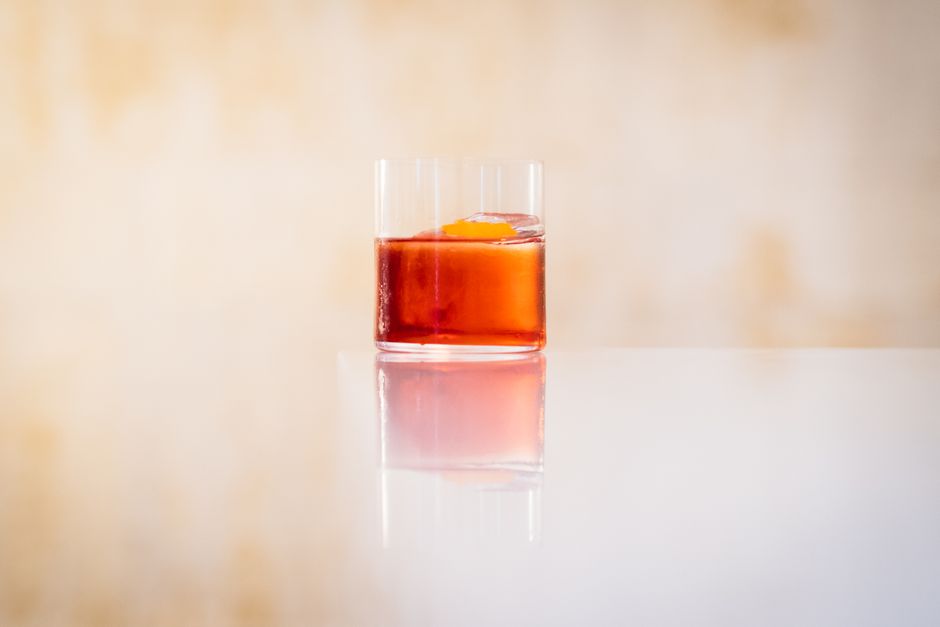
The Negroni: The World’s Most Beloved Bittersweet Cocktail
The negroni is one of the simplest — and most satisfying — cocktails ever created. Three ingredients. Equal parts. One unforgettable drink.
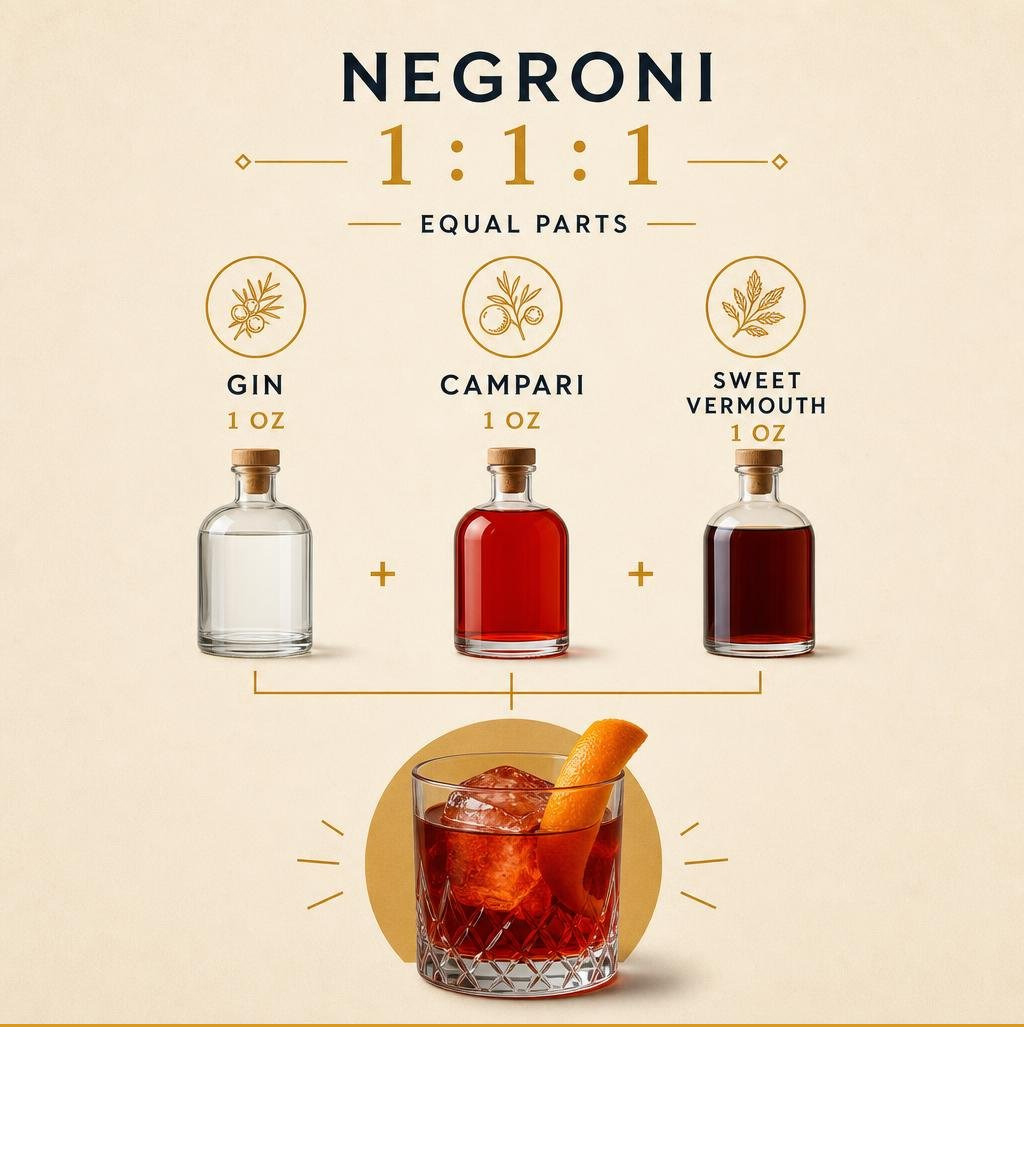
Quick answer: A classic Negroni is made with:
- 1 oz gin
- 1 oz Campari
- 1 oz sweet red vermouth
Stir over ice, strain into a rocks glass, and garnish with an orange peel. That’s it.
Few drinks have stayed this relevant for this long. The Negroni held the No. 1 spot on Drinks International’s list of the world’s 50 most popular cocktails for two consecutive years. It’s bitter, it’s bold, and it’s the kind of drink that rewards you for trusting simplicity.
There’s a reason bartenders love it. There’s a reason home drinkers love it. And as the famous Orson Welles put it in 1947 after discovering the drink in Rome: “The bitters are excellent for your liver, the gin is bad for you. They balance each other.”
That tension — bitter against sweet, strong against aromatic — is exactly what makes this cocktail so hard to put down.
I’m Christopher Pape, and in this guide I’ll walk you through everything you need to know to make a perfect Negroni at home.
The History and Origin of the Negroni
Like many of the world’s greatest culinary creations, the origin of the negroni is wrapped in a bit of mystery, a dash of romanticism, and plenty of friendly debate. The most widely accepted legend takes us back to the year 1919 in Florence, Italy.
According to popular lore, a colorful nobleman named Count Camillo Negroni walked into Caffè Casoni. The Count, who had reportedly spent time working as a rodeo clown in the American Wild West, had developed a taste for strong spirits. He asked his friend and bartender, Fosco Scarselli, to strengthen his favorite cocktail, the Americano (a simple mix of Campari, sweet vermouth, and club soda). Scarselli obligingly swapped out the club soda for a healthy splash of gin. To visually distinguish the Count’s new, stiffer beverage from a standard Americano, Scarselli garnished it with an orange slice instead of the traditional lemon peel. Just like that, a legend was born.
However, cocktail historians love a good paper trail, and the official history of the Negroni is not entirely open-and-shut. While the Florence story is widely celebrated, some researchers point out that the earliest printed equal-parts recipe actually appeared in a French cocktail book in 1929 under the name “Campari Mixte.” This early French variation was shaken and served with a lemon zest rather than built over ice with an orange slice. Furthermore, some believe the 1919 origin year might have been confused with an Italian red amaro called “Antico Negroni 1919,” produced by Guglielmo Negroni’s distillery.
Whether the drink was born from a thirsty Italian count in Florence or emerged from the creative cocktail culture of early 20th-century Western Europe, its legacy is undeniable. To read more about the historical timeline and the debates surrounding its lineage, you can explore the detailed Negroni archive.
Key Ingredients and the Classic Negroni Recipe
Part of what makes the negroni a masterclass in mixology is its foolproof blueprint. It is a highly balanced, equal-parts cocktail that relies on three distinct pillars. If you change even one of these core components, the drink quickly transforms into something else entirely.
To mix a true classic, you will need:
- London Dry Gin (1 oz): The gin provides the structural backbone of the drink. A classic London Dry gin brings clean, botanical notes of juniper, coriander, and citrus peel that cut through the heavier ingredients.
- Campari (1 oz): As confirmed by the International Bartenders Association (IBA), Campari is the indispensable “red heart” of every traditional Negroni. This bright crimson Italian liqueur delivers the signature bitter orange, herbal, and woody notes that define the drink.
- Sweet Red Vermouth (1 oz): Vermouth is a fortified, aromatized wine that adds crucial sweetness, body, and herbal complexity. Because vermouth is wine-based, it balances the aggressive bitterness of the Campari and the dry heat of the gin.
For the ultimate guide on sourcing, measurements, and ratios, you can check out the How to Make a Negroni: Ingredients and Recipe | Campari page, or review the step-by-step instructions on the Classic Negroni Cocktail Recipe hub. If you are looking for a highly curated, bartender-approved perspective on ingredient pairings, we recommend reading the Classic Negroni Recipe | VinePair guide.
Here in New York, we are lucky to have a thriving local spirits scene. While traditionalists often stick to classic Italian imports, we love experimenting with regional craft ingredients. For example, local craft vermouths can introduce fascinating, small-batch botanicals to your glass. You can read about some of these unique regional styles in our feature, Edible Glimpses: Uncouth Vermouth.
Mastering the Stirred Negroni Technique
While the classic recipe can be built directly in a rocks glass over ice, the preferred method among professional bartenders is to stir the cocktail in a mixing glass first. Stirring gives you precise control over dilution and chilling, ensuring a silky texture without introducing unwanted air bubbles.
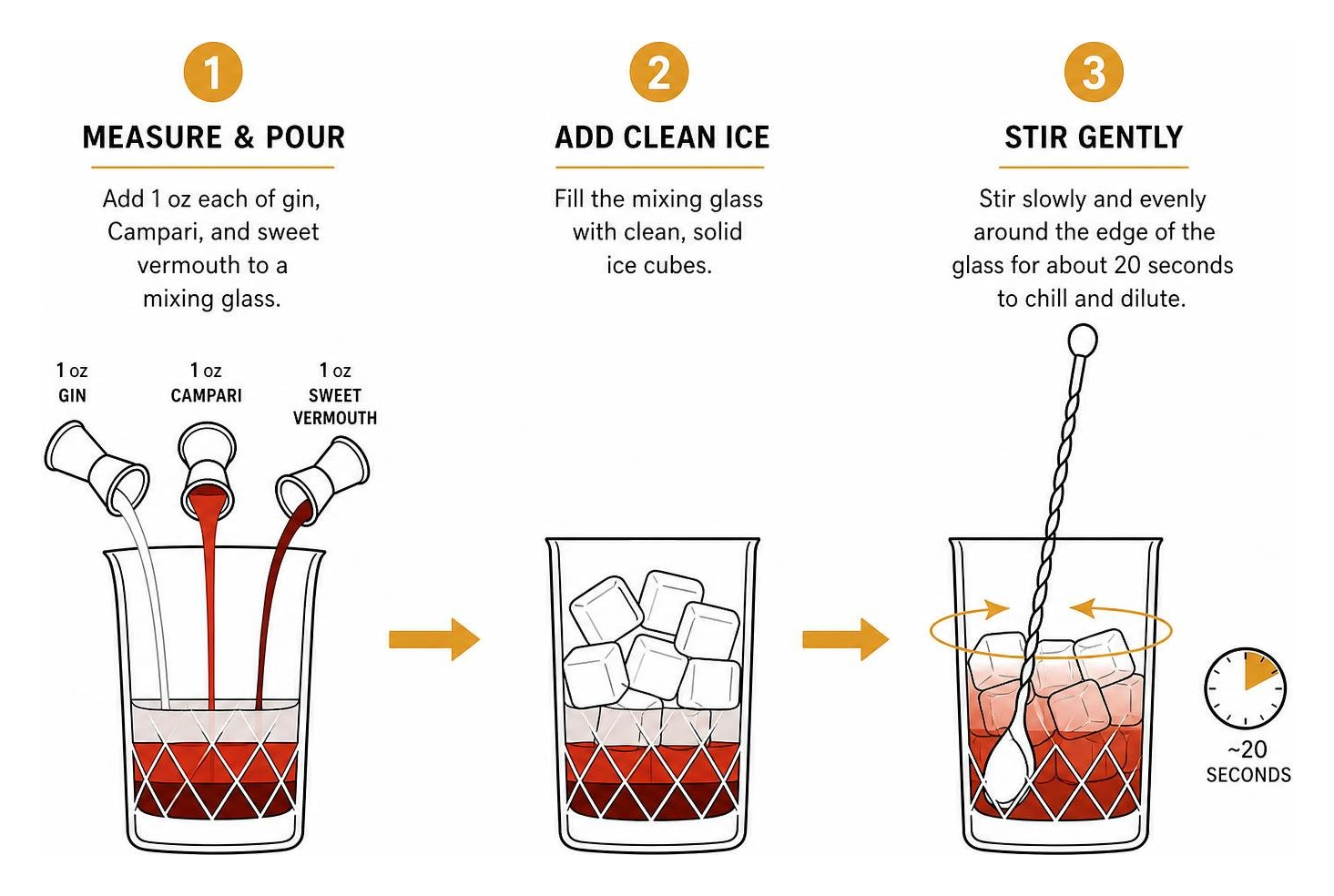
To stir your drink like a pro, follow this sequence:
- Measure and Pour: Using a jigger, measure exactly 1 ounce of dry gin, 1 ounce of Campari, and 1 ounce of sweet vermouth into a mixing glass.
- Add Clean Ice: Fill the mixing glass with clean, solid ice cubes. Avoid crushed ice, which melts too quickly and will water down your drink.
- Stir Gently: Insert a bar spoon and stir slowly and evenly around the edge of the glass for about 20 seconds. This chills the liquid to perfection while achieving the ideal dilution.
- Strain: Strain the mixture into a chilled rocks glass or double old-fashioned glass over one large, clear ice cube. A single large cube melts much slower than smaller pieces of ice, keeping your drink cold without diluting the complex flavors.
- Express and Garnish: Using a Y-peeler, cut a thin strip of fresh orange peel. Hold it over the glass and twist it gently to express the aromatic citrus oils over the surface of the drink. Rub the peel along the rim of the glass, then drop it in.
For a visual breakdown of these essential bar skills, check out our guide on How to Shake, Muddle, Stir in Photos, or join us in person to hone your mixology craft by checking out Learn to Shake, Muddle, and Stir Like a Pro at Our Next How-To Night.
Common Mistakes to Avoid When Mixing a Negroni
Because the negroni is incredibly simple to assemble, it is often called a “foolproof” drink. However, a few minor missteps can easily ruin an otherwise perfect cocktail. Keep these rules in mind:
- The Dusty Vermouth Trap: Vermouth is a fortified wine, not a distilled spirit. This means it oxidizes and degrades quickly once opened. If you are using a dusty bottle of vermouth that has been sitting unrefrigerated in your cabinet for months, your drink will taste flat and sour. Always store your opened vermouth in the refrigerator and use it within four weeks.
- Never Shake a Negroni: Shaking introduces tiny air bubbles and chips of ice, resulting in a cloudy, over-diluted drink. A proper Negroni should be crystal clear, rich, and velvety. Always stir.
- Don’t Free-Pour: Because this drink relies on a precise 1:1:1 balance, free-pouring can easily throw off the equilibrium. Use a jigger to measure your ingredients exactly.
- Avoid Lemon or Lime Garnishes: The bright, bitter orange notes of Campari are designed to pair specifically with orange. Using sour citrus like lemon or lime is considered a culinary crime in the cocktail world. Stick to a fresh orange peel or a clean orange slice.
Popular Variations and Similar Bitter Cocktails
Once you have mastered the classic, the three-ingredient blueprint serves as a launchpad for endless experimentation. By swapping out just one ingredient, you can explore an entire family of bittersweet cocktails.
Some of the most popular variations include:
- Negroni Sbagliato: Meaning “mistaken” or “broken” Negroni in Italian, this lighter variation was created when a busy bartender accidentally grabbed a bottle of Prosecco instead of gin. The result is a bubbly, effervescent, and lower-ABV drink that is perfect for brunch or warm summer afternoons.
- The Boulevardier: By swapping out the gin for rich bourbon or rye whiskey, you get a warmer, heavier drink. The caramel and vanilla notes of the whiskey pair beautifully with the bitter Campari and sweet vermouth.
- The Americano: The historical precursor to the Negroni. It features equal parts Campari and sweet vermouth, topped with chilled club soda and garnished with a lemon twist.
- White Negroni: A modern twist that replaces Campari with French Suze (a bitter gentian liqueur) and sweet vermouth with Lillet Blanc, resulting in a floral, pale-yellow cocktail.
- Kingston Negroni: A tropical, ester-heavy variation that swaps the gin for a robust, funky Jamaican dark rum.
If you are looking to explore user-submitted ratios and modern community riffs, you can browse the Negroni variations on Kindred Cocktails database. For a taste of how New York’s premier cocktail establishments handle these classic variations, read our review of a Brooklyn institution: A Look at the Clover Club: The Cocktail Revolution Bellies Up at the Neighborhood Bar.
You can even find refreshing, ready-to-drink options that play on these bittersweet, botanical profiles close to home. For a sparkling, canned alternative that is perfect for a picnic in Prospect Park, check out our feature on the Interboro Canned Gin and Tonic.
Here is a quick comparison of the three most famous bittersweet cousins:
| Cocktail | Base Spirit | Bitter Agent | Modifier | Presentation |
|---|---|---|---|---|
| Negroni | Gin (1 oz) | Campari (1 oz) | Sweet Vermouth (1 oz) | Rocks, Orange Twist |
| Boulevardier | Bourbon/Rye (1.25 oz) | Campari (1 oz) | Sweet Vermouth (1 oz) | Up or Rocks, Orange Twist |
| Americano | Club Soda (Top-off) | Campari (1 oz) | Sweet Vermouth (1 oz) | Tall Glass, Lemon Twist |
Frequently Asked Questions About the Negroni
What does a Negroni taste like?
A negroni has a bold, unapologetically bittersweet flavor profile. On your first sip, you will experience the bright, botanical notes of juniper and citrus from the gin. This is immediately followed by the rich, herbal sweetness of the red vermouth, which finally gives way to the lingering, woody bitterness of Campari. It is a complex, savory drink that stimulates the palate, making it the ultimate pre-dinner apéritif.
Why is the Negroni so popular today?
Its modern popularity is driven by its beautiful simplicity, its striking crimson color (which makes it a social media favorite), and the rise of global events like Negroni Week. In 2026, the drink remains a staple of global cocktail culture because it is incredibly easy for home bartenders to replicate without expensive equipment, while still offering a sophisticated, mature flavor profile.
Can you make a Negroni ahead of time?
Absolutely. Because the cocktail contains no juices, dairy, or perishable mixers, it is incredibly stable and perfect for batching. You can combine equal parts of gin, Campari, and sweet vermouth in an airtight glass bottle and store it in your refrigerator or freezer. Because of the high alcohol content, a batched Negroni will not freeze solid in a standard home freezer; instead, it will become incredibly cold and velvety, ready to pour over ice at a moment’s notice.
Conclusion
At Edible Brooklyn, we believe that the best drinks are the ones that connect us to local culinary culture, high-quality ingredients, and the shared joy of a well-crafted glass. Whether you are mixing up a classic equal-parts recipe in your own kitchen, hosting a festive gathering with a freezer-batched bottle, or ordering a creative variation at a cozy neighborhood bar in Brooklyn or Manhattan, the negroni remains a timeless symbol of hospitality.
Now that you know how to make this iconic cocktail the right way, it’s time to start mixing. For more curated recommendations on the best local spirits, neighborhood bars, and culinary hotspots across New York, explore our comprehensive Edible Brooklyn Guides. Cheers!
