

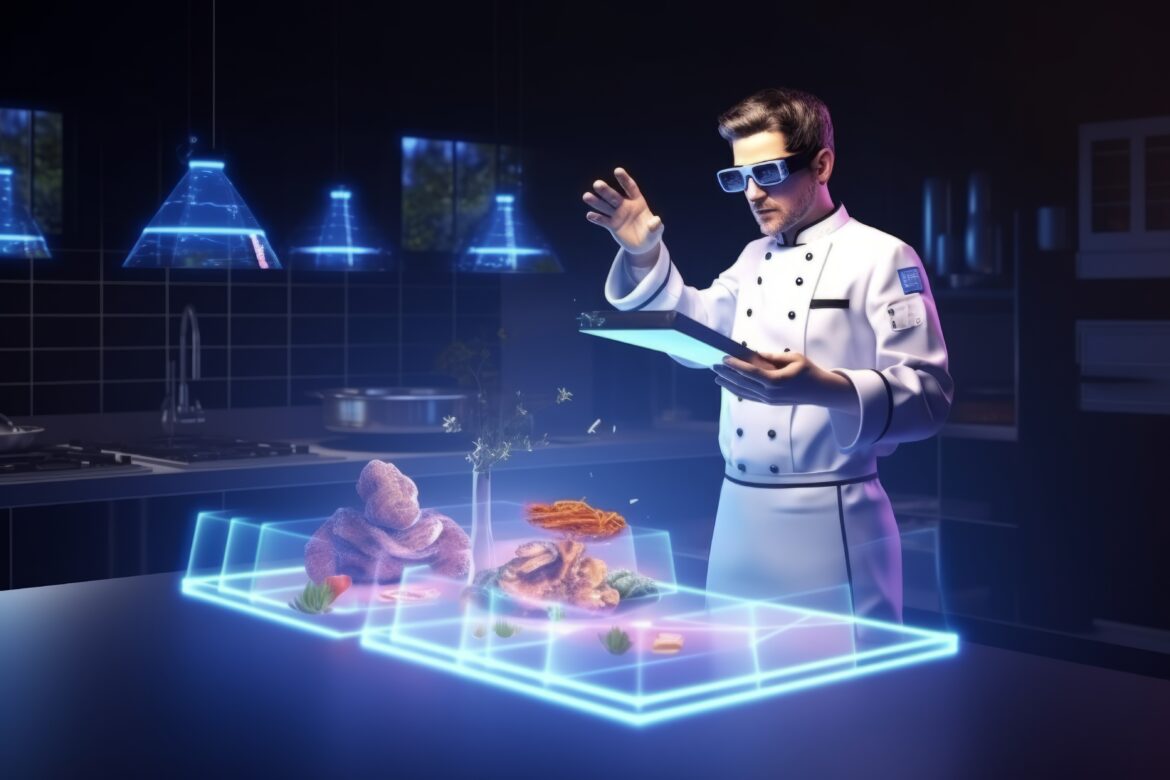
Today’s home kitchen doesn’t look or feel like it did a generation ago. The days of heavy grease-stained binders as our only culinary secrets, of hovering anxiously over a hot oven door as we waited for dinner to be done, they are gone. Today, microchips, high-speed internet and smart engineering are quietly rewriting our relationship with food.
We’re in the midst of a massive shift in the way we think about our food. Technology has been integrated into every step of the culinary process, creating a kitchen that is more accessible, collaborative and precise for home cooks of all skill levels.
Smart Kitchen: Precision Cooking
The biggest change to the home kitchen is the elimination of guesswork. Classic recipes depended on vague time frames for years, telling you to bake something for forty-five minutes or until you see a generic golden brown color. Today, real data is replacing those old approximations with a new generation of connected countertop appliances.
Take the rise of specialized countertop gear like the Typhur doneness control oven. This kind of smart appliance uses multi-sensor systems to monitor the food at its core, instead of leaving you to guess when a salmon or pork tenderloin is perfectly cooked.
These advances are altering the way we cook in a variety of ways:
Internal tracking over timers: no more guessing over a random kitchen clock. Newer systems track internal temperatures in real time and avoid drying out your proteins.
Multi-stage automation: Some smart ovens can automatically lower the heat or turn on a convection fan when a certain temperature threshold is met to give you a crispy exterior but keep the inside tender.
Countertop efficiency. Compact, high-speed appliances are slowly replacing massive wall ovens for everyday meals because they heat up faster and use far less energy.
When you strip away the stress from hit-or-miss recipes, these tools empower home cooks to tackle complex dishes that they might have previously avoided.
How We Learn and Watch Recipes Have Changed
The way we discover and consume culinary knowledge has changed as radically as our physical appliances. Cookbooks are still cherished keepsakes, but our everyday learning is digital. Short-form video platforms have made cooking a highly visual, bite-sized learning experience.
But there are some challenges to watching a recipe video on a noisy subway or in a loud living room. The video is useless if you can’t hear the creator talk about how much salt to add. This reality has forced content creators to focus heavily on accessibility and clear formatting.
Digital creators are rethinking how they create content to include specific visual tools in response to a fast-moving, global audience:
Visual text is a must now. Creators have figured out that viewers need to be able to follow exact ingredient measurements even when their phone volume is all the way down.
Easier editing tools: Creators frequently employ automated software to add subtitles to video setups, saving hours of manual transcription and staying focused on the food itself.
Global translation opportunities: Accurate, multi-language subtitling allows a home cook in New York to make a traditional noodle recipe shot by a chef in Tokyo.
With these tools, the geographic location and language barrier is no longer a limitation to learn a new technique. With a smartphone, anyone can now watch a masterclass in dough folding or fish butchery at their leisure.
Virtual Communities and the Global Kitchen
Beyond these individual tools and videos, technology has fundamentally altered the social aspect of cooking. The kitchen was a somewhat isolated space where your immediate family or neighbors were the only ones tasting your food or sharing tips. Cooking today is a hyper-connected global conversation.
Online forums, social media groups, and localized digital food communities are allowing people to troubleshoot kitchen disasters in real time. If your sourdough loaf collapses or your custard curdles, you can upload a quick photo to a global community and get fixing advice from five different time zones in 10 minutes.
This digital sharing culture has also democratized food publishing. You don’t need a huge book deal or a network television show to share your family’s traditional heritage recipes with the world anymore. A simple online video or a dedicated food blog can reach thousands of eager learners overnight, preserving regional food cultures that may otherwise have been lost to time.
Innovating, while respecting tradition
All this digital integration is incredibly helpful, but the real magic happens when technology supports our instincts, rather than replaces them. Smart appliances are great and the instructional videos are well-produced, but they don’t detract from the sensory pleasure of cooking—the smell of garlic sizzling, the feel of a well-kneaded dumpling, the taste of a perfectly balanced sauce.
These are an extra set of eyes and hands instead. They take care of the boring parts of checking the temps and writing down steps, leaving us to enjoy the creative, communal aspects of feeding the people we love. Technology hasn’t replaced the soul of home cooking, it’s only made the kitchen a much friendlier place to explore.
