

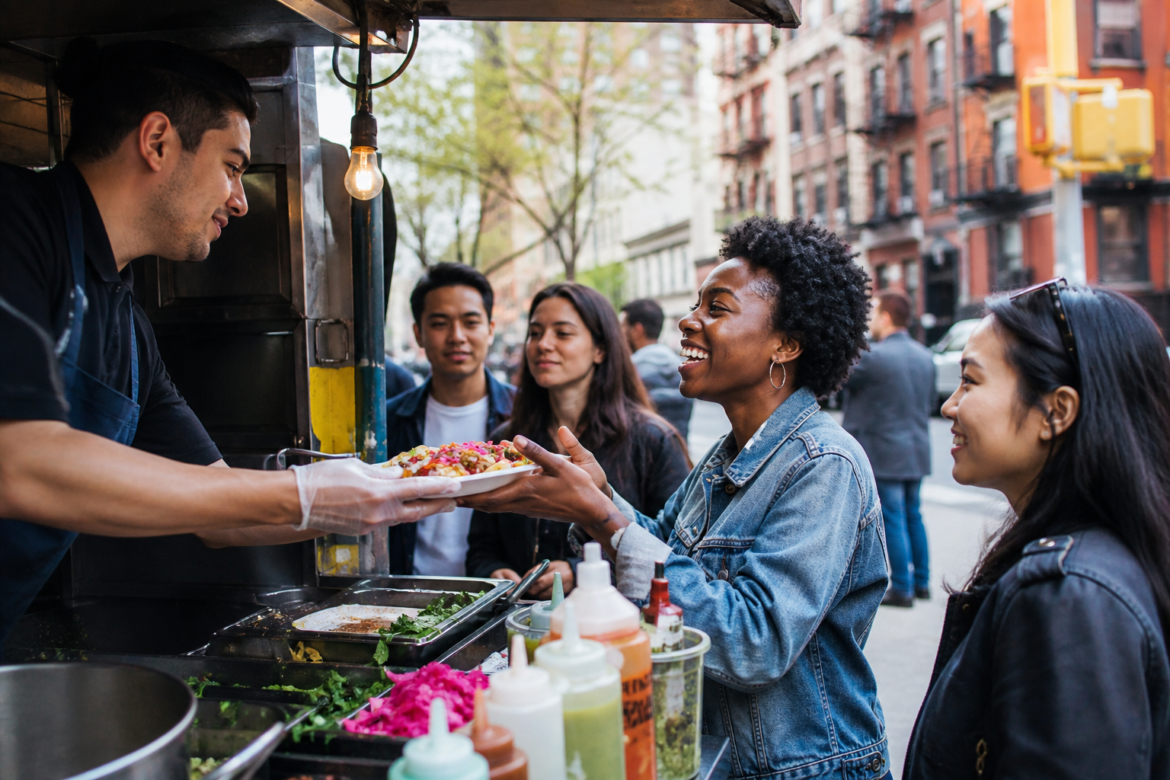
Walk through a busy neighborhood on a Friday evening, cut through a local park, or linger near a busy subway exit, and you will find street food vendors residents have come to rely on: carts loaded with tamales, trailers serving jerk chicken, pop-up tables offering everything from hand-rolled dumplings to experimental Caribbean-Latin fusions. There is no dress code, no reservation, no door to push open. The food is just there, at pavement level, woven into ordinary life.
This is a fundamentally different model from the sit-down restaurant. It is informal, affordable and social in a way that a dining room rarely manages, and it is reshaping neighbourhood food culture in ways that go well beyond what is on the menu.
This article looks at how independent vendors are, how they are changing public space and neighbourhood identity, and why the practical question of how they set up and operate matters as much as the food itself. Along the way, it examines how modern, purpose-built catering trailers give these micro-businesses a professional, flexible foundation. Whether you are a curious local, a food culture enthusiast, or someone quietly imagining your own street food business, the independent street food model has something worth understanding.
How street vendors reshape neighbourhood culture and public space
Street vendors do something that restaurants, for all their importance, rarely manage: they place food in the open air, in shared space, where it becomes a reason for neighbours to pause and talk rather than simply pass through. A cluster of food stalls at a market, outside a community venue or in a busy public space can effectively turn that area into an informal gathering point.
The cultural dimension of this is significant. Food vendors bring regional cuisines, languages, traditions and food rituals into everyday public life. For communities with roots around the world, a vendor serving familiar food can provide more than a meal. It can offer a connection to heritage and a way of sharing that culture with a much wider audience.
This is one reason street food has become such an important part of the UK’s food identity. Traditional British favourites now sit alongside regional Asian, African, Caribbean, Middle Eastern and Latin American dishes, while innovative combinations continue to emerge from the interaction between different culinary traditions.
Markets, festivals and community events can provide particularly valuable platforms for independent vendors. These settings allow small food businesses to introduce their products to new customers while contributing to the atmosphere and character of the event itself. In this sense, street food vendors are not simply selling meals; they are helping create experiences and bringing people together around food.
There is also a tension worth recognising. As street food becomes more popular, vendors may find themselves increasingly sought after by larger festivals, corporate events and premium markets. This can create valuable opportunities for growth, but it can also increase expectations around presentation, consistency and service. The most successful vendors need to balance the authenticity and individuality that made their concept appealing with the professional standards expected by customers and event organisers.
From Idea to Income: The Entrepreneurial Power of Mobile Food Businesses
Street vending is one of the more accessible entry points into the food economy. The upfront costs can be substantially lower than taking on a restaurant lease, there is no fixed location to commit to, and the format allows an operator to scale gradually, testing whether an idea actually works before making a much larger investment.
That combination attracts new chefs, family businesses and career-changers who might never have been able to launch through a conventional restaurant model.
Mobility is central to the economics. A vendor who can move between a weekday business district, a Saturday market, a food festival and a private event is effectively creating several potential income streams from one operation. That flexibility also allows particular dishes and concepts to reach different audiences without the restrictions of a single permanent location.
The format encourages experimentation in a way that a fixed restaurant can sometimes resist. Rotating menus, seasonal specials and real-time feedback from customers can all help determine which dishes deserve a permanent place on the menu. Ideas that resonate with customers can be developed further, while those that do not perform well can be replaced without the costs associated with changing an established restaurant menu.
For many operators, street food is not simply a short-term project. It can become the foundation of a long-term food business, eventually leading to additional trailers, event catering, a permanent premises or a combination of different revenue streams.
The entrepreneurial appeal is easy to understand. Vendors have control over their menus, working patterns, branding and business direction. They can build something around their own skills and interests while developing a direct relationship with their customers. That independence can be one of the most rewarding aspects of running a mobile food business.
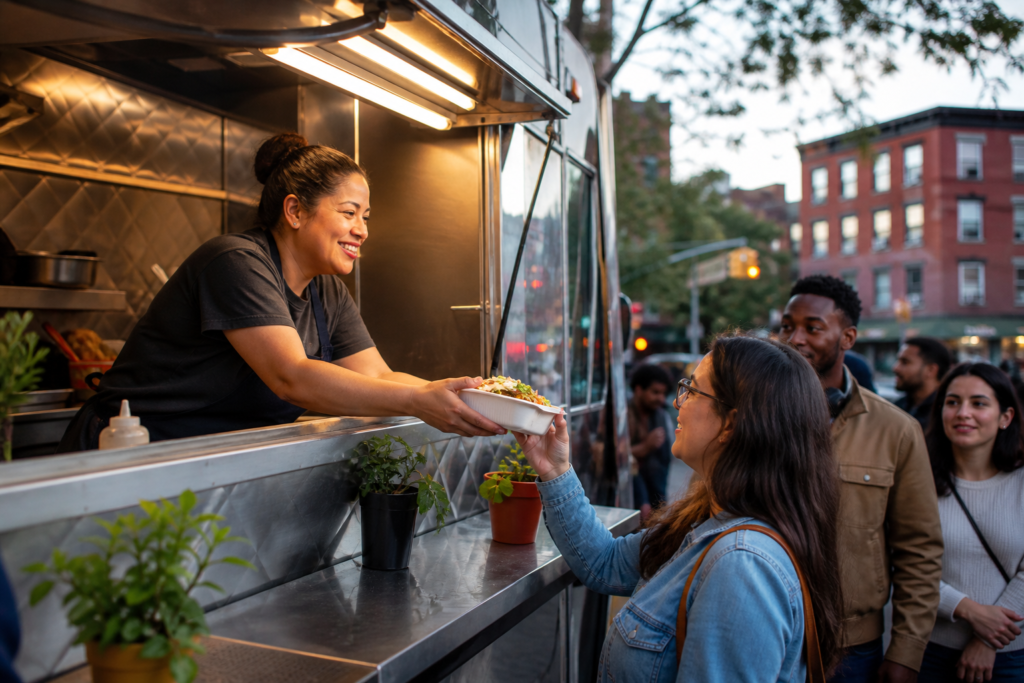
From idea to income: the entrepreneurial power of mobile food businesses
Why professional catering trailers matter for street food vendors
There is a meaningful difference between a makeshift set-up and a purpose-built mobile kitchen, and vendors who have made the transition tend to feel it immediately. A well-designed catering trailer is not just a container for equipment; it is a workspace built around how a specific operator actually cooks, stores and serves. Proper refrigeration, integrated sinks, adequate ventilation and a logical workflow make it possible to work efficiently through a long service, rather than simply getting through it.
Being built on wheels matters in a borough where the best opportunities shift by day, season and event calendar. A vendor with a trailer can move between neighbourhoods, markets and private bookings without rebuilding their entire set-up each time, and that mobility is not a nice-to-have; it is the commercial model. A trailer that is easy to relocate lets an operator follow demand rather than hoping demand stays consistent in one place, and it’s little wonder that catering trailers from Bistro Trailers are becoming a common sight at markets, festivals and private events across the country.
Compliance is another practical reality. A trailer designed from the outset to meet food safety and hygiene requirements, with the right sinks, refrigeration and power supply, makes operating as a legitimate, inspectable business considerably more straightforward than trying to retrofit equipment onto something not built for the purpose. That matters for the vendor’s peace of mind and for the credibility they project to customers and event organisers alike.
A solid, well-presented trailer also reads as professional to customers deciding whether to queue and to event organisers deciding which vendors to invite back. That credibility compounds over time. Unlike a restaurant lease, a trailer is a transferable asset: it can be taken to a new pitch, a new borough or even a new city if a concept needs to pivot or a seasonal opportunity opens up elsewhere. Specialist builders such as Bistro Trailers design these units around the operator’s menu and workflow, so the trailer fits the business rather than the other way round. That kind of purpose-built foundation is what turns a street food concept from an idea into something genuinely road-ready.
Balancing the romance with reality, and how to take your first step
Street food is not an easy life, and the UK’s thriving food scene does not pretend otherwise. There are licences and regulations to understand, pitches to secure, equipment to maintain and customers to satisfy. Beyond the administrative side, there is the physical reality: long days in all weathers, early starts, demanding service periods, competition for popular locations and the constant need to maintain consistent quality.
Running a mobile food business also means accepting a certain amount of uncertainty. Markets can be affected by weather, events can change, and busy locations can vary depending on the time of day or season. Vendors need to understand their costs, manage stock carefully and make sure their pricing provides enough margin to support the business.
Knowing this upfront is not a reason to abandon the idea; it is a reason to prepare properly. That means understanding local regulations before you set up, researching potential markets and events, considering where your concept could genuinely fit, costing your menu with realistic margins, and connecting with existing food business communities where you can learn from people already working within the industry.
For anyone inspired by the UK’s street food scene, a useful starting point is clarity about your food and your story. What do you cook well enough to prepare repeatedly, under pressure, from a mobile kitchen? Where does that fit into the landscape of what already exists, and what gap does it fill? Visit busy markets and food festivals as a customer, pay attention to what works and what does not, and let that inform your thinking before you commit to anything.
When the concept feels solid and the planning is done, investing in a fit-for-purpose catering trailer is one of the most concrete steps you can take. Working with a specialist builder to design a compact kitchen around your actual menu and workflow removes a significant layer of improvisation from the launch.
With the right preparation and a reliable trailer as your base, the kind of small, mobile food business that animates streets, carries a culture into the open air and becomes part of a community’s everyday life is not just an aspiration. It is a practical business model being embraced by food entrepreneurs across the UK.
