

Brooklyn has watched this film several times now. A commodity product sold on price and volume gets rediscovered by people who care about how it’s made. Roasters start naming farms, chocolate makers start naming estates, and brewers start chasing character.
Hemp is somewhere in the middle of that same arc, and it’s a more interesting story than the wellness marketing around it suggests.
The Commodity Phase
The first wave of hemp products after federal legalization was a commodity business, and it behaved like one. Bulk extract, bought on price, put into a carrier oil or a gummy base with synthetic color, sold on the biggest milligram number the label could carry.
Nobody was making claims about varieties or terroir because nobody was thinking that way. The differentiators were price and packaging, which is exactly where any commodity category sits before someone decides to do it properly.
That phase also created the credibility problem the industry still carries: a market with no quality floor, where the number on the front of the packet was an assertion nobody checked. It is the environment the current generation of producers is reacting against.
What Changed
Three things, all of which will sound familiar to anyone who followed speciality coffee:
- Provenance started mattering. Growers began talking about where and how the plant was farmed, which matters more in hemp than in most crops because the plant draws material out of its soil and the extraction process concentrates whatever it took up.
- Processing became a point of difference. Live resin extraction, which freezes the plant immediately after harvest rather than drying and curing it, exists specifically to preserve the volatile aromatic compounds that give a variety its character. That’s the same instinct as a roaster protecting origin character rather than roasting it away.
- Formulation replaced dosage. The commodity approach sold one compound at whatever strength. The producer-led approach builds different products for different purposes, pairing cannabinoids with botanicals in the way a bartender builds a drink rather than the way a factory fills a bottle.
Why Batch Variation Is Part of the Appeal
Small-batch food trained shoppers to stop expecting everything to taste exactly the same forever. Coffee changes between harvests. Beer changes when a brewer swaps hops. Tomatoes taste different depending on when and where they were grown. Variation is not automatically a defect when the raw material is agricultural.
Hemp belongs in that conversation too. Growing conditions, harvest timing, and processing choices can all affect the plant material that eventually reaches production. That makes batch information more useful than a polished front label alone.
The important distinction is between natural variation and inconsistency. Small-batch does not mean manufacturers get a free pass on quality control. It means shoppers have more reason to look for evidence of what is actually in a particular run.
That is where independent batch testing becomes relevant. It gives buyers something concrete to check rather than asking them to take craftsmanship, purity, or potency on trust.
Reading the Producer, Not the Package
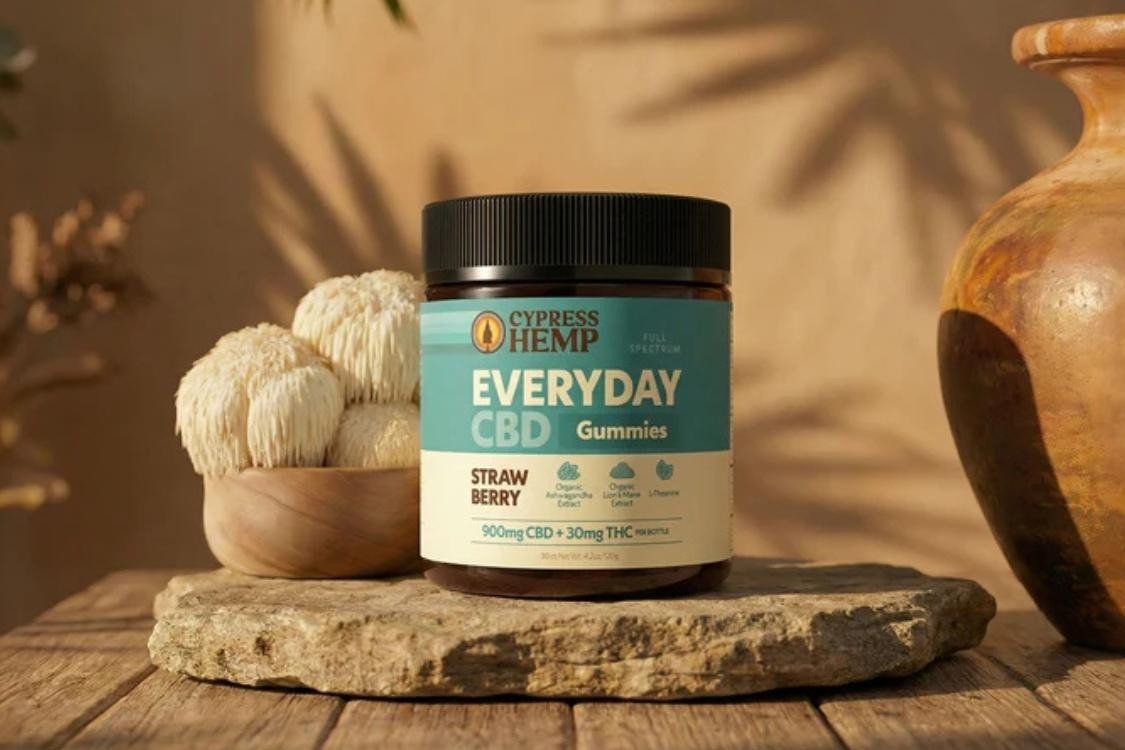
The practical result is that this category can now be shopped the way Brooklyn shops everything else: by looking at who made it. A good example of the producer-led version is cypresshemp.
A grower, not a marketer, founded it in 2017; it farms organically, builds separate formulas around minor cannabinoids for different times of day, uses fruit juices and spice extracts for color instead of dye, and publishes an independent lab report for every batch. Whether or not that’s your category, it’s recognizably a maker’s approach rather than a filler’s.
The functional side is where the ingredient lists get genuinely interesting to a food audience:
- Chamomile in evening formulas.
- Reishi and lion’s mane as functional mushroom extracts.
- L-theanine from tea leaves.
- Ashwagandha.
These are herbalism ingredients arriving in a category that used to be a single molecule in sugar.
The Necessary Caveats
Food writing about this category has to get two things right. First, hemp products are not medicine and shouldn’t be written about as though they are. The science is new and largely small-scale. Any producer promising a defined outcome has gone beyond it.
What’s genuinely defensible is that the ingredients are better than they were and the manufacturing is more transparent.
Secondly, these are adult products, for 21 and over. Edibles pass through digestion before anything happens, so they arrive later than people expect, which is the single most common mistake in the category.
Always follow the serving size on the label, wait longer than feels necessary, and don’t drive. Rules also differ between states, and they keep moving. So check what’s legal in yours.
The Ingredient List Is Getting More Interesting
One sign of a maturing food category is that people eventually turn the package around. The branding might get something off the shelf, but the ingredient list starts to matter once shoppers understand what they are buying.
Hemp is moving in that direction. Instead of treating every product as interchangeable, it is possible to look at the carrier ingredients, flavorings, botanical extracts, and other components alongside the cannabinoids themselves. A shorter list is not automatically better, but a clear one makes comparison much easier.
This is especially relevant with gummies and other edibles, where plenty happens beyond the hemp extract. Fruit ingredients, sweeteners, colors and added botanicals all form part of the finished product.
That puts more pressure on producers to explain what they use and why. It also gives shoppers a familiar way into an unfamiliar category: read the back first, then decide whether the front deserves attention.
Where It Goes Next
If the arc holds, the next phase looks like what happened to chocolate. A small number of producers who genuinely make things, a much larger number who repackage bulk material and describe it beautifully, and a slowly improving ability among shoppers to tell which is which.
The tools for telling are already here: a published batch report, a named growing approach, an ingredient list you could read aloud, and someone whose background is in growing rather than in branding.
That’s not a hemp checklist. It’s the checklist this borough has applied to coffee, bread, and beer for twenty years, now arriving at a shelf that hasn’t had it yet.
