

There is a very specific kind of frustration that every home cook who has ever tried to film themselves cooking knows intimately. You are halfway through folding a lamb dumpling, your fingers are coated in egg wash, and your phone has just slipped sideways on its tripod at the exact moment the pleat finally comes out right. You either stop to fix it and lose the moment entirely, or you keep going and get nothing but footage of your ceiling fan.
Food content creation is, at its core, a two-handed job that asks you to give up at least one of those hands to a camera. The result, more often than not, is content that feels slightly off. The cook is stiff. The angle is awkward. The steam has already dissipated by the time the shot is ready.
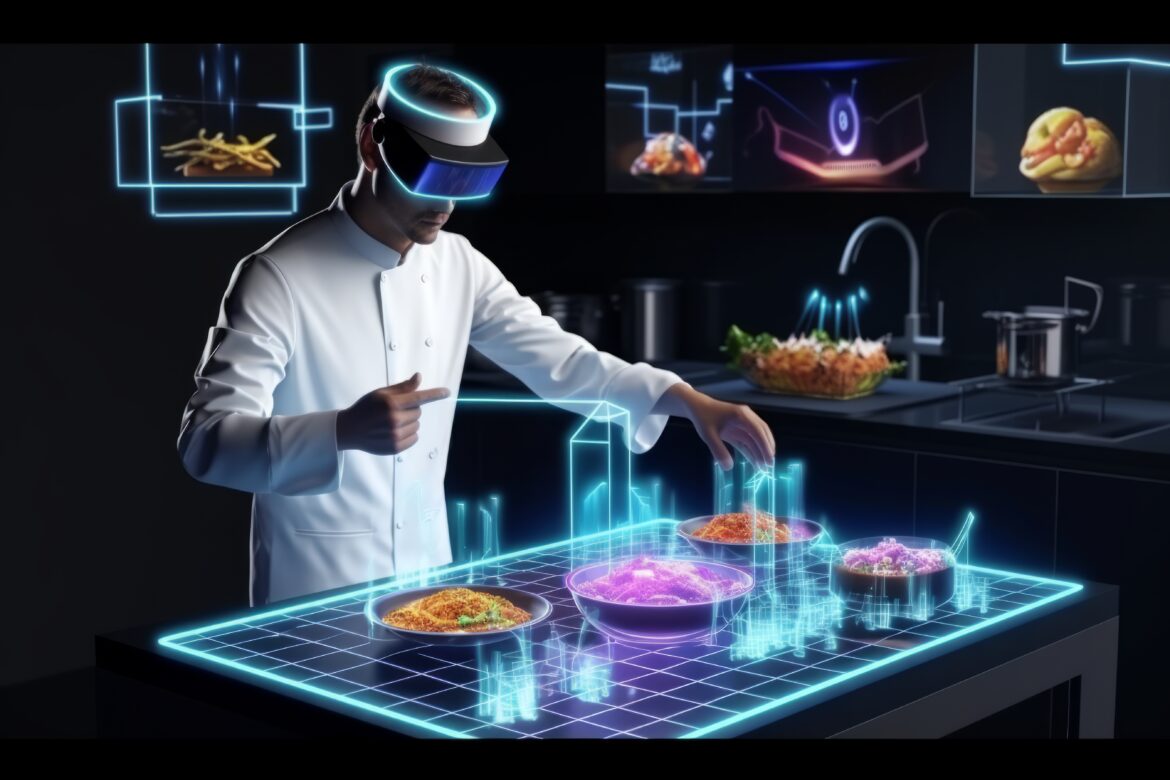
A new category of wearable technology is beginning to chip away at that tension. Glasses featuring a built-in camera let the cook simply look at what they are doing, and let the footage take care of itself. The shot moves with the person, not around them. When you tilt down to check whether the bottom of your socca has crisped properly, the camera goes there too. When you glance up to grab a handful of parsley, it follows. The result is footage that reads less like a produced cooking video and more like a genuine point-of-view experience.
Why POV Changes the Cooking Story
There is a reason that professional food television has spent the last decade trying to fake what a wearable camera captures naturally. Watch any cooking competition closely and you will notice the camera operators crouching low, angling up from counter height, hovering close to a knife mid-chop. They are trying to approximate the experience of being the cook, seeing what the cook sees. Wearable cameras do not approximate that experience. They deliver it.
For independent food creators, that is a meaningful shift. The content that tends to resonate on short-form video is not perfectly lit overhead shots of finished dishes. It is the moment the butter hits a hot pan and the kitchen fills with sound. It is the quick judgment call about whether a sauce needs more acid. It is the small, unrepeatable textures of cooking in a real kitchen, not a set. A hands-free camera catches those moments because the cook is not managing a camera at all. They are just cooking.
That authenticity matters to audiences. According to media researchers, trust in media that feels personally relatable and unmediated has grown significantly as consumers have grown more skeptical of polished productions. Food content is no exception. The cooks who have built the most loyal followings in recent years tend to share one quality: they make you feel like you are actually in the kitchen with them.
Keeping Pace With a Recipe
One underappreciated advantage of hands-free filming is pacing. Cooking does not pause for content. A roux will burn if you stop to reposition a tripod. Bread dough is ready when it is ready, not when you have found your light. Trying to document a recipe in real time while also managing a camera often results in either undercooked content or overcooked food.
When the camera travels with you, the documentation happens at the same pace the cooking does. You can narrate naturally, gesture freely, and keep both hands in the process. For recipe developers and home recipe testers who want to document their process accurately, this is genuinely useful. It means the footage reflects the recipe as it was actually made, not a staged approximation of it.
The Brooklyn Kitchen as a Content Studio
Brooklyn has always had a particular relationship with food as self-expression. The borough’s food makers, from the fermenters in Bed-Stuy to the pastry pop-ups in Bushwick, have never drawn a sharp line between what they make and how they present it. The sharing of food and the storytelling around food have always traveled together.
That instinct maps naturally onto what hands-free cameras make possible. A baker who is also documenting their process for a community of followers does not have to choose between being present in the bake and capturing it. The Brooklyn food scene has always rewarded makers who are genuinely in their craft. Technology that lets the camera follow the craft, rather than interrupt it, fits that ethos without much friction.
The same logic extends well beyond the home kitchen. Food storytelling in Brooklyn happens at the Saturday greenmarket, at the counter of a new ramen spot in Crown Heights, at a pickle fermentation class in a Gowanus warehouse. All of those environments share one feature: they are not designed for filming. Pulling out a phone breaks the rhythm of the experience and signals to everyone around you that you have momentarily left the room. A wearable camera lets you stay in the room. You can taste, ask questions, move through a crowded market stall, and document all of it without the moment becoming about the documentation.
What It Does Not Replace
None of this replaces judgment, editing, or the creative work of actually telling a food story. Hands-free footage is raw material, not a finished video. The decisions about what to keep, how to frame a narrative, which moments carry meaning, those still belong entirely to the creator.
What it does change is the cost of getting that raw material. Right now, making a solid cooking video as a solo creator often means filming a dish two or three times: once to cook it properly, once to get the angles right, once to capture the narration cleanly. That is a lot of repetition for something that should feel spontaneous. According to recent research on creator habits among younger digital audiences, the demand for authentic, unscripted content has only grown. Fewer takes, less staging, and more genuine process are exactly what that audience responds to.
Hands-free cameras do not make anyone a better cook or a better storyteller. But they do remove one significant friction point from a process that already has plenty of them. For food creators who have ever lost a perfect moment to a slipping tripod, that is worth paying attention to.
