

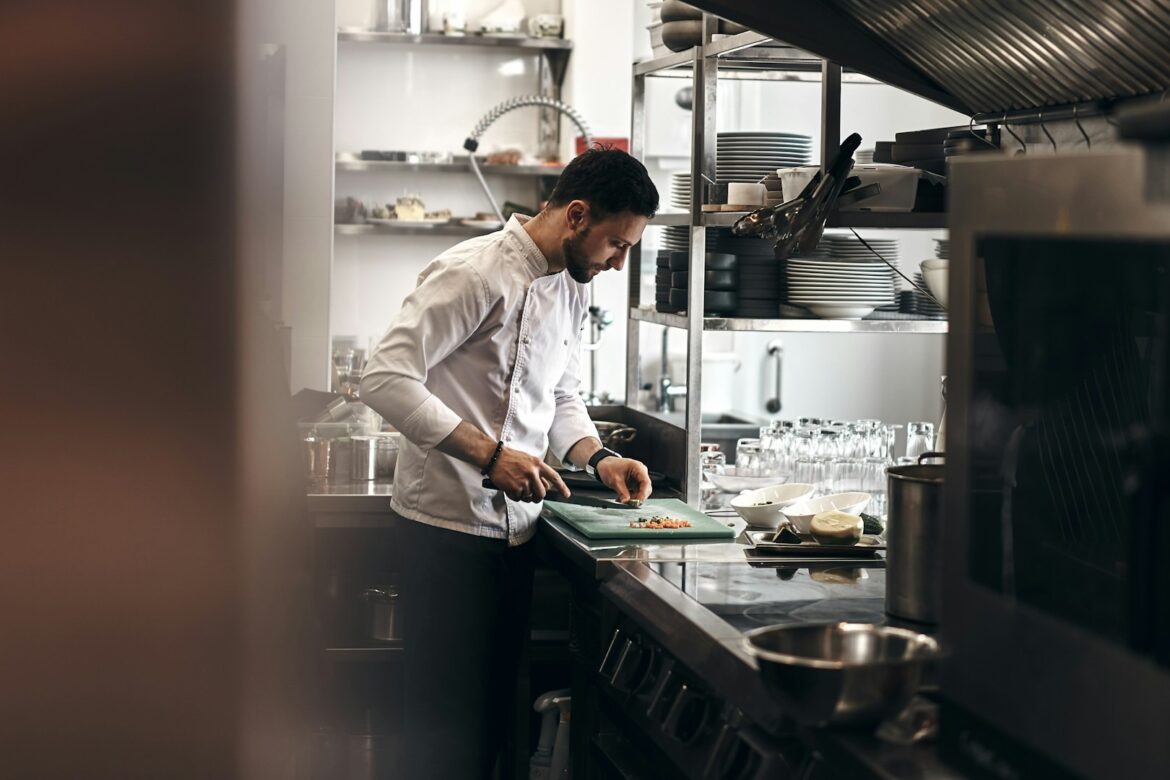
Walk into almost any kitchen in Brooklyn right now and you’ll find something unexpected next to the cutting boards: a phone propped against a spice jar, playing a cooking video from a channel based somewhere the chef has never actually visited. That’s not a coincidence. It’s become part of the job. Brooklyn has spent the last decade turning into one of the most internationally minded food scenes in the country, and a lot of that comes down to how chefs are learning about food that isn’t native to their own background.
This isn’t just about flipping through a cookbook anymore, although plenty of chefs still do that too. It’s about piecing together flavor, technique, and cultural context from dozens of scattered sources, then figuring out how to translate all of it into something that works on a menu in Bushwick or Sunset Park. The research doesn’t stop once the dish is finalized either. Chefs keep circling back to their sources as ingredients shift, as new cooks join the kitchen, and as guests ask questions that push them to look deeper. This article looks at how that research actually happens, where chefs are getting their information, and what it means for the food you’re eating the next time you sit down at a Brooklyn restaurant.
Why Brooklyn Became a Testing Ground for Global Food
Brooklyn’s food identity has always been shaped by immigration. Neighborhoods like Sunset Park, Brighton Beach, and Flatbush have carried the flavors of Latin America, Eastern Europe, and the Caribbean for generations, long before “global cuisine” became a phrase used on restaurant menus. What’s changed is the direction of the curiosity. It used to flow mostly from the neighborhood outward, with home cooks passing recipes down within their own communities. Now it flows in every direction at once, with chefs from completely different backgrounds trying to understand and respectfully represent food traditions that aren’t their own.
That shift puts a lot of pressure on research. A chef can’t just guess at what makes a dish taste right in its home country. They need to understand ingredient sourcing, cooking methods, and the cultural weight a dish might carry for the people who grew up eating it. Getting it wrong isn’t just a culinary mistake, it can come across as careless or even disrespectful. So the research process has become more serious, more layered, and honestly, more interesting to watch.
Where the Research Actually Starts
Most chefs will tell you the first step isn’t a cookbook or a class. It’s watching. Video content, especially from creators who are cooking in their own home countries, has become one of the most trusted starting points for understanding a cuisine.
A few patterns show up again and again when chefs describe their process:
- They look for home cooks and small regional creators rather than polished studio productions, because the technique tends to be closer to how food is actually made day to day.
- They pay attention to what’s not shown on camera, like which ingredients are assumed to already be in the kitchen, since that often reveals what’s considered a staple versus a specialty item.
This kind of viewing isn’t passive. Chefs will rewatch the same video several times, sometimes with subtitles on and sometimes without, just to catch small details like how a knife is angled or how long something actually sits before it’s served.
The Language and Access Problem
Here’s where things get more complicated. A lot of the best food media in the world isn’t in English, and a good chunk of it isn’t even easily searchable outside the country where it was made. Regional cooking shows, local food blogs, and even grocery delivery apps that reveal what’s actually being cooked at home can be geographically restricted or just difficult to find through a standard search engine.
This is where a surprising number of chefs have started using a VPN as a practical research tool. It’s not about anything dramatic, it’s mostly about being able to browse regional streaming platforms, local recipe sites, or even social media trends the way someone in that country would see them, instead of getting a filtered or geographically limited version. A chef researching Filipino home cooking, for example, might use a VPN to access a streaming platform’s Philippines library directly rather than relying on whatever clips happen to make it onto international social media. It’s a small technical workaround, but it changes how close a chef can get to the source material without leaving their own kitchen.
Cookbooks Haven’t Disappeared, They’ve Changed Roles
It would be easy to assume physical cookbooks have been pushed aside entirely, but that’s not really accurate. What’s changed is how they’re used. Instead of being the starting point, cookbooks have become more of a confirmation tool. A chef might spend weeks watching videos and reading regional food writing to get a feel for a dish, then turn to a well-researched cookbook to check measurements, understand the history behind a technique, or make sure they’re not missing a foundational step that video content skipped over.
Books written by authors from the culture itself tend to carry the most weight in this process. There’s been a noticeable shift toward chefs specifically seeking out cookbooks written by people with direct cultural ties to the cuisine, rather than translated or adapted versions written by outsiders. That preference has quietly reshaped which books get attention in professional kitchens.
Talking to People Still Matters More Than Anything Online
No amount of video content or reading replaces an actual conversation, and most chefs will say this without hesitation. Some of the most respected research in Brooklyn kitchens right now comes from chefs building direct relationships with home cooks, either through community connections, staff members who grew up eating the food in question, or intentional trips back to a region to eat and learn in person.
This part of the process is slower and harder to scale, but it’s also where the real nuance comes from. A video can show you how a dish is made. A person can tell you why it’s made that way, what occasion it’s tied to, or what version their grandmother made differently. That kind of context rarely shows up in searchable form, which is exactly why it’s still considered the most valuable layer of research.
Social Media’s Complicated Role
Short video platforms have made global food more visible than ever, but chefs are increasingly cautious about treating them as a reliable source. Trends move fast, and a dish that goes viral online doesn’t always reflect how it’s actually eaten in its home country. A few chefs have mentioned deliberately slowing down when something looks appealing on social media, choosing to verify it against a more grounded source before putting anything close to it on a menu.
That doesn’t mean social platforms are useless for research. They’re often the first signal that something is worth looking into further. The difference is that experienced chefs treat that first signal as a starting point rather than a finished answer.
What This Means for the Plate in Front of You
All of this research eventually shows up in small, specific ways. It might be a chef choosing to serve a dish with the correct accompanying condiment instead of a more familiar substitute. It might be a menu description that credits a specific region instead of using a broad, generalized label. It might just be getting the texture of something right because a chef watched enough footage to understand how it’s supposed to feel in the mouth, not just how it’s supposed to look.
Diners don’t always notice this work directly, but they usually notice the result. Food that feels intentional rather than approximated tends to earn a different kind of trust, even from people who aren’t familiar with the cuisine themselves.
There’s also a quieter effect happening on the business side. Menus built on real research tend to hold up better over time, because they aren’t riding on a single trend that will eventually fade. A dish shaped by genuine understanding keeps making sense long after the version that inspired it stops trending online. Regulars notice consistency, and word of mouth in a neighborhood like this still counts for a lot, maybe more than any single review ever could.
Conclusion
Brooklyn’s chefs aren’t inventing a new way to learn about food, but they are combining old and new methods in a way that reflects how connected the world has become. Video platforms, regional streaming access, cookbooks written by cultural insiders, and direct conversations with home cooks are all part of the same process now, each filling in gaps the others leave behind. It’s a more demanding way to research a menu, but it’s also a more honest one. And for a borough built almost entirely by people who brought their food traditions from somewhere else, that kind of care feels less like a trend and more like a continuation of how Brooklyn has always eaten.
