

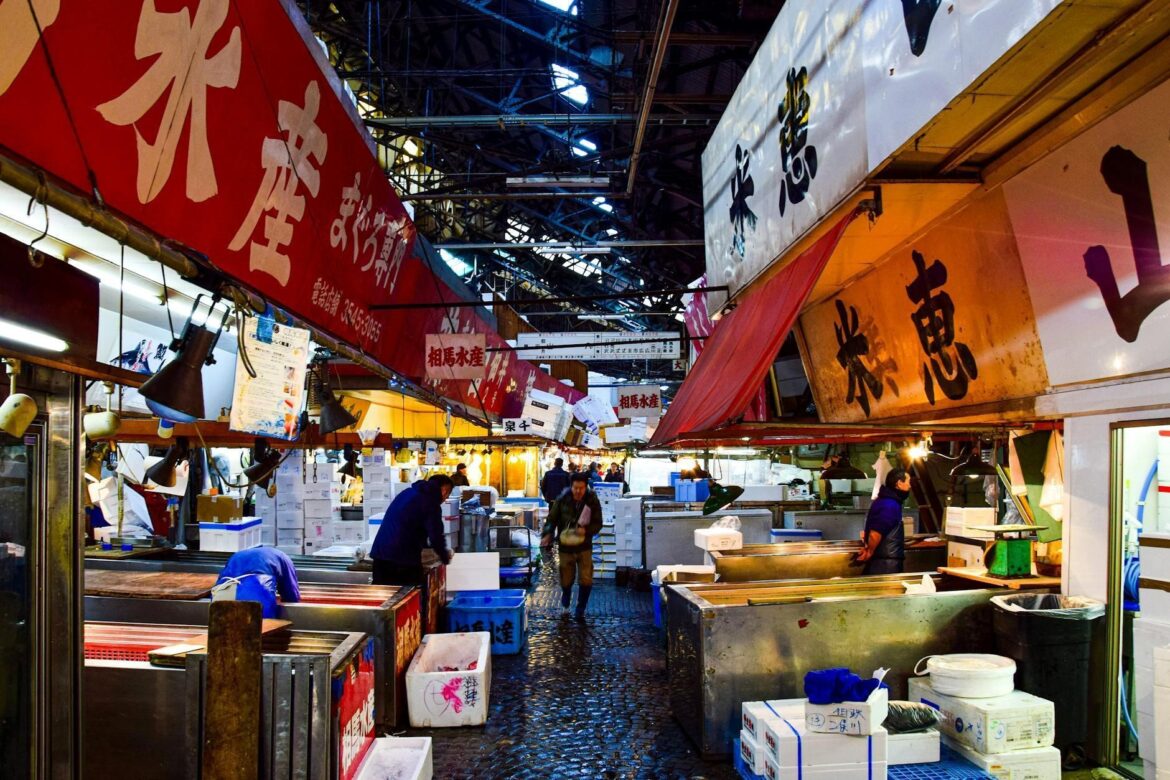
Tsukiji’s inner market closed in October 2018 and moved to Toyosu, where the live tuna auction now runs at 5:30 a.m. behind glass walls. Tsukiji Outer Market kept operating and remains the chef-and-home-cook destination it has always been. In Oaxaca, the Consejo Regulador del Mezcal (CRM) certified more than 600 maestro mezcaleros across Valles Centrales and Sierra Sur as of 2026, and Brooklyn chefs sourcing single-village mezcals increasingly travel directly to the palenques rather than going through US importers. This is what a 2026 food pilgrimage to Japan or Mexico actually looks like on the ground.
TL;DR
- Japan: Toyosu replaced inner Tsukiji in 2018; Tsukiji Outer Market is alive and remains the chef-visit destination. Sake-brewery tours cluster in Niigata, Hyogo’s Nada district, and Akita.
- Mexico: Oaxaca’s Valles Centrales (San Dionisio Ocotepec, Santiago Matatlán) and Sierra Sur are the mezcal-pilgrimage hubs; the CRM regulates denominación de origen.
- What you can bring back: Dry seafood, miso, sake, kitchen knives, mezcal (one-liter limit per traveller per USDA APHIS rules).
- What you can’t: Most fresh fish, fresh meat, fresh produce; agricultural restrictions are tighter than most chefs expect.
- What the sourcing trip needs: A booked translator for palenque visits, ground-transport plan for Niigata sake country, working phone for restaurant bookings.
How is Tsukiji different from Toyosu in 2026?
Tsukiji’s inner wholesale market (where the famous tuna auctions ran for decades) moved to Toyosu Market in October 2018. The inner-market site at the original Tsukiji is now a construction zone; the auctions, the wholesale floor, and the working market machinery are all at Toyosu, 2.3 km east of the original. Tsukiji Outer Market, the streets of fishmongers, knife shops, tamago-yaki stalls, and dashi vendors, kept operating in the original location and is now the chef-and-home-cook destination. Toyosu admits visitors on a controlled schedule (the live tuna auction is viewable from a glassed gallery from 5:30 a.m.); Tsukiji Outer Market opens around 5:00 a.m. and starts winding down at 1:00 p.m. Most working Brooklyn chefs on sourcing trips visit both: Toyosu for the wholesale scale, Tsukiji Outer for the small-volume specialty buys. The Toyosu Market Promotion Council publishes the official daily schedule.
Where should you go to source sake in 2026?
Three regions anchor a serious sake itinerary. Niigata Prefecture along the Sea of Japan coast remains the country’s largest sake-producing region by brewery count, with the Niigata Sake Tasting Forum each March drawing brewers from over 80 kura. Hyogo Prefecture’s Nada district near Kobe produces the famous Yamada-Nishiki rice used in most premium ginjo and daiginjo sakes; the district has six historic brewery clusters open for visits. Akita Prefecture is the rising-star region for the new wave of low-temperature, long-fermentation sakes that have appeared on Brooklyn restaurant lists. Travel between regions runs on the Joetsu Shinkansen (Tokyo to Niigata, 2 hours) and the Tohoku Shinkansen (Tokyo to Akita, 4 hours); rent a car only after arriving in the region (urban driving in Japan is harder than rail). The recent profile of a Brooklyn artisan importer captured this pattern well.
What does an Oaxaca mezcal-sourcing trip look like in 2026?
Oaxaca’s mezcal economy splits into three regions. Valles Centrales (the central valleys south of Oaxaca City) contains the largest concentration of palenques and the most accessible day-trip villages: Santiago Matatlán, San Dionisio Ocotepec, Tlacolula. This is where most US importers run their sourcing relationships and where first-time visitors should start. Sierra Sur (the southern mountains around Miahuatlán) produces the most distinctive single-village mezcals, often from rare wild agaves; visits require longer drive times and local introductions. Sola de Vega to the southwest produces the cult tobaziche and tobalá mezcals. The Consejo Regulador del Mezcal (CRM) regulates denominación de origen and certifies more than 600 maestro mezcaleros; their published producer registry is the starting point for any serious sourcing visit. Practical guidance: book a Spanish-speaking driver-translator for at least the first two days; most palenques operate without English-speaking staff and the tasting protocol benefits from cultural translation, not just language.
What can you actually bring back through US customs?
USDA Animal and Plant Health Inspection Service (APHIS) rules govern most of what chefs care about. From Japan: dry seafood (bonito flakes, dried sea vegetables, dried scallops), miso paste, soy sauce, sake (3 liters per traveller in checked bags), shochu, processed sweets, ceramics, and kitchen knives are all permitted. Fresh fish, fresh meat, fresh produce, and most live agricultural products are prohibited. From Mexico: mezcal (one liter per traveller is the practical USDA + TSA limit), processed mole pastes, dry chiles, salt, and ceramics are permitted. Fresh meat, fresh produce, fresh dairy, and any unprocessed agricultural products are prohibited. Both countries: declare everything on the CBP arrival form; lying on a customs declaration is a felony that ends a chef’s commercial-import relationships permanently. The recent food-policy analysis on culinary-import logistics covered the audit process in detail.
Logistics that make a food pilgrimage work
Japan: pre-arrival data activation matters more than you think
Booking high-demand restaurants in Tokyo and Kyoto increasingly happens through Japanese-language apps (TableCheck, OpenTable Japan) that require a working data connection at the precise moment the booking window opens. Many of the destination kaiseki restaurants (Ryugin, Den, Mizai, Kohaku) accept bookings only via these channels, opening reservations exactly one month before the meal at midnight Japan time. NTT Docomo holds the densest 5G footprint across Tokyo and Osaka; SoftBank is competitive in central Tokyo; au KDDI handles regional travel reliably. On a recent sourcing run we activated the Japan data plan I loaded for Tsukiji over airport Wi-Fi at Narita before clearing customs; it routed through NTT Docomo by the Keisei Skyliner platform and held the reservation app login through the Tokyo Metro tunnels. The Toyosu Market opens at 5:00 a.m.; signal at the market is unreliable inside the wholesale halls but strong in the visitor galleries.
Mexico: rural-village signal reality
Telcel has the densest 4G/5G across Mexico City, Oaxaca City, and the main Valles Centrales corridor. Movistar Mexico is competitive in CDMX but thinner once you’re south of Tlacolula. AT&T Mexico holds well along the Pan-American Highway. The signal-drop happens between palenques, not at them; most maestro-mezcalero properties sit a kilometre or two off paved roads, and the off-road sections lose signal regardless of carrier. On a Sierra Sur sourcing trip last winter we ran the Mexico eSIM I used in Oaxaca’s mezcal valleys which routed through Telcel from Mexico City Benito Juárez (MEX) to Oaxaca’s Xoxocotlán airport (OAX) and into the Tlacolula valley, with predictable drops in Sierra Sur between palenque visits. Carry a paper map of the visiting villages; Google Maps offline mode works in Mexico but the village-road resolution is thin.
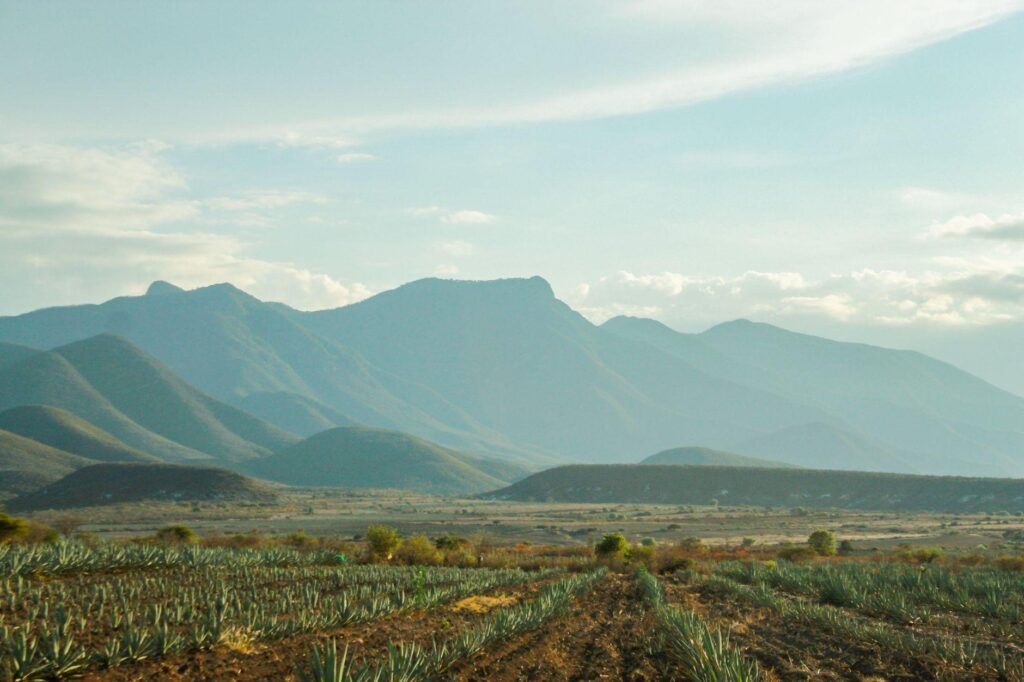
Agave plants growing in an Oaxaca mezcal field with rugged Mexican mountain landscape behind
Photo: Gustavo Romero Monterroza on Pexels
What chefs ship vs carry vs eat-and-leave
A standard Brooklyn-chef sourcing trip splits the take-home into three categories. Carry on the plane: kitchen knives bought at Tsukiji Outer Market or Sakai (Osaka), a single bottle of premium mezcal, ceramics under the airline’s fragile-baggage limit. Check in luggage: sake (3-liter checked-bag allowance per traveller per US Customs), additional mezcal (up to one liter total), dry seafood from Toyosu, dry chiles from Oaxaca, hand-painted pottery. Eat and leave: anything fresh, anything live, anything that needs refrigeration, anything that would survive less than 72 hours of transit. The single most common new-importer mistake is buying perishable specialty fish at Tsukiji Outer Market without realising US Customs will confiscate it on arrival. Bring back the dashi base instead and source the fish in NY through established restaurant supply relationships.
For Brooklyn home cooks rather than commercial chefs, the limits are looser but the principles identical. Rebuilding flavours back in your home kitchen with imported pantry recipes is how the sourcing trip extends into the year. Edible Brooklyn’s Travel section tracks the broader culinary-travel landscape.
FAQs
Is Tsukiji Market still open in 2026?
Tsukiji Outer Market (the streets of fishmongers, knife shops, and specialty vendors) is fully open and remains a chef-visit destination. The inner wholesale market and famous tuna auction moved to Toyosu Market 2.3 km east in October 2018. Most working chefs visit both on a Tokyo sourcing trip.
Where do Brooklyn chefs source mezcal in Oaxaca?
Valles Centrales is the most accessible region (Santiago Matatlán, San Dionisio Ocotepec, Tlacolula). Sierra Sur produces rare wild-agave mezcals around Miahuatlán. The Consejo Regulador del Mezcal (CRM) maintains the official producer registry and certifies maestro mezcaleros. Sourcing visits work best with a Spanish-speaking driver-translator.
What kitchen tools can I bring back from Japan?
Kitchen knives (no blade length restrictions for personal-use checked baggage), ceramics, lacquerware, knife-sharpening stones, and small kitchen equipment are all permitted. Carry knives in checked luggage only; TSA confiscates them from carry-on. Major knife districts: Sakai (Osaka) and Seki (Gifu).
How much sake and mezcal can I bring through US customs?
Sake: up to 3 liters per traveller in checked bags within the standard alcohol allowance. Mezcal: one liter per traveller is the practical USDA + TSA limit. Declare everything on your CBP arrival form. Specialty rules apply for commercial importation; that’s a separate licensing process.
Do I need a translator on a Japanese sake-brewery tour?
Most Niigata and Nada sake breweries that accept visitor tours have some English-language signage and many have English-speaking staff. Akita’s smaller regional breweries less so. For commercial-buying conversations, a Japanese-speaking interpreter or a translator app with a working data connection is essential.
