

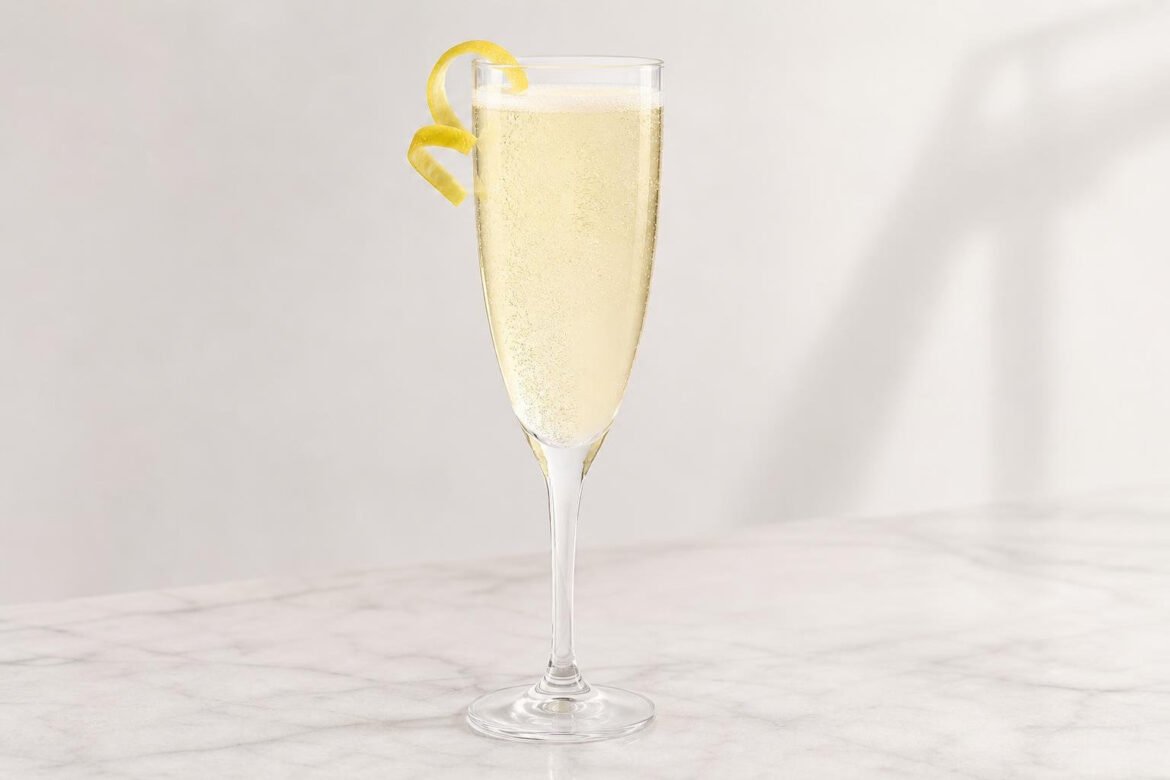
The French 75: A Classic Champagne Cocktail Worth Knowing
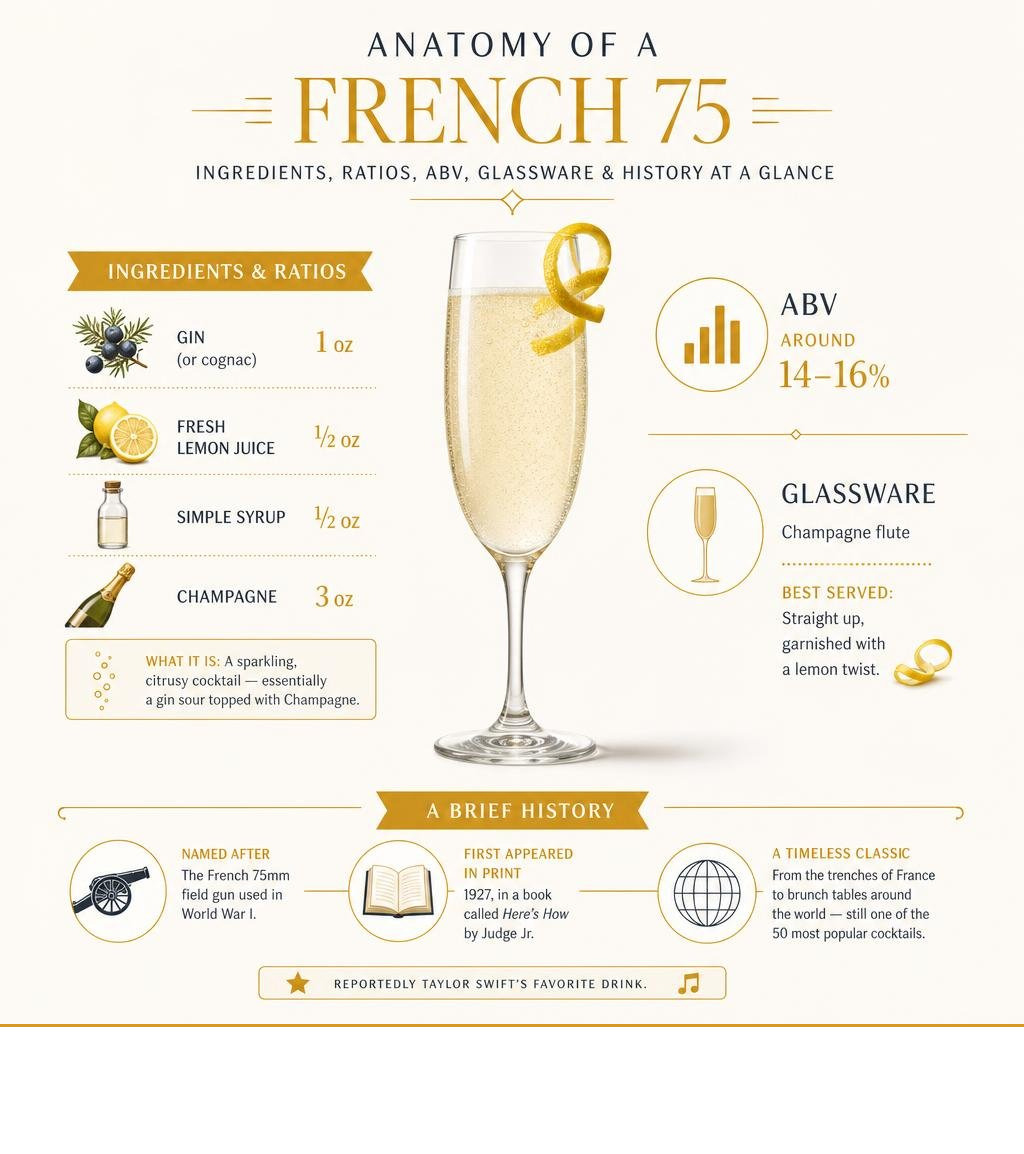
The French 75 is a classic cocktail made with gin (or cognac), fresh lemon juice, simple syrup, and Champagne. Here is what you need to know at a glance:
- What it is: A sparkling, citrusy cocktail — essentially a gin sour topped with Champagne
- Key ingredients: 1 oz gin, ½ oz fresh lemon juice, ½ oz simple syrup, 3 oz Champagne
- ABV: Around 14–16%
- Named after: The French 75mm field gun used in World War I
- First appeared in print: 1927, in a book called Here’s How by Judge Jr.
- Best served: Straight up in a Champagne flute, garnished with a lemon twist
It is one of the 50 most popular cocktails in the world — and reportedly Taylor Swift’s favorite drink.
Elegant and effervescent, the French 75 has a reputation for packing more of a punch than it looks. That reputation is baked right into its name. The cocktail is named for the Canon de 75 modèle 1897, a fast-firing French artillery piece that could deliver 15 to 30 rounds per minute during World War I. Soldiers and pilots said drinking one felt about the same.
The drink has traveled a long road from the trenches of France to the brunch tables of Brooklyn — through Prohibition-era New York, the golden age of Hollywood, and the cocktail renaissance of the 21st century.
I’m Christopher Pape, and in this guide I’ll walk you through everything you need to know, from the drink’s explosive origins to the best way to make one at home.
French 75 word guide:
- national margarita day
- ninja creami
- princess polly
The Explosive History of the French 75
To truly understand the french 75, we must look back to the battlefield. Long before it was served in delicate glassware at upscale Manhattan lounges, the “75” was a term of military pride and destructive power. The drink’s origin story is a fascinating mix of wartime grit, transatlantic migration, and the evolution of modern mixology.
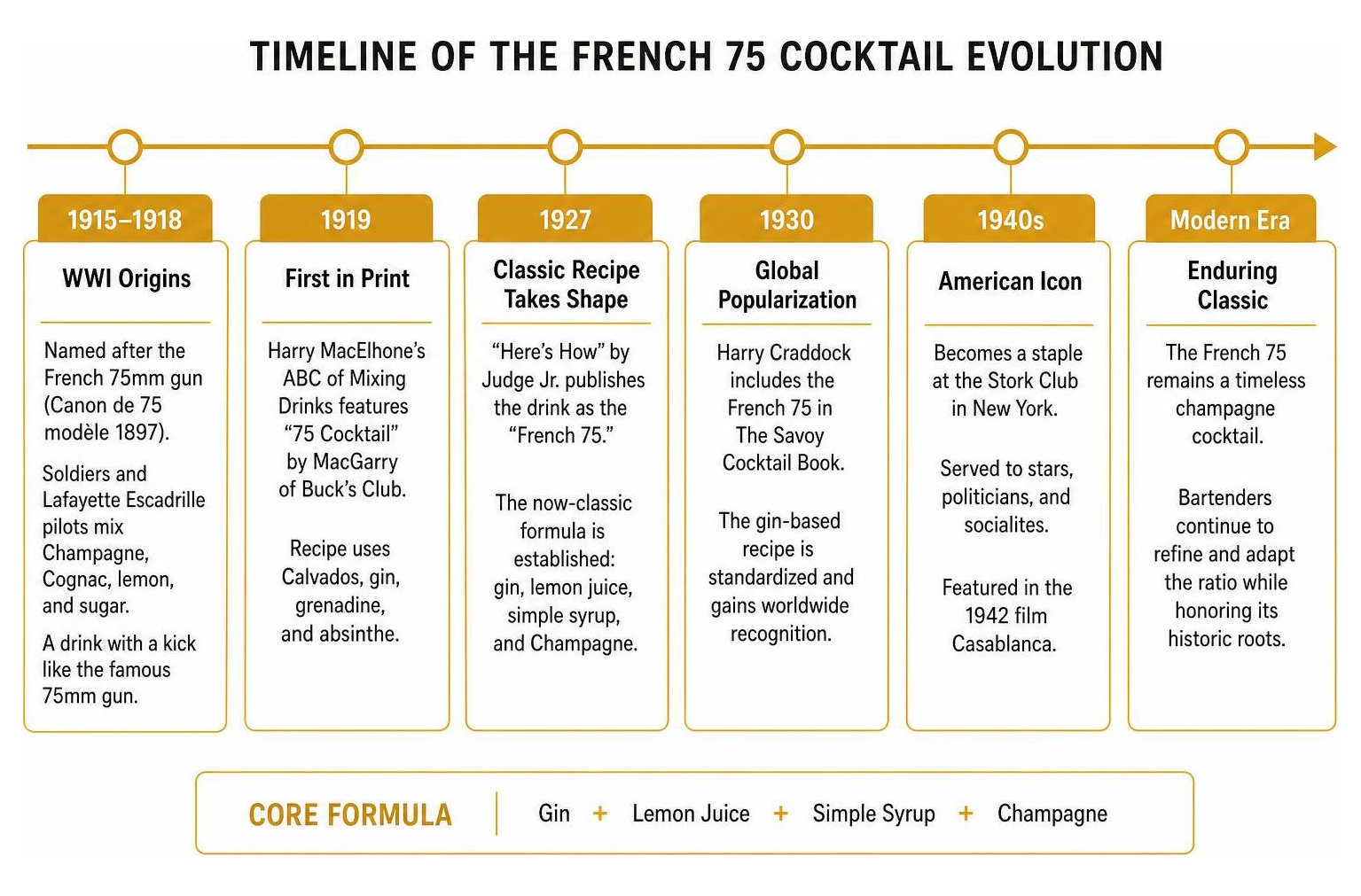
World War I Origins and the Canon de 75
The cocktail gets its name from the legendary French 75mm light field gun, officially known as the Canon de 75 modèle 1897. This weapon revolutionized warfare. It was the first modern artillery piece to feature a hydro-pneumatic recoil mechanism, which kept the gun carriage completely stationary during firing. Because the crew did not have to re-aim the weapon after every shot, they could fire at an astonishing rate of 15 to 30 aimed rounds per minute. Over 17,500 of these guns were manufactured during World War I, and they became a symbol of French military resilience.
Soldiers and fighter pilots, particularly the volunteers of the Lafayette Escadrille—an American-manned squadron of the French Air Service—sought out drinks that could match the high-octane adrenaline of their missions. Legend has it that these pilots, wanting to celebrate their survival, combined French Champagne with Cognac, lemon, and sugar, claiming the mixture had a kick like being shelled by the famous 75mm gun.
Another historical anecdote attributes the invention to the famous French-American fighter pilot Gervais Raoul Lufbery, who allegedly spiked his Champagne with Cognac to give it more weight. However, cocktail historians like David Wondrich have traced similar combinations of spirits, sugar, lemon, and sparkling wine back to the mid-19th century. Wealthy travelers in Victorian England and France had been experimenting with mixing gin or brandy with Champagne for decades. The war simply gave this punchy template a catchy, modern name.
At the same time, across the English Channel in London, a bartender named MacGarry at Buck’s Club was reportedly serving a version of the drink that substituted Champagne for the club soda in a standard Tom Collins. Whether born in the muddy airfields of France or the refined social clubs of London, the drink captured the spirit of an era characterized by rapid change and high anxiety. It was a time of transition, a theme we explore in our historical look at spirits in The Bitter Beginning.
The Evolution of the French 75 in Print
The cocktail’s journey into print reveals how recipes shift over time. The earliest written mention of a drink named after the gun appeared in 1919 in Harry MacElhone’s ABC of Mixing Drinks. However, this early iteration, credited to MacGarry of Buck’s Club, was quite different from what we drink today; it combined Calvados, gin, grenadine, and absinthe.
The recipe took its now-classic form and the “French 75” name in 1927 in Here’s How, a book published by Judge Jr., a writer for a popular New York humor magazine during the height of Prohibition. This version solidified the core template: gin, lemon juice, simple syrup, and Champagne.
Shortly after, in 1930, Harry Craddock published the legendary Savoy Cocktail Book, which helped popularize the gin-based French 75 (cocktail) ) on a global scale. Craddock’s recipe cemented the drink’s status as a high-society staple.
When the drink crossed the Atlantic, it found its American spiritual home at the legendary Stork Club in New York. The Manhattan hotspot served the drink to movie stars, politicians, and socialites, cementing it as an icon of mid-century sophistication. It even made a famous silver-screen appearance in the 1942 classic film Casablanca, where characters order it at Rick’s Café Américain to toast to better times.
Essential Ingredients and the Classic Ratio
Making a world-class french 75 requires balancing high-acid citrus, sweet syrup, botanical spirits, and dry bubbles. Because there are a few historic interpretations of the recipe, home bartenders often debate which ratio is best. Below, we compare the classic Savoy ratio with the modern, high-acid Morgenthaler ratio:
| Ingredient | Classic Savoy Style (1930) | Modern Morgenthaler Style |
|---|---|---|
| Gin / Cognac | 1.0 oz | 1.0 oz |
| Fresh Lemon Juice | 0.5 oz | 1.0 oz |
| Simple Syrup | 0.5 oz (1:1 ratio) | 0.5 oz (2:1 rich ratio) |
| Brut Champagne | 3.0 oz | 2.0 oz |
| Ice | None in glass (Served Up) | Served over cracked ice |
If you are looking for an exceptional local spirit to anchor your cocktail, we highly recommend using a craft gin from Brooklyn’s own Kings County Distillery to bring a unique, regional character to this European classic.
Choosing the Best Gin and Champagne
The choice of gin and sparkling wine will completely dictate the final flavor profile of your drink.
For the gin, we recommend a robust London Dry gin (such as Tanqueray or Beefeater) or a structured regional craft gin. A classic London Dry brings heavy juniper and bright citrus notes that cut cleanly through the sweetness of the syrup and the richness of the wine. While delicate, floral gins like Hendrick’s are wonderful in a Martini, their subtle cucumber and rose botanicals easily get lost when paired with fresh lemon juice and effervescent Champagne.
When it comes to the bubbles, quality matters, but you do not need to empty your wallet on an expensive bottle of vintage Champagne. Once you mix the wine with lemon juice and sugar, the subtle nuances of a $100 bottle are lost. Instead, look for a high-quality, dry sparkling wine in the $15 to $25 range.
Always opt for “Brut” or “Extra Brut” designations. These wines have very low residual sugar, which keeps the cocktail crisp and refreshing. If you use a sweet sparkling wine, the drink will quickly become cloying. Excellent alternatives to French Champagne include dry Spanish Cavas or high-quality, crisp Italian Proseccos. To learn more about sourcing exceptional sparkling options locally, check out our guide on Sip Wine? Want Brooklyn Uncorked Happening May 31.
Step-by-Step Guide to the Perfect French 75
To make a flawless, professional-grade French 75 at home, follow this method based on the Classic French 75 Recipe | VinePair :
- Prep your glassware: Place your Champagne flute or coupe glass in the freezer for 10 minutes before mixing. A chilled glass helps preserve the delicate carbonation of the sparkling wine.
- Squeeze fresh juice: Always use freshly squeezed lemon juice. Bottled lemon juice lacks the bright, aromatic oils and sharp acidity needed to balance the cocktail.
- Combine the base: Add 1 oz of gin, ½ oz of fresh lemon juice, and ½ oz of simple syrup to a cocktail shaker filled with ice.
- Shake vigorously: Shake the mixture for 10 to 12 seconds until the shaker tin is completely frosted over. Shaking aerates the citrus and perfectly integrates the sugar.
- The carbonation trick: Instead of pouring the shaken base into the glass and topping it with Champagne, try the professional bartender method: pour 3 oz of chilled Brut Champagne into your chilled glass first, then strain the shaken base over it. Because the gin and lemon mixture is denser than the sparkling wine, it will naturally sink through the bubbles, mixing the cocktail on its own without requiring a stir that might deflate the carbonation.
- Garnish with elegance: Express a long, thin lemon twist over the surface of the glass to release the citrus oils, then drape it over the rim.
For more inspiration on mastering classic shaking techniques, see how local experts approach historic spirits, such as how Bartender Ryan Herzog Loves Martinez.
Key Variations and Serving Styles

Part of the enduring charm of the french 75 is its versatility. Over the decades, bartenders have developed a family of riffs by swapping the base spirit, changing the sparkling component, or adjusting the presentation.
Gin vs. Cognac: The Base Spirit Debate
The most popular debate in the cocktail world is whether the French 75 should be made with gin or Cognac. While modern drinkers are most familiar with the botanical, gin-based version popularized by the Savoy Cocktail Book, historical evidence and regional traditions strongly support the Cognac version, often called the French 125.
In New Orleans, home of the historic Arnaud’s French 75 Bar, the cocktail is traditionally served with Cognac. Using a high-quality brandy, like Pierre Ferrand, yields a richer, rounder, and more warming drink. The caramel, oak, and stone-fruit notes of the distilled grape spirit pair beautifully with the grape-based Champagne, making it an exceptional choice for autumn and winter gatherings.
If you want to experiment with adding complex herbal layers to either base, consider incorporating a splash of a local bitter liqueur, such as St. Agrestis Aperitivo.
Glassware and Presentation: Flute vs. Collins Glass
How you serve your French 75 can completely change the drinking experience. Today, most upscale bars serve the drink “up” in a delicate Champagne flute or a vintage coupe. This presentation is elegant, keeps the drink cold, and showcases the rising bubbles.
However, historical purists—including respected modern bartenders like Jeffrey Morgenthaler—advocate for serving the drink over cracked ice in a tall highball or Collins glass, as described in the French 75 (Difford’s Recipe) . This presentation mimics the physical shape of the original 75mm artillery shell. Serving it on the rocks slows down dilution, makes the drink incredibly refreshing, and aligns it with its structural cousin, the Tom Collins.
For a deeper look at how glassware and presentation evolved during the modern cocktail renaissance, read our profile on the legendary Brooklyn establishment, Aook at the Clover Club: The Cocktail Revolution Bellies Up at the Neighborhood Bar.
Other notable variations in the French 75 family include:
- French 76: Made by substituting vodka for gin, offering a clean, crisp profile where the lemon and Champagne take center stage.
- French 77: Substitutes gin for Elderflower liqueur (such as St-Germain), creating a floral, slightly sweeter profile.
- The French 95: Uses American bourbon as the base, adding rich notes of vanilla, oak, and corn.
- The Absinthe Twist: Adding a tiny dash of anise-flavored spirit, like Doc Herson’s Absinthe, to pay homage to the earliest 1919 recipes.
Frequently Asked Questions
Why is it called a French 75?
The drink was named after the French military’s signature 75mm field gun used during World War I. Allied soldiers and pilots compared the cocktail’s heavy alcoholic kick to being hit by the fast-firing, powerful weapon.
Can you make a French 75 with cognac instead of gin?
Yes, absolutely. In fact, many cocktail historians believe the Cognac version is closer to what World War I pilots originally drank. Making it with Cognac yields a deeper, richer flavor profile that is highly popular in historic cocktail hubs like New Orleans.
How does a French 75 compare to a Tom Collins?
The two drinks share an almost identical structure (spirit, lemon, sugar, bubbles). However, while a Tom Collins is served over ice and topped with carbonated club soda, a French 75 is topped with dry Champagne, giving it a much higher ABV (around 14–16%) and a more complex, wine-forward flavor.
Can I make a batch of French 75s for a party?
Yes! The French 75 is an excellent candidate for batching. To scale the recipe for a party of 12, use this math from the French 75 Cocktail Recipe: Classic, Bartender, and Pitcher | The Kind Host :
- 12 oz Gin (or Cognac)
- 6 oz Fresh Lemon Juice
- 6 oz Simple Syrup
- 1 bottle (750ml) of Brut Champagne
Crucial Batching Tip: Mix the gin, lemon juice, and simple syrup in a pitcher ahead of time and keep it chilled in the refrigerator. Never add the Champagne to the pitcher, as it will go completely flat within 20 minutes. When your guests arrive, simply pour 2 ounces of your pre-mixed chilled base into each glass, and top with 3 ounces of fresh, bubbly Champagne right at the moment of service.
What food pairings work best with a French 75?
Because of its high acidity and effervescence, the French 75 is a spectacular food-pairing cocktail. It acts as a palate cleanser, cutting beautifully through rich, fatty, and salty foods.
- Brunch: It pairs flawlessly with classic brunch dishes like eggs Benedict, smoked salmon bagels, or savory crepes. It is a sophisticated, boozier alternative to the standard Mimosa.
- Appetizers: Pair it with raw oysters, salty french fries, or a rich charcuterie board. The crisp bubbles cut through the salt and fat effortlessly.
- What to avoid: Avoid pairing the French 75 with heavy chocolate desserts, as the sharp citrus and dry wine can clash with the bitter, rich notes of cacao.
If you are looking for more seasonal inspiration on where to enjoy these drinks around the city, check out our guide on Feeds to Follow This Week: Where to Sip Cocktails to Before Summer’s Official End.
Conclusion
Whenever you choose to drink the French 75—and whichever spirit you choose as its base—this is one classic you’ll want to rediscover again and again. Its fascinating journey from a devastating World War I weapon to a symbol of mid-century cinematic glamour and a staple of the modern Brooklyn brunch scene proves that great flavor and great storytelling never go out of style.
At Edible Brooklyn, we love celebrating the intersection of culinary history and our vibrant local food scene. Whether you are shaking up a classic gin-based version at home using local NY craft spirits or ordering a rich, Cognac-based French 125 at a historic bar in Manhattan, this cocktail remains the ultimate expression of sparkling sophistication.
Ready to explore more of the best local drink trends, craft distilleries, and dining destinations in New York? Explore our curated guides to the best local food and drink and join us as we explore the very best of our region’s culinary culture. Cheers!
