

Understanding the Kyle Rittenhouse Case and Its Impact
Kyle Rittenhouse is a young American who became nationally known after shooting three men-two fatally-during protests in Kenosha, Wisconsin, on August 25, 2020. While the events took place in the Midwest, the legal and social shockwaves were felt across the country, including in New York, where communities from Brooklyn to the Catskills discussed what the case suggested about protest, public safety, and the limits of self-defense. He was 17 years old at the time, armed with an AR-15-style rifle, and claimed he acted in self-defense.
For Edible Brooklyn, this is not food reporting. Instead, it is a contextual explainer for readers in Brooklyn, Manhattan, and the Hudson Valley/Catskills who saw 2020’s unrest reshape daily life and public space, including the way neighborhoods think about safety, civic participation, and who belongs where.
Quick Facts:
- The Incident: Rittenhouse shot Joseph Rosenbaum (36) and Anthony Huber (26), killing both, and wounded Gaige Grosskreutz (26) during unrest following the police shooting of Jacob Blake
- The Trial: Faced five criminal charges including intentional homicide and reckless endangerment
- The Verdict: Acquitted of all charges in November 2021 after the jury deliberated for 27 hours over four days
- Since the Trial: Has become a conservative media figure, launched gun advocacy projects, and faces ongoing civil lawsuits
The case emerged from a chaotic night in Kenosha, where protests over racial justice turned violent. Rittenhouse, who traveled from Illinois, said he wanted to protect property and provide medical aid. What followed became one of the most polarizing legal cases in recent American history, sparking conversations from the streets of Manhattan to community forums in New Paltz.
The trial touched raw nerves around self-defense laws, gun rights, racial justice, and vigilantism. It divided Americans along political lines-polls showed two-thirds of Republicans believed he should be acquitted, while three-quarters of Democrats thought he should be convicted.
Beyond the courtroom, the Rittenhouse case sparked broader conversations about who gets to claim self-defense in America, how the justice system treats different defendants, and what role armed civilians should play during civil unrest.
This guide breaks down the key events, legal arguments, verdict, and ongoing implications of a case that continues to shape national debates about guns, protest, and justice.
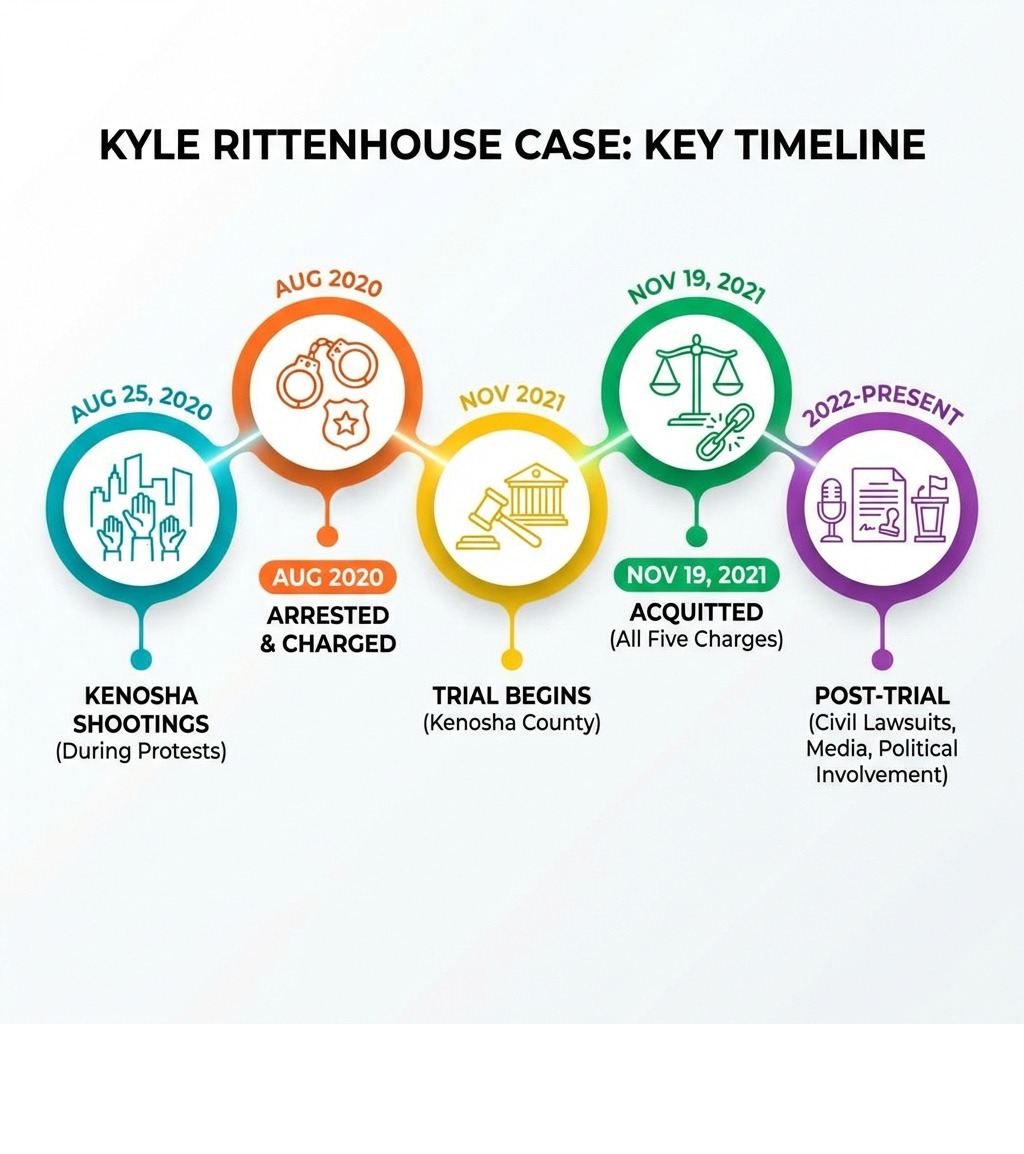
Key kyle rittenhouse vocabulary:
The Kenosha Shootings: A Timeline of Events
To understand the kyle rittenhouse case, we have to look back at the summer of 2020. It was a time of immense social friction across the United States, with significant demonstrations occurring throughout New York City and its surrounding boroughs. In Kenosha, Wisconsin, the spark was the police shooting of Jacob Blake, a Black man, which left him paralyzed. This incident triggered days of protests, some of which devolved into riots, arson, and property damage.
On August 25, 2020, the third night of unrest, 17-year-old kyle rittenhouse traveled from his home in Antioch, Illinois, to Kenosha. He was armed with an AR-15-style rifle, which had been purchased for him by an older friend, Dominic Black. Rittenhouse joined a group of other armed men who said they were there to protect a local car dealership and provide medical assistance to anyone injured.
The details of this highly polarizing case are documented through extensive video footage. Late that night, a series of three confrontations occurred:
- Joseph Rosenbaum: In a car dealership parking lot, 36-year-old Joseph Rosenbaum, who was unarmed, pursued Rittenhouse. Video showed Rosenbaum throwing a plastic bag at Rittenhouse and lunging for the barrel of his rifle. Rittenhouse fired four shots, killing him.
- Anthony Huber: As Rittenhouse ran toward police, a crowd followed him. He tripped and fell. 26-year-old Anthony Huber struck Rittenhouse with a skateboard and tried to pull the rifle away. Rittenhouse fired once, fatally hitting Huber in the chest.
- Gaige Grosskreutz: Moments later, 26-year-old Gaige Grosskreutz approached Rittenhouse while holding a handgun. Rittenhouse fired one shot, severing a portion of Grosskreutz’s bicep.
Rittenhouse eventually walked past police lines with his hands up, but he was not arrested until he returned to Illinois. The events of that single hour transformed a teenager into a national lightning rod, and they also traveled far beyond Wisconsin: New Yorkers in Brooklyn, Manhattan, New Paltz, and the Catskills debated what the footage showed, how fear is judged in self-defense claims, and what it means when armed civilians show up to a protest.
The Legal Battle: Kyle Rittenhouse on Trial
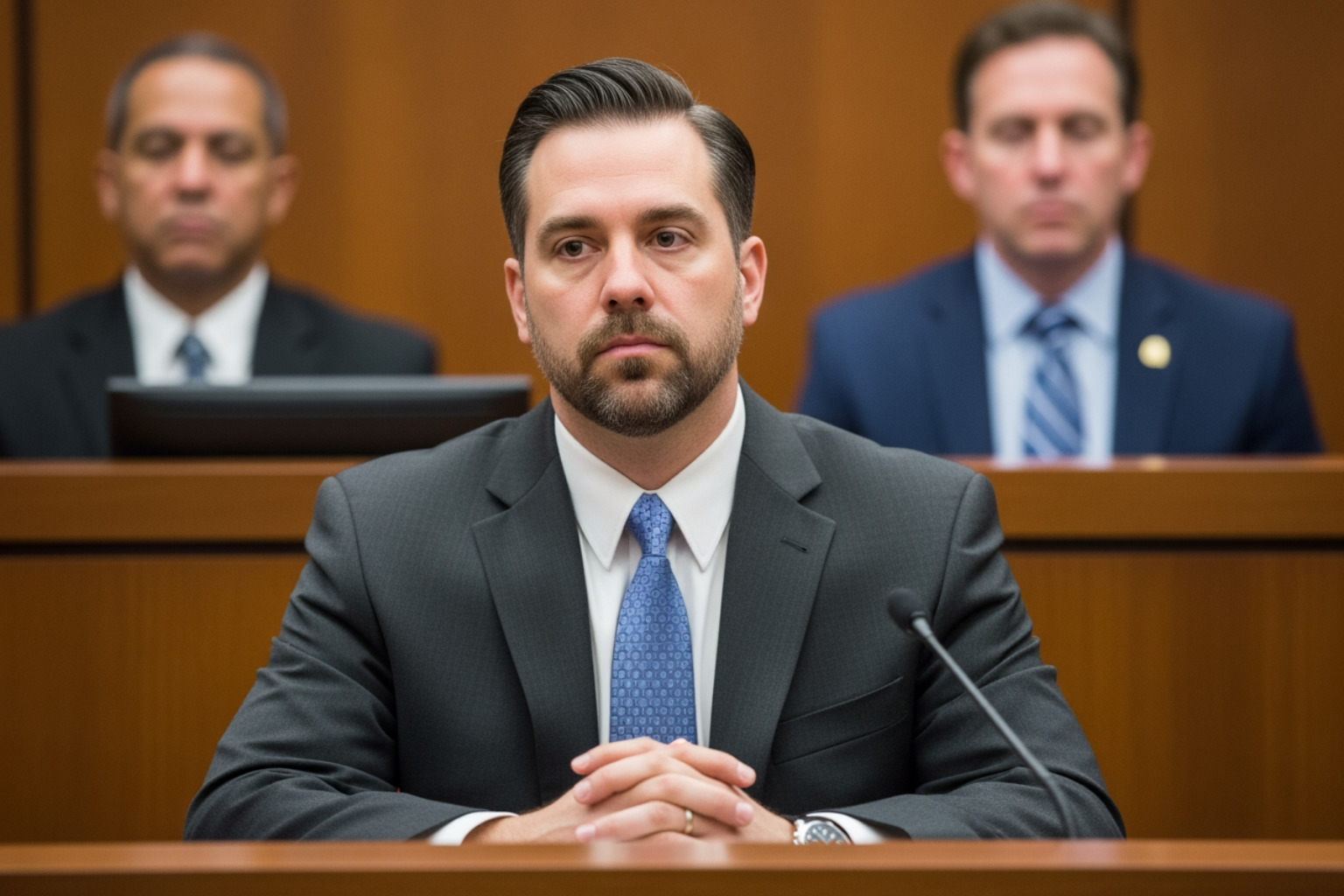
The trial began in November 2021 at the Kenosha County Courthouse. The eyes of the nation, including many in the New York legal community, were fixed on the courtroom, as nearly every minute was broadcast live. The jury, tasked with deciding the fate of kyle rittenhouse, eventually spent 27 hours deliberating over four days.
Rittenhouse faced five felony counts, including first-degree intentional homicide and reckless endangerment. The central question wasn’t whether he had pulled the trigger-he admitted he had-but whether he was legally justified in doing so.
Because Edible Brooklyn serves readers in Brooklyn, Manhattan, and upstate communities, it’s also worth noting why a Wisconsin case drew such attention here: New Yorkers compared Wisconsin’s self-defense framework and courtroom dynamics with how similar questions are argued in New York courts and in local public debate.
Prosecution Arguments Against Kyle Rittenhouse
The prosecution team, led by Thomas Binger and James Kraus, sought to portray Rittenhouse as an “active shooter” who had essentially brought a gun to a fistfight. They argued that by carrying a semi-automatic rifle into a volatile protest, Rittenhouse was a “tourist” looking for trouble and had provoked the very attacks he later claimed to be defending himself against.
A key part of their strategy involved scientific research on militia violence, suggesting that the presence of armed civilians often escalates tensions rather than calming them. Binger famously pointed the rifle toward the jury box during his closing argument to demonstrate the perceived threat Rittenhouse posed. However, the prosecution faced setbacks when their own witnesses, including Gaige Grosskreutz, admitted on the stand that they were pointing weapons at Rittenhouse before he fired.
Defense Strategy for Kyle Rittenhouse
The defense, led by Mark Richards, leaned heavily into the “perfect self-defense” argument. Under Wisconsin law, a person can use deadly force if they reasonably believe it is necessary to prevent imminent death or great bodily harm. This stands in contrast to the ‘duty to retreat’ principles often discussed in New York self-defense cases.
Richards argued that Rittenhouse was a well-intentioned young man who was attacked by “mobs.” Rittenhouse himself took the stand-a risky move for any defendant-and broke down in tears while describing the moments leading up to the first shooting. The defense’s narrative was simple: every person Rittenhouse shot had attacked him first, and he fired only to save his own life.
| Prosecution Argument | Defense Argument |
|---|---|
| Rittenhouse was an “active shooter” and provocateur. | Rittenhouse acted in lawful self-defense. |
| He traveled across state lines to find trouble. | He was there to protect property and provide first aid. |
| He used excessive force against unarmed people. | He fired only when his life was in immediate danger. |
| His presence escalated the violence of the night. | He was a victim of a “lynch mob” mentality. |
Verdict and the Post-Trial Media Landscape
On November 19, 2021, the jury returned a verdict of “not guilty” on all counts. In Manhattan, the media capital of the world, the reaction was immediate and visceral. Outside the courthouse, protesters and supporters clashed, reflecting the deep divisions within the country.
For many on the right, the acquittal was a victory for the Second Amendment and the right to self-defense. kyle rittenhouse was quickly accepted by conservative media. He sat for a documentary-style interview with Tucker Carlson on Fox News, which became one of the show’s most-watched episodes. He also traveled to Mar-a-Lago to meet with former President Donald Trump, who called him a “nice young man.”
Conversely, many on the left saw the verdict as a miscarriage of justice. Critics in Brooklyn and beyond argued that the acquittal and white privilege were inextricably linked, suggesting that a Black teenager in the same position would likely have faced a different outcome. They pointed to the judge’s rulings—such as not allowing the men shot to be called “victims” while permitting the terms “looters” and “rioters”—as evidence of a biased environment.
Broader Social and Legal Implications
The Rittenhouse case did more than just decide the fate of one individual; it set a cultural and legal precedent. It has become a cornerstone in discussions about the Second Amendment and the role of armed citizens in “protecting” their communities.
Socially, the case revealed a massive gap in how Americans perceive justice. In New York, where the intersection of race and law is a constant point of local discourse, the case is often cited alongside the murder of Ahmaud Arbery to discuss the intersection of race and the right to claim self-defense.
For readers in Brooklyn, Manhattan, New Paltz, and the Catskills, the case also became a proxy for arguments about safety and civic life that surfaced during 2020: how communities respond to unrest, what public order should look like, and who is empowered to act when institutions seem absent or overwhelmed.
Legally, the battle isn’t over. While Rittenhouse is free from criminal liability, he faces significant civil litigation. The family of Anthony Huber filed a wrongful death lawsuit details that a federal judge has allowed to proceed. Gaige Grosskreutz has also filed a civil suit. These cases will focus on whether Rittenhouse and the Kenosha law enforcement acted with negligence.
Frequently Asked Questions about the Rittenhouse Case
What were the specific charges against Kyle Rittenhouse?
Rittenhouse was charged with five counts: First-degree intentional homicide (for the death of Anthony Huber), First-degree reckless homicide (for the death of Joseph Rosenbaum), First-degree attempted intentional homicide (for the wounding of Gaige Grosskreutz), and two counts of first-degree reckless endangerment. He was acquitted of all five, a decision that was closely watched by legal analysts in New York.
Who were the individuals involved in the Kenosha shooting?
The three men shot were Joseph Rosenbaum, Anthony Huber, and Gaige Grosskreutz. Rosenbaum and Huber passed away from their injuries, while Grosskreutz survived. All three were white, as is kyle rittenhouse, though the events took place during a Black Lives Matter protest, sparking solidarity marches in Brooklyn and Manhattan.
What legal actions has Kyle Rittenhouse taken since his acquittal?
Rittenhouse has been proactive in the media space. He launched “The Media Accountability Project” (TMAP) with the goal of suing media outlets and celebrities he believes defamed him. He has also released a book titled Acquitted and remains active in gun rights outreach, which continues to be a topic of debate in New York political circles.
Conclusion
At Edible Brooklyn, we believe that understanding the complex social fabric of our country is essential, even when the topics are as heavy as the kyle rittenhouse case. While our focus is often on the vibrant food scene and local culture of Brooklyn, Manhattan, New Paltz, and the Catskills, we recognize that national events like these ripple through every community, sparking dialogue and shaping our collective future.
The Rittenhouse case remains a powerful example of the intersection of law, race, and politics in America. Whether viewed as a landmark for self-defense or a symptom of systemic flaws, its impact on the American psyche is undeniable.
As a local publication, our role is not to relitigate the case, but to help readers understand why it became a flashpoint-and why those debates echoed in New York neighborhoods and gathering places, from city blocks to small-town main streets.
To learn more about support provided by PBS and their coverage of these complex issues, we encourage you to explore their journalistic resources.
