
“This was always my dream project: to do something from where I come from,” explains Goa-born chef Eric McCarthy, sitting in the bustling back garden of his Cobble Hill restaurant, Indian Table.
“Most Americans are familiar with North Indian food and South Indian food, like Chicken Tikka Masala and Saag Paneer,” he goes on. “But I said, ‘Let me bring out the best of Goa.’”
India’s smallest state, Goa is located on the country’s western coast, nestled between Maharashtra to the north, Karnataka to the south and east, and the Arabian Sea to the west. An exceedingly rare find in the United States, Goan food is characterized by a unique blend of Indian and European flavors, ingredients, and methodologies, thanks to the heavy influence of Portuguese occupiers, who held the coastal territory for 451 years until India annexed the area in 1961.
The Road from Goa to Brooklyn
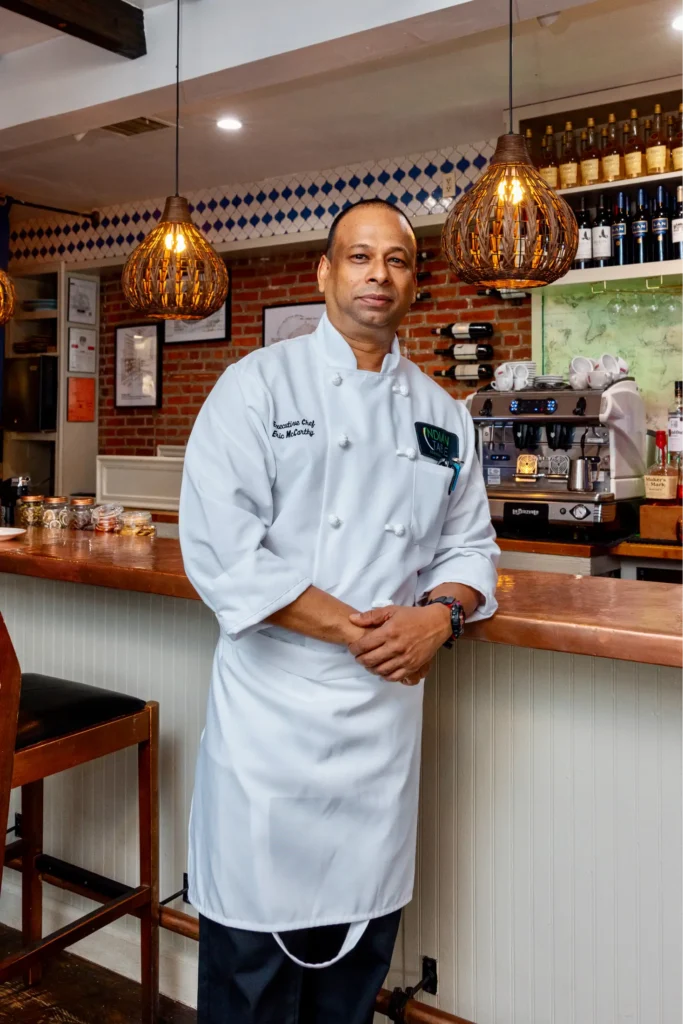
Born and raised in Goa, McCarthy grew up cooking with his family, helping his mother and grandmother prepare homestyle Goan classics for weekly Sunday feasts. He later joined the kitchen at his family’s bed and breakfast, where he expanded his culinary repertoire to include European dishes in demand with tourists. After graduating from the Institute of Hotel Management in Goa, McCarthy decided to find out if he was built for a career as a chef. “Why not go and try and see how I do?” he remembers thinking. “There was no turning back after that.”
He worked for a year with India’s Taj Hotel Group before joining Carnival Cruise Lines, with whom he traveled the world for half a decade cooking mostly French cuisine. Drawn to New York as the epicenter of the culinary world, McCarthy moved to the city and became the executive chef at Brick Lane Curry House in the East Village, where his infamously spicy phaal earned him early notoriety from the likes of the New York Times. He went on from there to Tamarind in Tribeca in 2008, where he spent seven years as executive chef and earned his first Michelin star. Then came Tulsi in 2014, where he spent another five years as Executive Chef in the pressure-cooker of a Michelin kitchen, defending his star for four consecutive years.
“And then, after that, I was just burnt out,” McCarthy laughs. “I don’t need that kind of stress. I just want to enjoy what I do. That’s why I decided to do something that’s close to my heart, my culture, my food.”
McCarthy secured the Court Street location for Indian Table in 2019, bringing many former colleagues with him across the river. Then, of course, the pandemic hit, forcing the nascent restaurant to become a primarily takeout operation. During that time, McCarthy began selling some of the Goan dishes he’d always hoped to bring to New York, to overwhelmingly positive feedback. When Indian Table was able to open in earnest in 2021, it was as a full-fledged Goan restaurant—the first of its kind in Brooklyn.
Dining at Indian Table
Sit down at Indian Table, and it’s immediately evident you’re not at a typical Indian restaurant. Even amid the rise of regional cuisine from the subcontinent in New York City, the proudly Goan restaurant is a further cry from the classic curry house than most guests will be prepared for.
The menu’s first page introduces you to the distinctive character of Goan food, and the following pages—notably devoid of familiar Indian classics—are rife with Portuguese. Aperitivos for appetizers, arroz for biryani, forno for tandoor, and sobremesa for dessert.
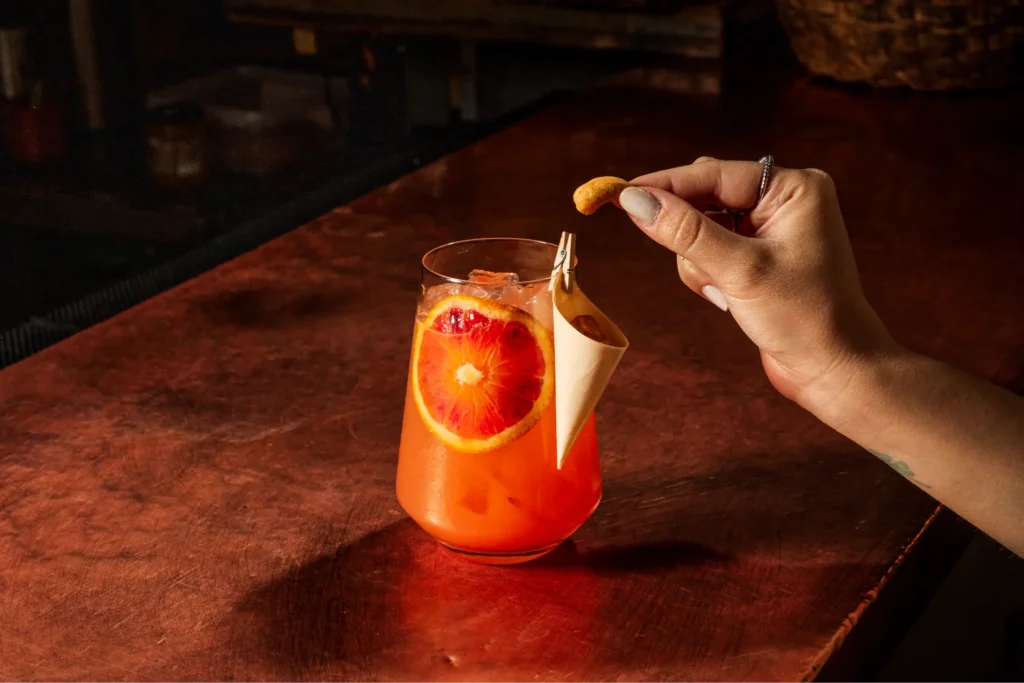
While you can order a classic cocktail at Indian Table, the most exciting (and most popular) items off the beverage menu can be found under O Coquetel De Goa, the list of Feni cocktails. Feni, a liquor distilled most often from fermented cashew apple or palm sap, is a traditional drink made only in Goa, beloved for its bright tropical flavors and earthy undertones, particularly in its cashew iteration.
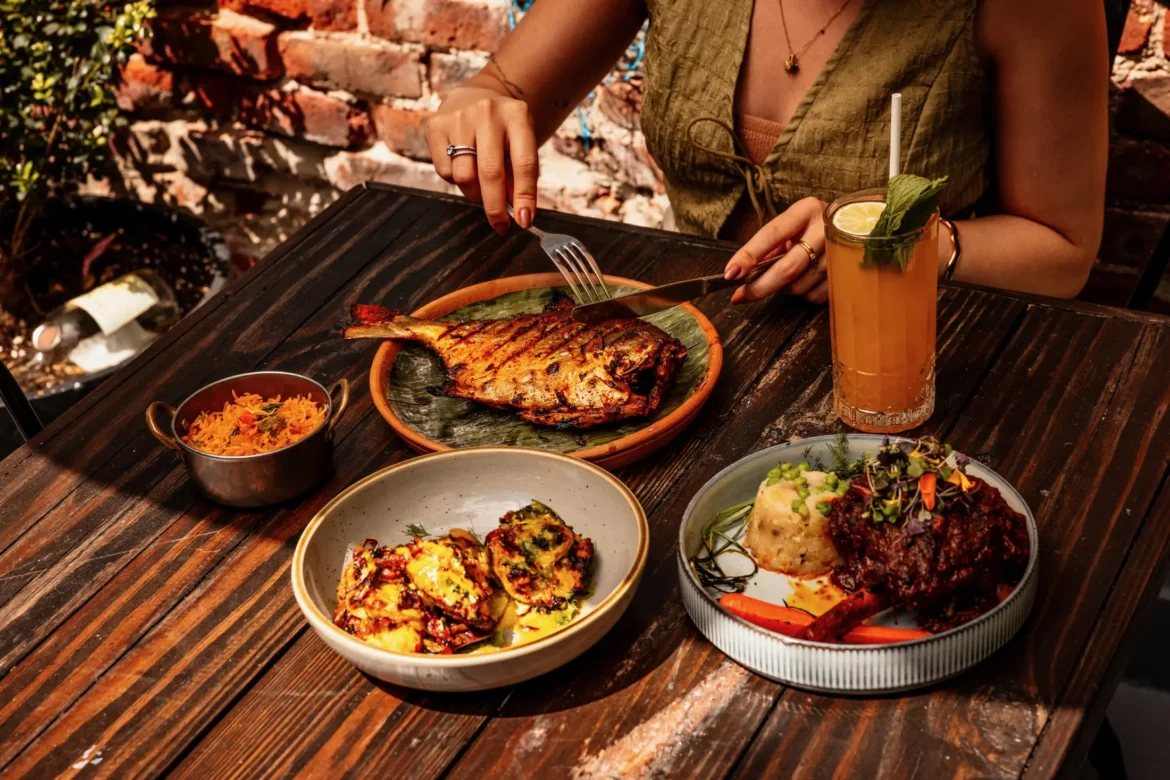
Your server will likely recommend the Susegad ($19), made with cashew feni, blood orange puree, ginger liqueur, and Limca (an Indian lemon-lime soda). It’s like rum punch with a bite, and a complex, pungent finish reminiscent of slivovitz, pisco, or another fruit brandy. The sidecar of salted cashews offers a perfect complement—you could go back and forth, biting and sipping until the bar closes down.
But back to the food: The restaurant boasts a large dinner menu, showcasing the profound variety of traditional Goan fare, replete with surprising delights farmed from McCarthy’s young life in his home region. “Most of the recipes I do here are from my aunt, from my grandmom, and from my mom,” he explains.
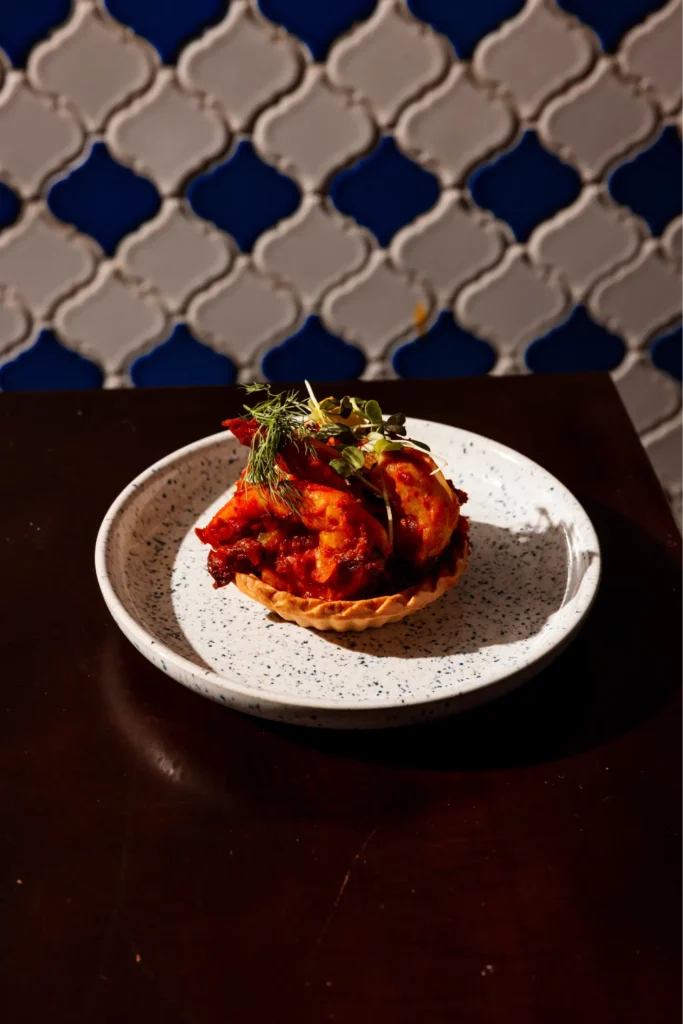
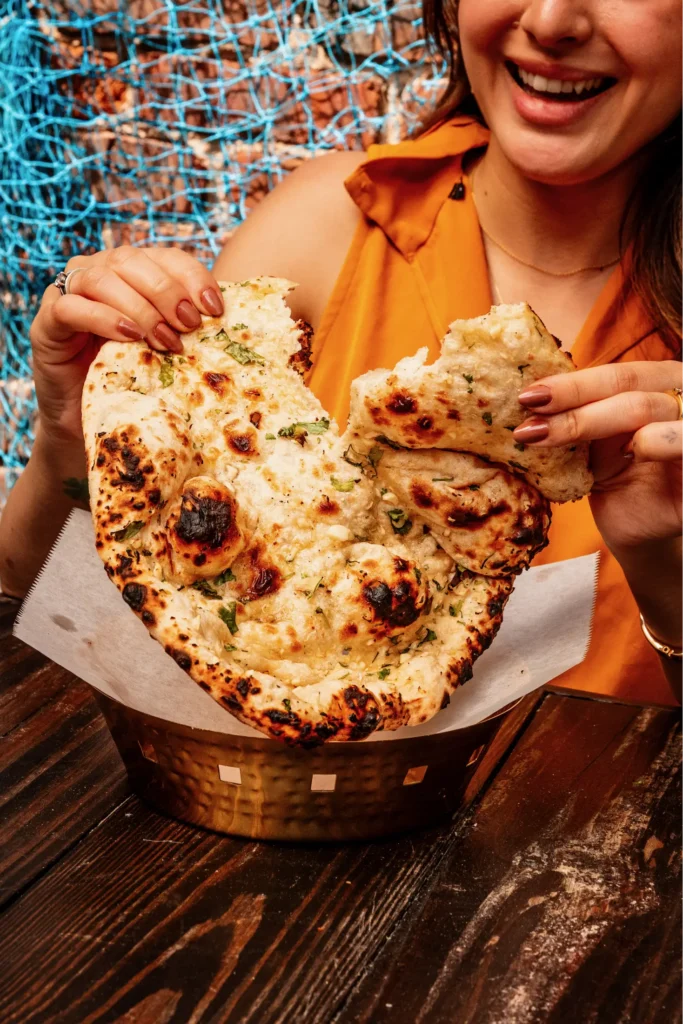
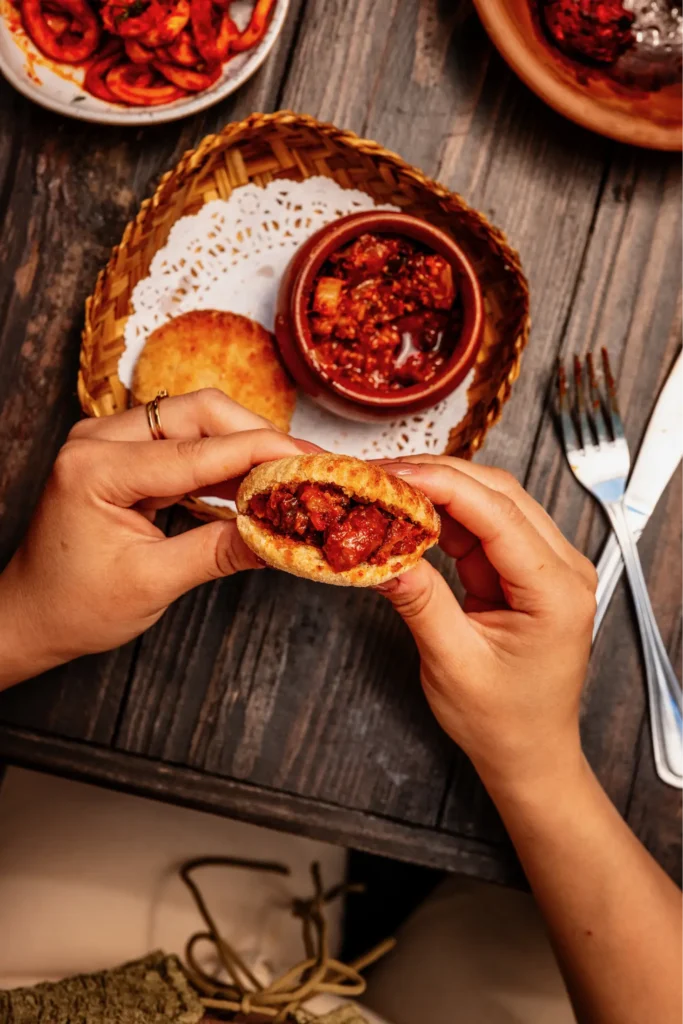
You might start your meal with the Croquetas De Bacalhao ($15)—cod croquettes that are creamy on the inside with a delicate crunch on the outside, best enjoyed between sips of your Susegad or an ice-cold Indian lager. Another star aperitivo is Caitan’s Ros Omelette ($15), McCarthy’s take on a classic Goan breakfast. The delicate masala omelette is served atop a light and generously spiced xacuti (a traditional Goan curry), with a side of poder păo (a delightfully spongy dinner roll, baked fresh daily). It’s an ultimate comfort bite—you’ll want to order another.
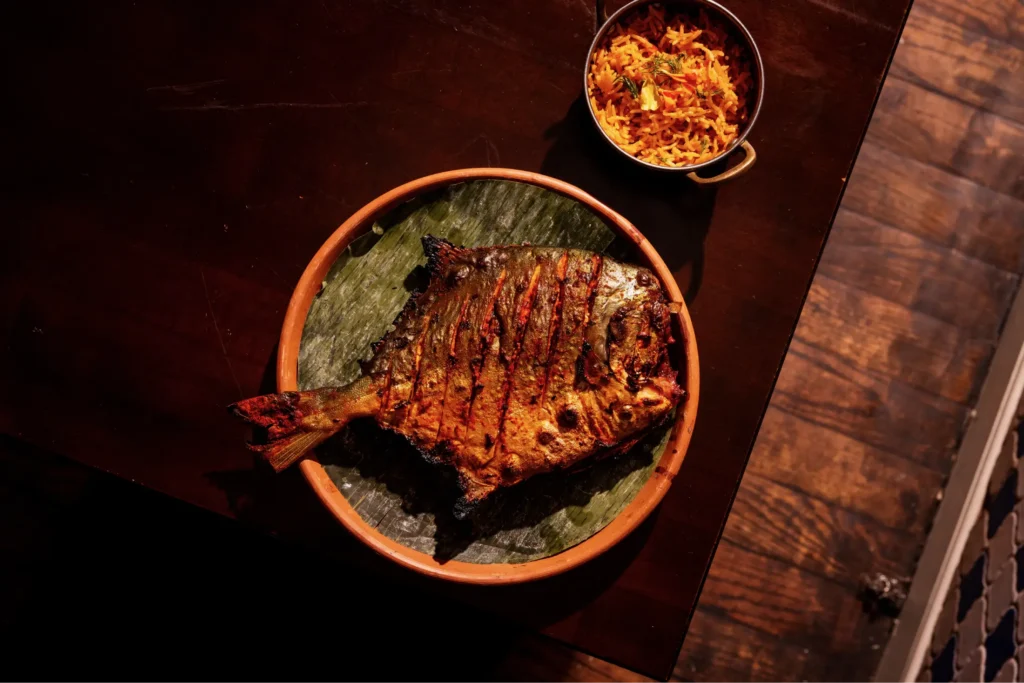
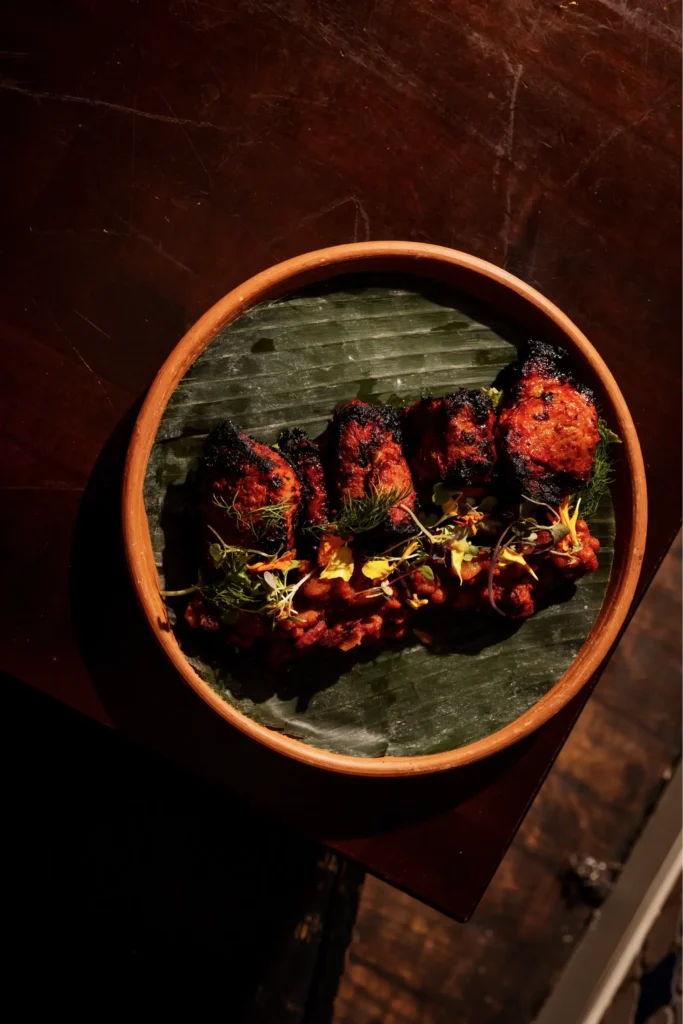
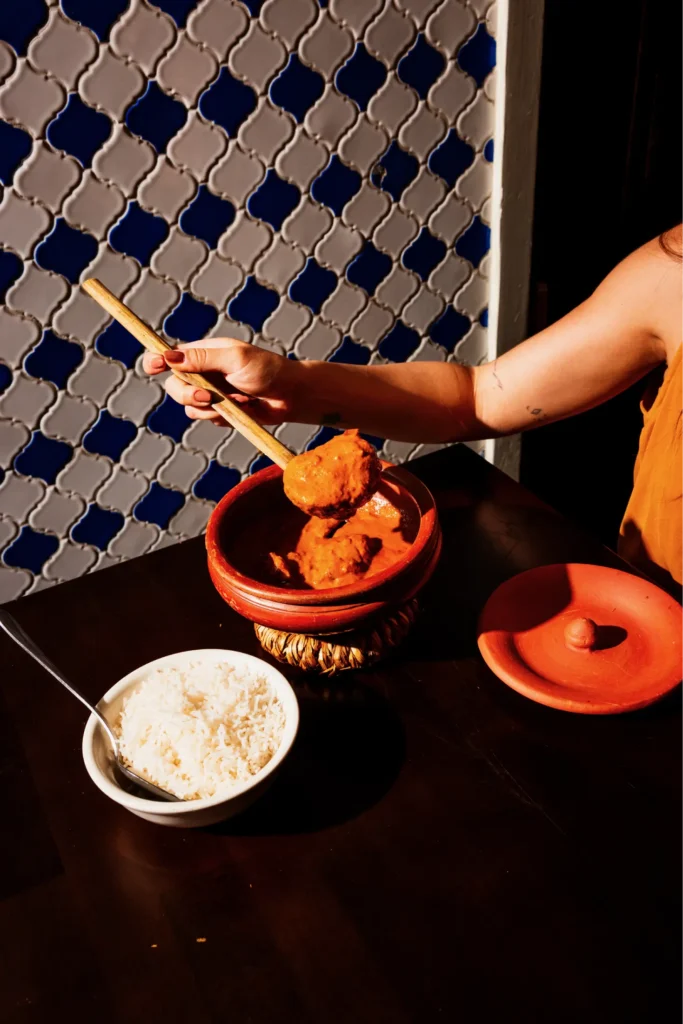
Entrees include the Vindalho De Porco ($35)—bright with acid and spice, with perfectly tender pieces of pork nestled among firm chunks of potato—as well as the signature Kalchi Kodi ($36), a rich, cozy halibut curry, which traditionally sits overnight to thicken and deepen in flavor (hence the name, which translates directly to “yesterday’s curry”). For vegetarians, the Tendli Channache Bhaji ($25) is like a warm, creamy salad of juicy Indian ivy gourd, crispy black chickpeas, and green mango—a phenomenal textural experience.
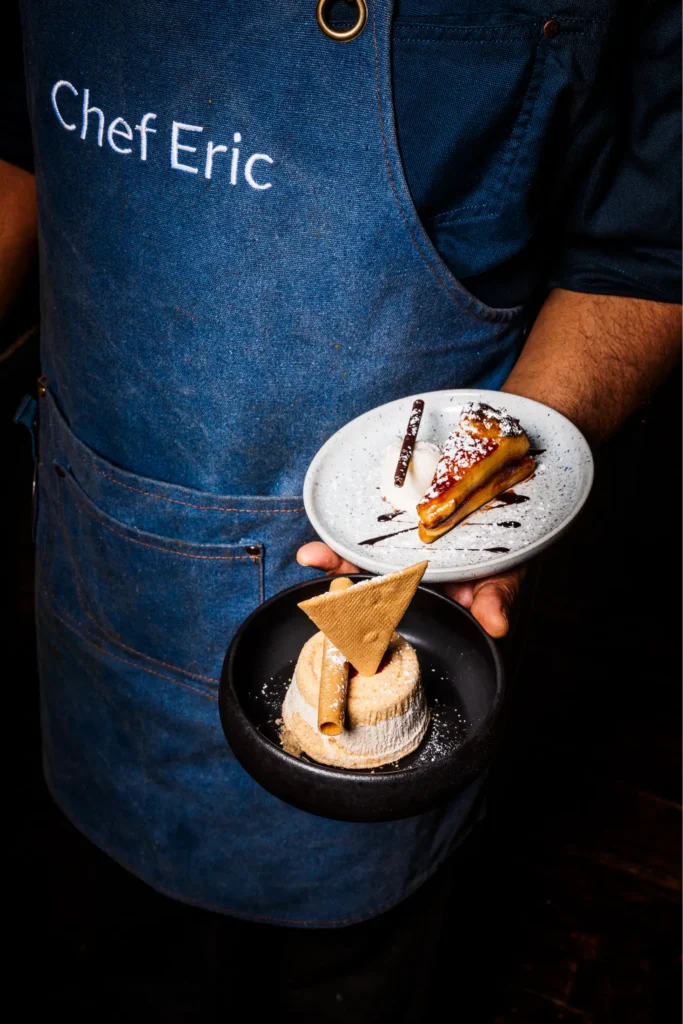
For dessert, the Bebinca ($12) is a dense, eggy cake, generously spiced with nutmeg, served with a small bite of coconut ice cream.
At Home in Cobble Hill
The move to Brooklyn has been a success for McCarthy, who lauds the borough for its slower pace and Cobble Hill in particular for its food-savvy residents and convenient location.
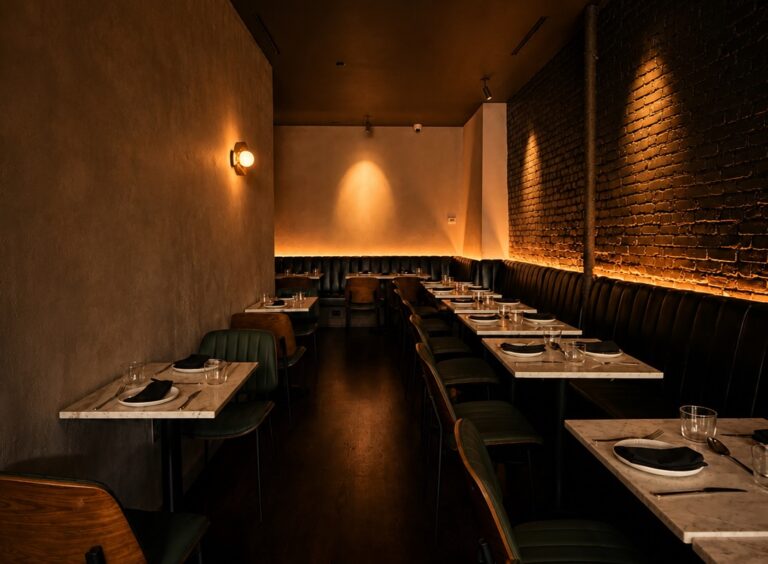
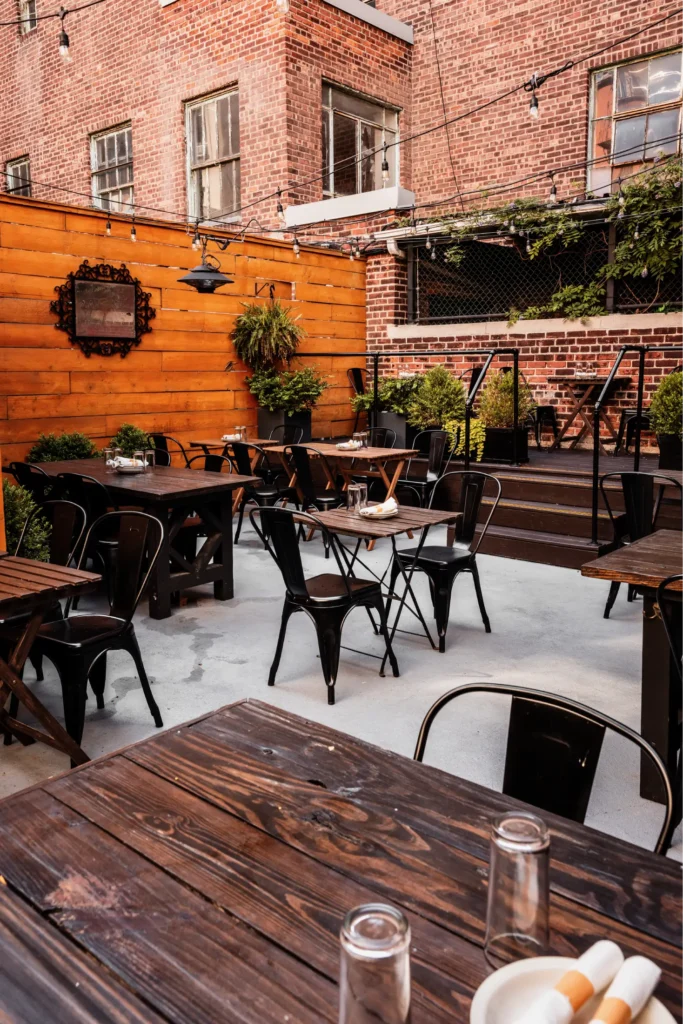
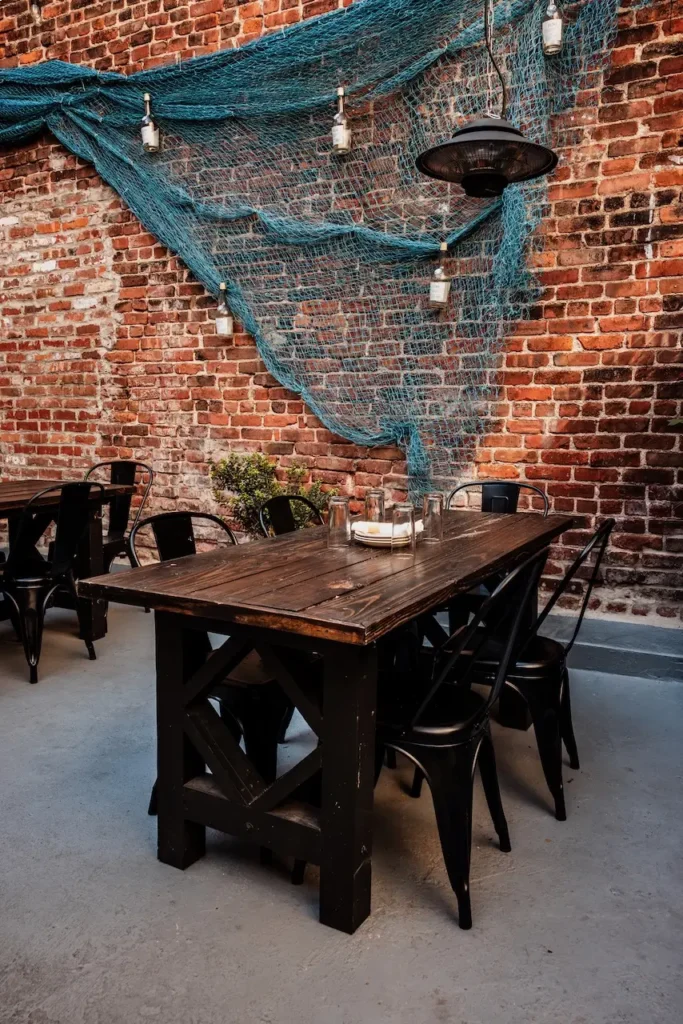
It’s a bustling restaurant by design. McCarthy wants guests to enter to the sound of clinking glasses, chiming silverware, and good conversation. A Goan fishing net hangs from the brick wall of the spacious backyard, adorned with numerous empty Feni bottles, invoking the spirit of celebrations past and inviting carefree indulgence. The long interior dining room is large enough to relax in, and though the restaurant fills up, particularly on the weekends, McCarthy doesn’t nudge people out the door.
“When guests come and sit here, they don’t want to leave. I have guests here who come at 5, and they leave at 10,” he says. “We don’t like to push guests out. We don’t want them to feel like they’re not wanted.”
This is a disposition particularly characteristic of Goa, which—aside from its food—is known for its laid-back atmosphere, evoked with the word “susegad,” borrowed from the Portuguese “sossegado,” for quiet. A complex term—both a colonial projection and a point of regional pride—susegad is alive at Indian Table, where the service is great but casual, and the food is humbly excellent.
Indian Table is open every day for lunch and dinner, both for dine-in and takeout. Reservations can be booked through their website. They also offer catering and full or partial buyouts of their 120-seat space.