


Why Shakira’s Age Matters to Her Incredible Career
Shakira’s age is 47 years old. The Colombian superstar was born on February 2, 1977, in Barranquilla, Colombia.
Quick Facts:
- Current Age: 47 years old
- Birthdate: February 2, 1977
- Zodiac Sign: Aquarius
- Birthplace: Barranquilla, Colombia
- Full Name: Shakira Isabel Mebarak Ripoll
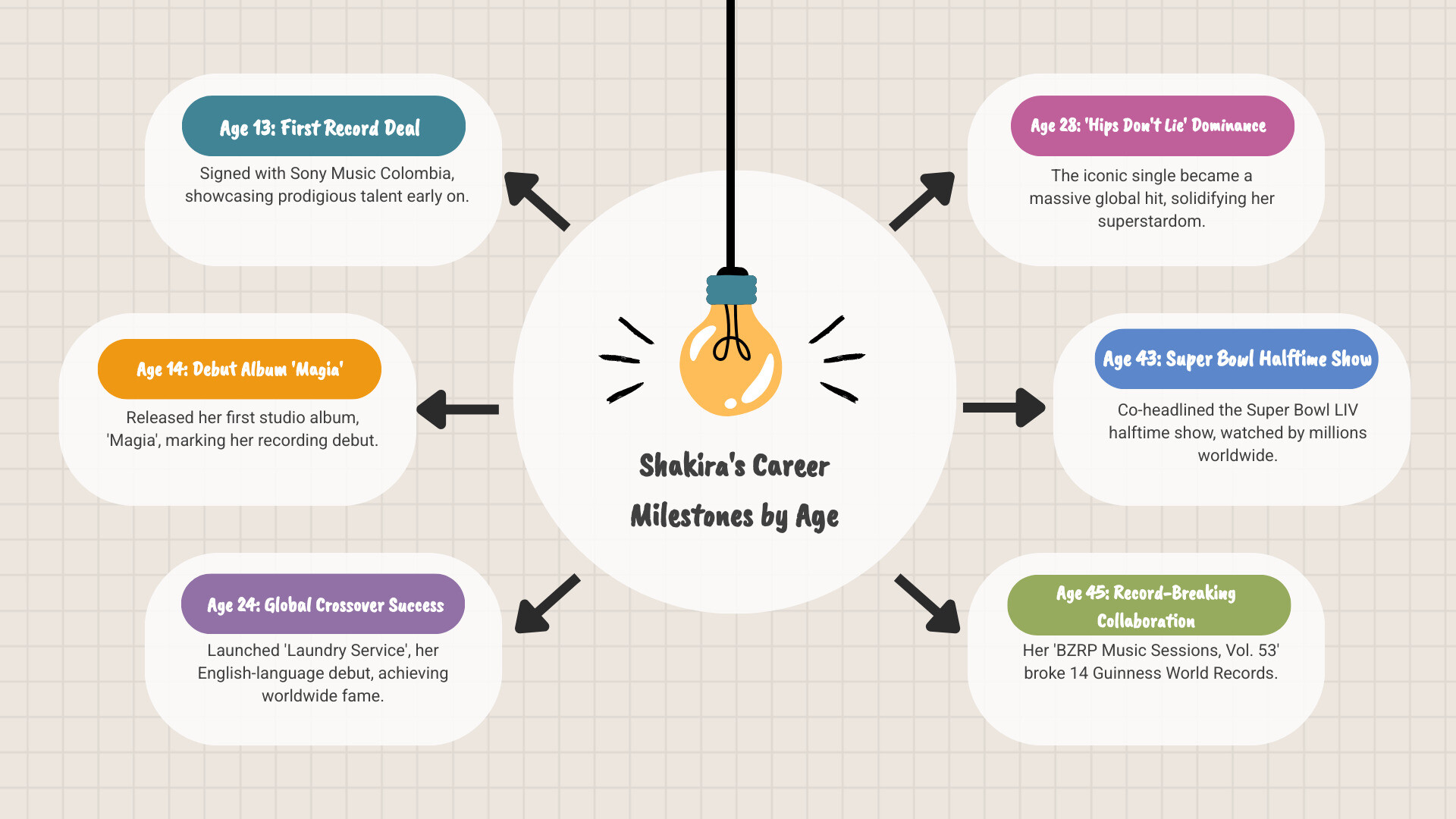
Shakira’s age tells a remarkable story. She signed her first record deal at just 13, released her debut album at 14, and achieved global crossover success at 24 with Laundry Service. Now in her late 40s, she’s still breaking records and dominating charts—her 2023 collaboration “BZRP Music Sessions, Vol. 53” broke 14 Guinness World Records when she was 45.
From belly dancing at her Catholic school as a child to performing at the Super Bowl at 43, Shakira has proven that age is just a number. She’s sold over 80 million records worldwide and won multiple Grammy Awards across four decades. Her career arc shows how she’s evolved from a teenage Colombian artist to the undisputed Queen of Latin Music.
What makes Shakira’s age particularly interesting is how she’s maintained relevance across generations. While many artists peak early, Shakira has continually reinvented herself—blending Latin pop, rock, and Middle Eastern influences—proving that talent and authenticity transcend age.
For us at Edible Brooklyn, her story also resonates in a very local way. New York, and especially Brooklyn and Manhattan, have long been hubs for Latin music, dance, and food. You can hear Shakira blasting from bodegas in Bushwick, bars in Williamsburg, and cafes in Jackson Heights, soundtracking everything from late-night arepas to brunch margaritas. Her cross-cultural sound mirrors the experience of eating your way through our boroughs: Colombian bakeries in Sunset Park, Lebanese spots in Brooklyn Heights, and pan-Latin restaurants all over downtown Manhattan.
Shakira’s journey—from Barranquilla to global stages, with New York as one of her most important tour stops—echoes the kind of immigrant and diasporic stories we tell through food. The way she layers Colombian and Middle Eastern influences into her music is not so different from how New Yorkers layer flavors on a plate. In many Brooklyn venues, you’ll find Shakira’s hits playing over mezze spreads, ceviche flights, or inventive arepa tastings, turning a simple meal into a mini celebration.
Shakira’s Age: The Foundational Years
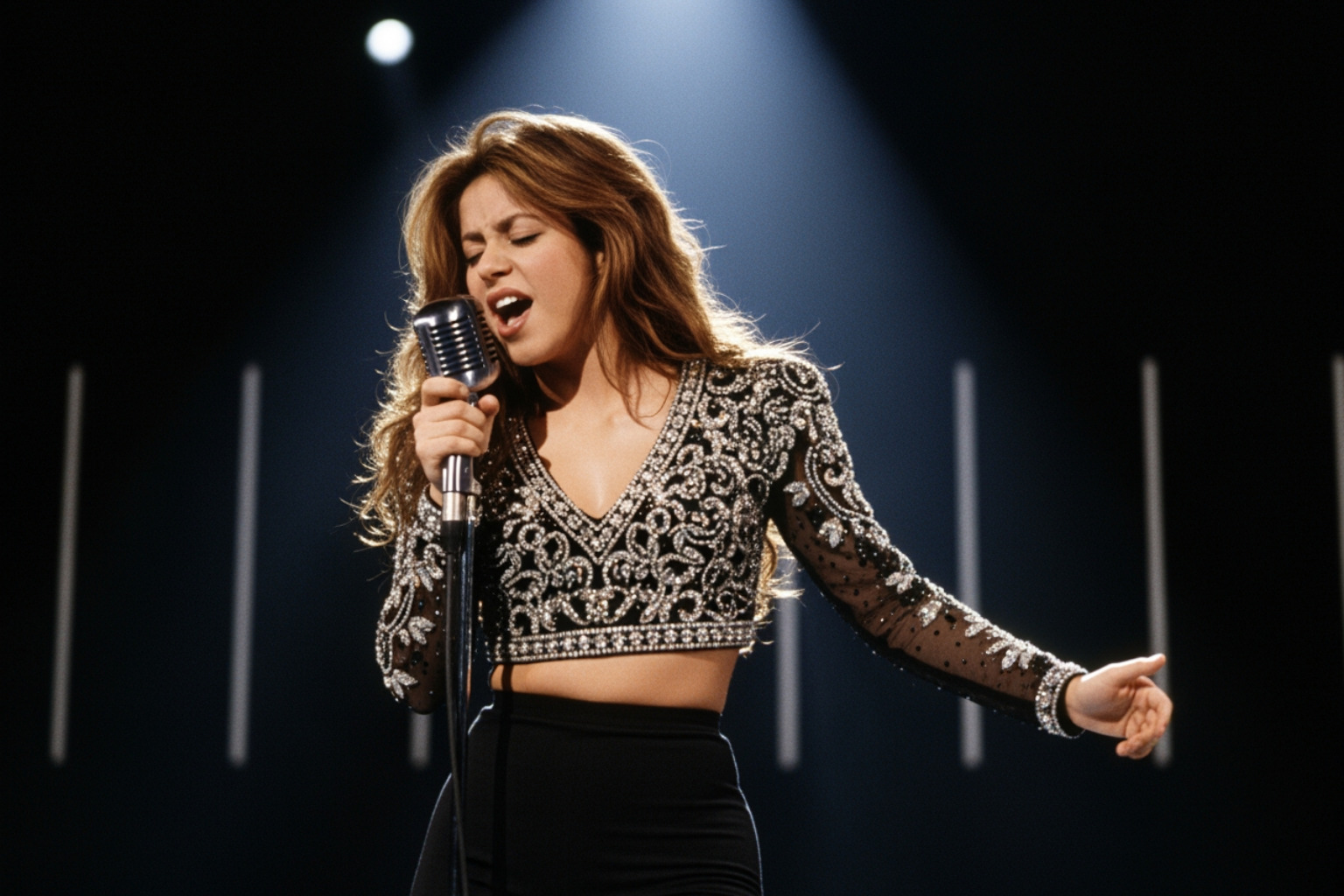
To truly appreciate Shakira’s enduring career, we must first look back at her foundational years, where her innate talent and passion for music first blossomed. Shakira Isabel Mebarak Ripoll was born in Barranquilla, Colombia, on February 2, 1977. She hails from a rich cultural background, with a Colombian mother and a Lebanese father, a heritage that would later profoundly influence her unique blend of musical styles and her signature belly dancing.
Even as a young child, Shakira’s artistic inclinations were evident. We learned that she began writing songs as early as eight years old, demonstrating a precocious talent for lyrical expression. Her early life was also marked by a love for performance; she started belly dancing as a child, an activity encouraged by her parents and teachers at her Catholic school. It’s a fun fact that at age four, her father took her to a Middle Eastern restaurant where she heard the doumbek and spontaneously started belly dancing on a table, a moment that clearly resonated with her. We also found that she wrote a poem called “The Crystal Rose” when she was just four, showcasing an early creative spark.
However, her journey wasn’t without its early challenges. A school music teacher, perhaps not recognizing her unique vocal quality, even rejected her for the school choir, reportedly telling her she sounded like a goat due to her strong vibrato! Despite this, her determination remained unwavering. By the age of 13, she signed her first record deal with Sony Music Colombia, marking the official beginning of her professional musical journey. We can find more details about her early life and career on her Official biography from her website.
Growing up in Barranquilla, a port city where Caribbean flavors, Lebanese recipes, and Colombian street food collide, Shakira was surrounded by the same kind of culinary mash-up you can now find across Brooklyn and Manhattan. Today, New York restaurants that highlight Colombian bandeja paisa, arepas, or Middle Eastern staples like hummus and shawarma are natural pairings for a Shakira-heavy playlist. Her cultural blend feels right at home in neighborhoods like Sunset Park, Park Slope, and the Lower East Side, where hybrid identities are celebrated at the table.
How old was Shakira when she released her first album?
Shakira was 14 years old when her debut album, Magia (meaning “Magic”), was released in June 1991 under Sony Music Colombia. The recording process for Magia began when she was just 13, a testament to her early start in the demanding music industry. This album primarily featured pop rock ballads and disco-uptempo songs, with Shakira writing the majority of the tracks. It also included her debut single, “Magia,” and other songs like “Sueños.” While Magia showcased her burgeoning talent, it didn’t achieve widespread commercial success.
Following Magia, Shakira released her second studio album, Peligro (meaning “Danger”), in March 1993, when she was 16 years old. This album featured singles such as “Tú Serás la Historia de Mi Vida” and “Eres.” Interestingly, Shakira herself was reportedly not pleased with the final production of Peligro. While it was better received than Magia, it also didn’t meet commercial expectations. These early albums, despite their limited success, were crucial stepping stones, allowing Shakira to hone her craft and gain invaluable experience in the recording studio. You can dig deeper into her debut album, Magia, by visiting More on her debut album Magia).
What was Shakira’s breakthrough age?
Shakira’s true breakthrough came with the release of her third studio album, Pies Descalzos (meaning “Bare Feet”), in 1995. At the time of its release, Shakira was 18 years old. This album marked a significant turning point in her career, as it achieved major success across Latin America. It was a more assertive sound, blending pop rock with elements of reggae, dancehall, bossa nova, and bachata, featuring direct lyrics and a personal aesthetic that resonated deeply with audiences. Pies Descalzos showcased her evolution as an artist and sold over 3 million copies, establishing her as a prominent figure in the Latin American music scene.
Her momentum continued with the release of Dónde Están los Ladrones? (meaning “Where Are the Thieves?”) in 1998, when she was 21 years old. This album, recorded in Gloria and Emilio Estefan’s Miami studio, became an even bigger worldwide success. It earned her a Grammy nomination and further solidified her status as a leading Latin artist. Dónde Están los Ladrones? released a “maelstrom of infectious energy” with her mesmerizing voice and a “deep vibrato” that captivated listeners. It also showcased her “bohemian rockera persona” and incorporated Arabic music and Middle Eastern music elements, particularly in the world hit “Ojos Así,” demonstrating her unique fusion of sounds. At this age, Shakira had firmly cemented her place as a major force in Latin music—a sound that would later shape many of the Latin playlists in New York restaurants, food halls, and outdoor markets where Edible Brooklyn loves to eat.
A Timeline of Career Milestones and Age
Shakira’s career has been a dynamic journey, marked by continuous evolution and groundbreaking achievements. Her ability to adapt, innovate, and connect with global audiences has allowed her to remain a relevant and influential force in music for decades. Let’s look at some key milestones and how her shakira age correlated with these pivotal moments.
| Album Title / Event | Release Year / Event Year | Shakira’s Age (approx.) |
|---|---|---|
| Magia (Debut Album) | 1991 | 14 |
| Peligro | 1993 | 16 |
| Pies Descalzos (Breakthrough) | 1995 | 18 |
| Dónde Están los Ladrones? | 1998 | 21 |
| Laundry Service (Crossover) | 2001 | 24 |
| Fijación Oral, Vol. 1 | 2005 | 28 |
| “Hips Don’t Lie” (Single) | 2006 | 29 |
| Oral Fixation, Vol. 2 | 2005 | 28 |
| She Wolf | 2009 | 32 |
| “Waka Waka” (World Cup Anthem) | 2010 | 33 |
| Hollywood Walk of Fame Star | 2011 | 34 |
| The Voice Coach | 2013-2014 | 36-37 |
| Super Bowl LIV Halftime Show | 2020 | 43 |
| “BZRP Music Sessions, Vol. 53” | 2023 | 45 |
| Las Mujeres Ya No Lloran | 2024 | 47 |
Beyond the releases and awards, many New Yorkers can trace their own memories through this timeline: Shakira tracks playing in tiny Brooklyn bars during the Laundry Service era, “Hips Don’t Lie” soundtracking summer block parties and backyard barbecues, or “Waka Waka” echoing from sports bars and Colombian restaurants during the 2010 World Cup while plates of empanadas, arepas, and wings fly out of the kitchen. Her catalog has quietly become part of the city’s food-and-music backdrop.
The Global Crossover at Age 24
The year 2001 marked a monumental shift in Shakira’s career as she made her highly anticipated English-language debut with the album Laundry Service. At this point, Shakira age was 24, and she was ready to conquer the global music scene. Having already achieved significant success in Spanish-speaking markets, she wisely chose to move to Miami, where she taught herself English specifically for songwriting, demonstrating her ambition and strategic thinking.
Laundry Service was a commercial phenomenon, selling over 13 million copies worldwide and reaching number three on the Billboard album chart. This album was a masterclass in cultural fusion, blending pop-rock with her signature Middle Eastern and Andean influences, creating a sound that was both familiar and exotic to new audiences. The lead single, “Whenever, Wherever” (known as “Suerte” in its Spanish version), became a global anthem, taking heavy influence from Andean music with its use of charango and pan flute. This track was the best-selling single of 2001, propelling her into superstardom.
Her crossover was so impactful that the Los Angeles Times described her as the first artist of the “rock en español” generation to become a star in the U.S., highlighting her unique blend of rock and native styles. However, not everyone initially accepted her English transition. Some detractors claimed she was “abandoning her essence” for Anglo audiences, a criticism that time has clearly disproven as she continued to accept both languages and cultures throughout her career. We can learn more about this pivotal period and her successful transition by reading about her crossover success.
In New York, that crossover period coincided with a boom in Latin nightlife and dining. Shakira’s English and Spanish hits played side by side in Brooklyn lounges, Manhattan rooftops, and small neighborhood restaurants, where ceviches, arepas, and plantain dishes were starting to gain wider attention beyond Latin communities.
Dominating Her 30s
As Shakira entered her 30s, her star continued to rise, marked by some of her most iconic and globally recognized work. In 2005, at the approximate Shakira age of 28, she released Oral Fixation, Vol. 2, the English-language counterpart to Fijación Oral, Vol. 1. This album further cemented her international appeal, selling over 1.8 million records in the U.S. and more than eight million worldwide.
The following year, in 2006, she released what would become one of her most enduring hits: “Hips Don’t Lie.” This collaboration with Wyclef Jean, released when she was 29, was a global sensation, topping charts in numerous countries and becoming the biggest-selling single of the 21st century worldwide at the time. Its infectious rhythm and iconic music video, showcasing her phenomenal belly dancing skills amid a Carnival setting, were unforgettable.
Her album She Wolf, released in 2009 when she was 32, saw Shakira adopting an electro-pop sound. The album, featuring the celebrated anthem “She Wolf” and its Spanish equivalent “Loba,” contrasted sharply with her previous work, demonstrating her willingness to experiment and stay current with evolving musical trends.
A year later, in 2010, at the Shakira age of 33, she scored another massive international hit with “Waka Waka (This Time for Africa).” This collaboration with South African band Freshlyground was chosen as the official anthem of the 2010 FIFA World Cup, becoming the biggest-selling World Cup song of all time and garnering over a billion views on YouTube by 2016.
Her influence and achievements were recognized beyond album sales. In 2011, at 34 years old, Shakira was honored with a star on the Hollywood Walk of Fame, a testament to her lasting impact on entertainment. She also took on a new role, joining the coaching panel of the popular American reality singing competition The Voice for its fourth season in 2013 and returning for its sixth season in 2014, when she was 36-37. This move introduced her to an even broader audience and showcased her charismatic personality and musical expertise. Her consistent presence across different media and her ability to produce chart-topping hits demonstrate her unwavering dominance throughout her 30s.
For many New Yorkers now in their 30s and 40s, those years line up with memories of finding Colombian bakeries in Queens, late-night tacos in Bushwick, or early brunch culture in Williamsburg—often with Shakira songs pulsing in the background.
A Resurgence in Her 40s
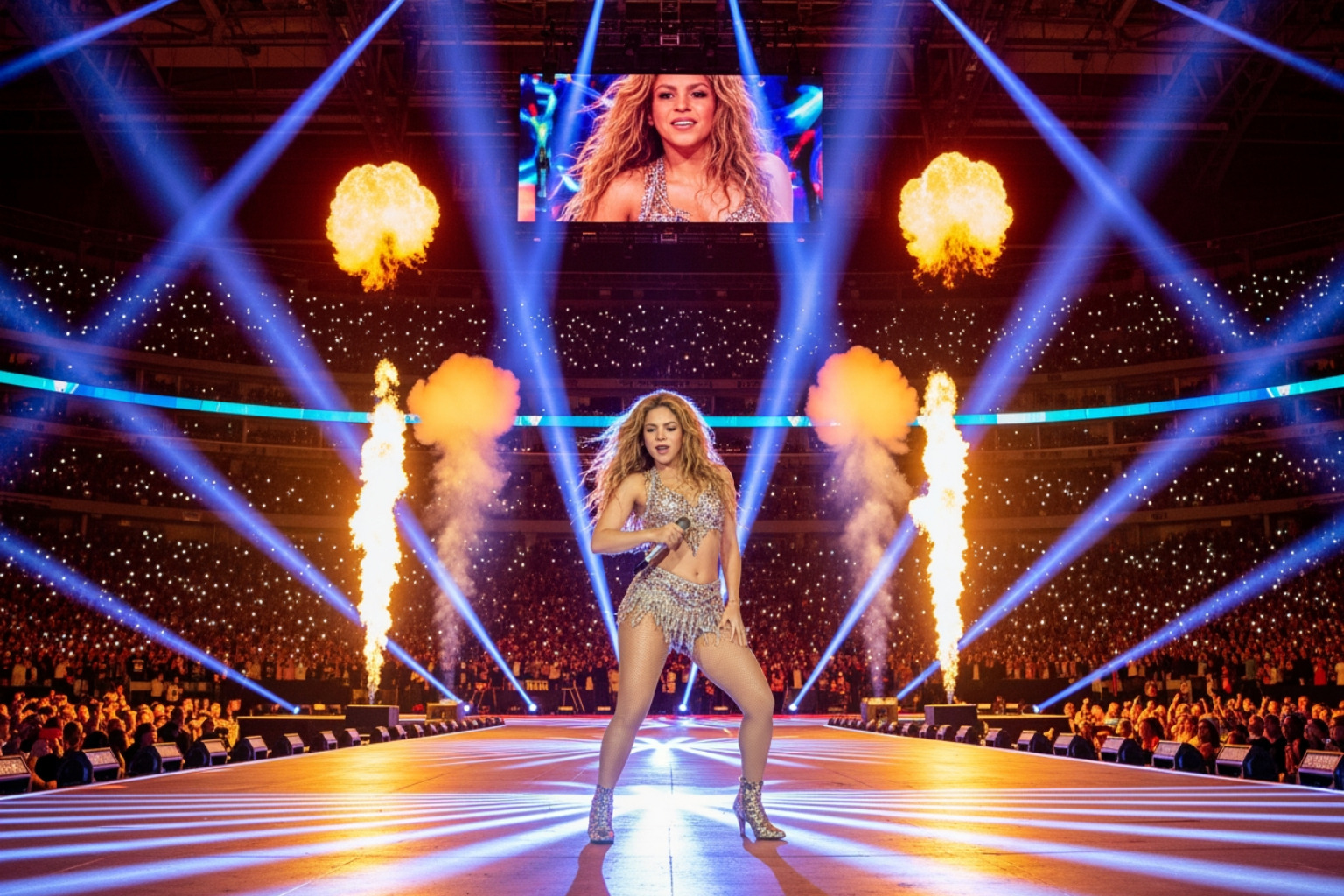
Shakira’s career in her 40s has been nothing short of spectacular, marked by powerful performances and record-breaking releases that prove her enduring relevance. At the approximate Shakira age of 43, she co-headlined the Super Bowl LIV halftime show in 2020 alongside Jennifer Lopez. Her performance was a vibrant celebration of Latin culture, featuring specific Afro-Colombian dances like mapalé and champeta, and showcasing her incredible energy and stage presence. The show captivated audiences worldwide, reminding everyone of her unparalleled talent.
Just a few years later, in 2023, when she was 45, Shakira once again dominated global conversations with her collaboration “BZRP Music Sessions, Vol. 53” with Argentinian DJ Bizarrap. This track, notable for its “diss track” nature aimed at her ex-partner Gerard Piqué, became an instant viral sensation. It broke an astonishing 14 Guinness World Records, including the most-viewed Latin track on YouTube in 24 hours and the fastest Latin track to reach 100 million views. The song’s success was not just a personal triumph but also highlighted her ability to leverage contemporary trends and personal experiences into universally relatable, chart-topping hits.
Her recent studio album, Las Mujeres Ya No Lloran (meaning “Women No Longer Cry”), released in 2024 at Shakira age 47, marked her first album in seven years. This highly anticipated return debuted at number 13 on the U.S. Billboard 200 with 34,000 album-equivalent units in its first week and achieved a 7x Platinum certification, signaling a strong comeback. This latest chapter in her career reaffirms her status as a global icon who continues to push boundaries and connect with millions, proving that her artistry only grows stronger with time.
In Brooklyn and Manhattan venues today—from Colombian restaurants in Jackson Heights and Bushwick-adjacent stretches to cocktail bars in Williamsburg and Soho—Shakira’s 40s-era tracks are part of the current soundtrack. Whether you are sharing patacones, sipping a mezcal cocktail, or grabbing a quick arepa before a show, chances are one of her anthems is playing overhead, bridging generations at the table.
Frequently Asked Questions About Shakira’s Age
We often get asked about the specific details of Shakira’s age, and it’s clear why. Her career has spanned so many decades and seen so many changes that people are naturally curious about her journey through time. Let’s address some of the most common questions we hear.
What is Shakira’s current age?
Shakira is 47 years old. She was born on February 2, 1977. It’s truly remarkable to see an artist maintain such a high level of performance and relevance for so long. Her energy on stage and in her music videos often makes it seem like she defies the very concept of age.
In New York, that energy translates directly to nightlife and dining culture. From Brooklyn dance floors where her songs close out the night to Manhattan restaurants that lean on her hits to set a celebratory mood, Shakira at 47 remains part of the city’s everyday soundtrack.
What is Shakira’s birthdate?
Shakira’s birthdate is February 2, 1977. For astrology enthusiasts, this makes her an Aquarius. Aquarians are known for being independent, intellectual, and humanitarian, traits that certainly align with Shakira’s public persona and extensive philanthropic work through her Pies Descalzos Foundation.
A fun fact we uncovered is that she famously shares her birthday with her ex-partner, Gerard Piqué. Both were born on February 2nd, though Piqué was born in 1987, making him 10 years younger than Shakira. This shared birthday was a curious detail throughout their long-term relationship.
How does Shakira’s age compare to other pop icons?
At 47, Shakira’s age places her among a generation of incredibly resilient and enduring pop icons who have demonstrated remarkable longevity in the music industry. Artists like Jennifer Lopez (born 1969), Beyoncé (born 1981), and Britney Spears (born 1981) are contemporaries who have also maintained significant careers for decades.
What sets Shakira apart, even among these legends, is her consistent ability to achieve chart success and critical acclaim across four different decades. She was the first woman to have number-one albums across four decades on the Billboard Top Latin Albums chart. This speaks volumes about her adaptability, artistic integrity, and unwavering connection with her fanbase, allowing her to stay relevant in an ever-changing industry. Her career is a testament to how talent, hard work, and a willingness to evolve can lead to an enduring legacy, rather than a fleeting moment of fame. She continues to break records and start on major tours, proving that her artistic fire burns as brightly as ever.
For Edible Brooklyn readers, that longevity mirrors the way New York’s Latin food scene has grown alongside her career—from a handful of beloved neighborhood spots to a vibrant network of Colombian, pan-Latin, and Middle Eastern-inspired restaurants and bakeries across Brooklyn and Manhattan. Shakira’s music, like the dishes we love to cover, has aged into a classic.
Conclusion
We’ve journeyed through the incredible career of Shakira, looking at how her shakira age has marked significant milestones and changes. From a prodigious teenager signing her first record deal at 13, to her global crossover at 24 with Laundry Service, and her recent resurgence in her 40s with record-breaking hits and a triumphant new album, Shakira’s career is a testament to extraordinary talent and relentless evolution.
She has consistently defied expectations, blending genres, languages, and cultures to create a unique sound that resonates worldwide. Her story is one of perseverance, from early rejections to becoming the undisputed Queen of Latin Music, selling over 80 million records, and winning multiple Grammy Awards. Shakira’s journey highlights that age is indeed just a number, especially when fueled by passion, creativity, and a genuine connection with one’s art.
Her enduring legacy is not just in her music but also in her profound cultural impact and humanitarian efforts. As Edible Brooklyn, we celebrate cultural icons who, like the vibrant food scene in our beloved Brooklyn and Manhattan, only get better with time. Shakira’s career is a delicious example of timeless talent, proving that true artistry and dedication can lead to an extraordinary, decades-long feast for the senses.
If her songs are the soundtrack to your next night out, there is no shortage of spots in Brooklyn and Manhattan where you can lean into that vibe—Colombian bakeries, pan-Latin restaurants, and mezze-focused bars that reflect the same Colombian–Lebanese blend that shaped her life. Keep exploring local menus, listening for the Shakira tracks in the background, and supporting the chefs, bartenders, and venues that make New York’s Latin and Middle Eastern food scenes thrive.
To stay updated on the tastiest places to eat and drink while Shakira plays overhead, visit ediblebrooklyn.com and sign up for our newsletter for upcoming events, neighborhood dining guides, and stories that connect global culture to the tables of Brooklyn and Manhattan.
